Optimistically baking my way through a challenging day

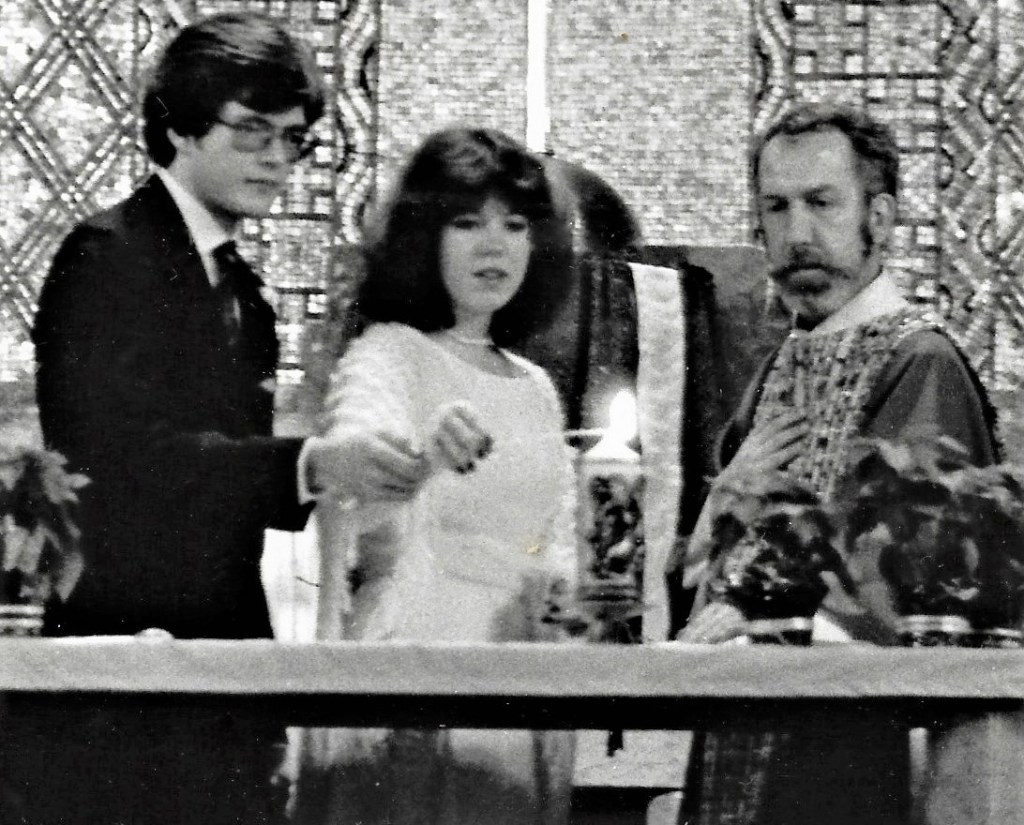
Babies at the altar: Brian and Barbara with Father Patrick Carroll on December 15, 1979.

AT THE SAME HOUR as I write this, 42 years ago today Barbara and I and a flock of family and friends trooped into St. Joseph’s Church on Seattle’s Capitol Hill. Outside, snow fell lightly. Inside, by an altar decorated with red poinsettias, my sweetheart and I said our wedding vows.

We’d been best friends for years by that point. Lovers for a while. At the time, I didn’t think twice about the “till death do us part” clause in what we said before that assemblage. But here we are.

I assumed today would be one of my more difficult days of 2021, but when I awakened this morning, rather than desolation I felt optimistic about quietly commemorating December 15, 1979, a date that’s engraved in gold on the inside of the wedding ring that I can’t imagine taking off.

Yes, it’s just me and the cat here in our island cabin today. It’s not what I’d choose. But I greeted this morning with a feeling of gratitude more than grief. I will always cherish the good luck that brought me and Barbara together. Divorce statistics demonstrate how many people struggle to find their soulmate. Many never do.

Our friendship and marriage brought so many good things to both of our lives, the best being our delightful daughter, Lillian.

One of my favorite latter-day photos of us, touring Scotland’s Edinburgh Castle in 2017.

I got out of bed this morning with the intent of doing some Christmas baking, something new for me. That was Barbara’s department, because she enjoyed it and was so good at it.

But it wouldn’t be Christmas without Yule Cake, a recipe we’ve kept for years in a binder of my mother’s favorite recipes. This recipe is in Mom’s own swirling handwriting, with a note at the top, “I’ve made several of these every Christmas for nearly 50 years.” Who knows when she wrote that. Eleanor Mary Elizabeth Cantwell died at age 88 in 2006. Barbara maintained the Yule Cake tradition since then. And now it’s up to me.

Many cringe at the idea of tooth-achingly sugary Christmas fruitcake, but that’s because they’ve never had this Yule Cake. Yes, it has some sweet fruit — orange peel, cherries, raisins and dates — but it’s more a nut cake. Baked in a large loaf pan for two full hours at 300 degrees, this cake contains 1 1/2 cups each of whole Brazil nuts and whole walnuts. With only 3/4 cup flour, moistened by three beaten eggs, there’s barely enough cake to hold all those nuts together. But sliced into small squares, nothing goes better with a cup of hot coffee on a cold winter morning. Later in the day, a bit of stinky Stilton cheese and a snifter of port are Yule Cake’s perfect complements.

The oven timer is about to ring. We’ll see if it worked. It’s my celebration of the Cantwell women on this cold middle day of December with a sky that looks like snow. Just as it did 42 years ago.

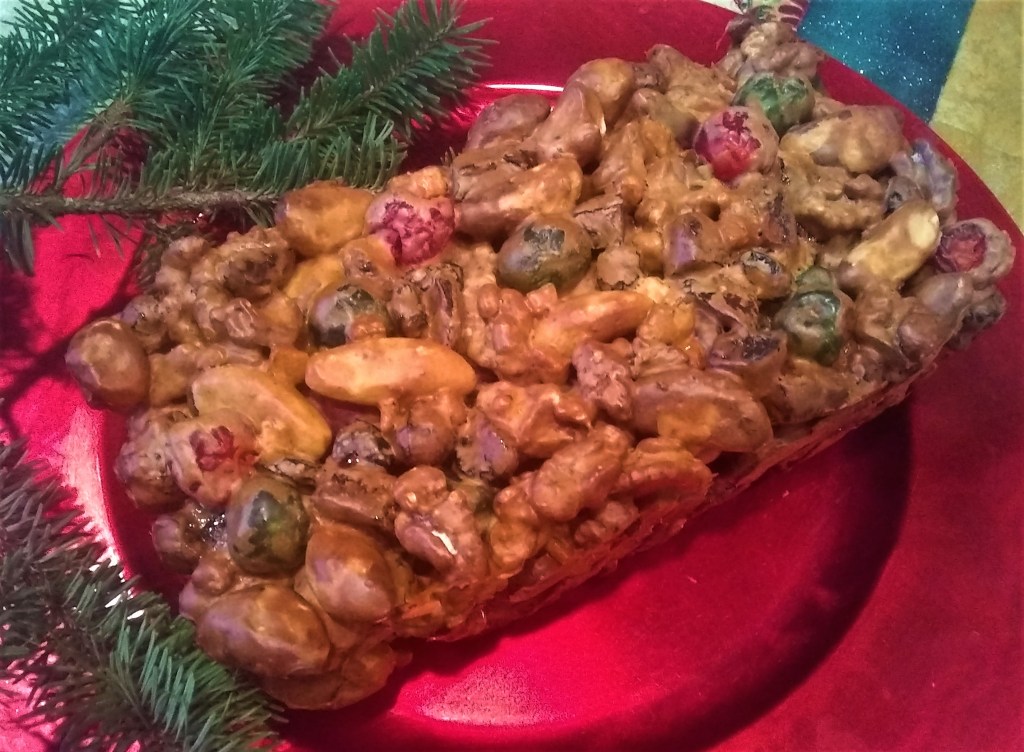
Out of the oven, my first attempt at Yule Cake looks pretty good. Let’s hope it’s edible.

Yule Cake recipe

  • 1 1/2 cups Brazil nut meats, whole
  • 1 1/2 cups walnut halves, unchopped
  • 7 ounces pitted dates, whole or sliced in half
  • 2/3 cup candied orange peel, chopped
  • 1/2 cup whole red maraschino cherries, drained
  • 1/2 cup whole green maraschino cherries, drained
  • 1/2 cup seedless raisins
  • 3/4 cup all-purpose flour
  • 3/4 cup sugar, or sugar substitute
  • 1/2 teaspoon baking powder
  • 1/2 teaspoon salt
  • 3 eggs
  • 1 teaspoon vanilla extract

Preheat oven to 300 degrees F.

Grease the bottom and sides of a large loaf pan and line it with parchment paper. Lightly grease the paper.

Place nuts and fruit in a large mixing bowl. Measure all dry ingredients into a sifter and sift over the fruit and nuts. Mix well.

Beat eggs until light and frothy. Add vanilla. Blend into fruit and nut mixture. Batter will be stiff. Spoon mixture into pan and spread evenly.

Bake at 300 F. for 1 3/4 to 2 hours (105 to 120 minutes). Cool on rack for 10 minutes before removing from pan and paper.

Hint: If shelling your own Brazil nuts, freeze them first for easier cracking. Easier: Trader Joe’s sells shelled Brazil nuts.

I can’t write ‘Tis the Season.’ Rose O’Donnell would kill me.

The giant wreath, made from fir boughs fallen in recent windstorms, went up on front of the Nuthatch today.

THAT SAID, I MADE MY WREATH TODAY, the five-foot circle of fir boughs that traditionally hangs across the Nuthatch’s front wall of windows on these darkest days of the year.

So I’ve declared it officially Christmastime. And Hanukkah. Solstice season. Or whatever jolliness you choose to celebrate in the gloom of winter.

Rose O’Donnell was the hard-boiled chief of the features copy desk, my boss when I first went to work at The Seattle Times, and if a lowly copy editor such as myself in those days used the all-time cliché headline “‘Tis the Season” on a holiday-related story, you risked having your pay docked, your pets turned out into the street, and your stocking filled with coal. Or at least having a pica pole thrown at you.

I raise a mug of eggnog to Rose’s meticulous standards, and announce without further fanfare that my wreath is up, along with the swag by the front door.

Just a week ago Lillian and I were celebrating Thanksgiving at a little camping cabin at Camano Island State Park, where we gobbled some really good burgers (garnished with sage, blue cheese, caramelized onions and mushrooms, mmmm) fried up on our camp stove. We decided this year that we should do something different for the holidays, because without Barbara nothing would be the same anyway. Our Thanksgiving venture was quietly delightful.

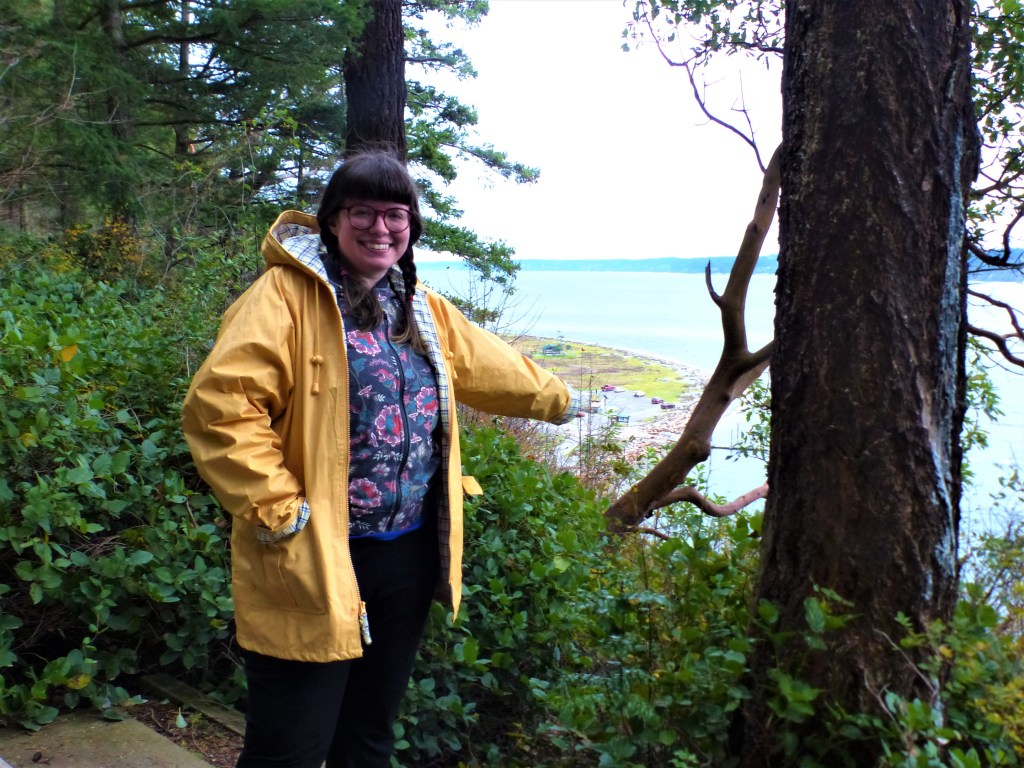
On a hike along the bluff at Camano Island State Park on Thanksgiving, Lillian points to the beach. Just in case you hadn’t noticed it.

For Christmas, Lillian and I are going away again, to cottages on the Washington coast with friends. I’m not having a Christmas tree at the Nuthatch; that was my sweetie’s favorite effort of the year, elaborately decorating a fragrant fir in our living room. She would bake up a storm, and pile the gifts high. I can’t do it on my own, not this year.

But my daughter and I have good Yuletide plans, and other treasured friends are coming to my cabin for a masked soiree on New Year’s Eve. It’s undeniably a tough holiday season, but I’m doing my best to keep spirits up. And remembering my sweetheart, who so loved Christmas.

Hold dear ones close and stay warm this winter, my friends.

At least it wasn’t a skunk

A fire blazes once more in the Nuthatch cabin’s woodstove Saturday night after a marathon cleanup effort.

THE SKITTERING IN MY CHIMNEY stopped midday Thursday. Friday night was cold. I lit a fire. The cabin filled with smoke.

It wasn’t good.

Whatever got into my chimney, and apparently went to its maker there, was now blocking it. Not a tiny bird, I guessed. A squirrel? A hundred bats? Damn.

Saturday was a marathon day of chimney surgery at the Nuthatch. I decided to attack the problem from the inside flue, dreading what I might find.

First I removed every treasured artifact from the mantel. The wedding photos. The ship in a bottle that my brother-in-law Roly constructed. The framed pearl from my father-in-law’s Hood Canal oyster beach. The New Guinea penis gourd from my sister-in-law Ann. All the good stuff.

Moved the wicker chairs to the far side of the room. Draped the furniture with sheets. Tacked a tarp to the wall around the woodstove and spread another across the floor. Soot can go everywhere.

Then I pulled on a white head-to-toe Tyvek painting suit, grabbed my toolchest, a respirator mask and safety glasses from the shed, strapped on my headlamp and commenced peering at the chimney’s every seam and joint to figure out how to open it up.

There were no screws holding the three sections together, just tapered ends fitting snugly into one another. I tried lifting up. I tried pushing down. No budging.

So I did what every home-maintenance wizard does. I checked YouTube.

No luck. All the online chimneys featured screws you could remove, or sliding extensions. Not what I had.

Stymied in my plan to disassemble the flue, I decided to poke and prod from inside the stove. Breathing like an astronaut, with the respirator covering my face, I discovered that the baffles at the top of the fire chamber were backed by bricks that moved when I poked them. Aha!

Fine black soot spilled from above as I moved the bricks. I was able to lift one out and open a clear passage to the chimney. More soot cascaded down. And my headlamp’s beam fell on a small gray lump wedged in one of the baffles. A lump with feathers. A sooty, lifeless sparrow.

I reached in with a gloved hand and gently pulled the limp bird from its trap. It wasn’t big. I don’t see how that small body alone would have blocked the smoke. But maybe its death struggles, all that skittering, had dislodged enough soot to clog the baffles.

With a sense of melancholy relief, I shook the soot and ash from atop each fire brick, replaced them carefully and shoveled the debris from the floor of the stove.

It took hours to get my front room stripped of its protective garments and reassembled as it was. I mixed cinnamon, cloves and orange extract in water and simmered it on the stove all afternoon to purge the cabin’s smoky smell. I buried the bird outside among soggy fallen maple leaves next to the stump looked over by Trudy, the cement garden bunny that came with us from our Bremerton home.

No squirrel, no skunk. No cloud of bats. Just a lonely sparrow who made a bad choice and complicated my Saturday. Sad to think of how its life ended. Rest in peace, you poor, dumb little bird.

The creature in my chimney

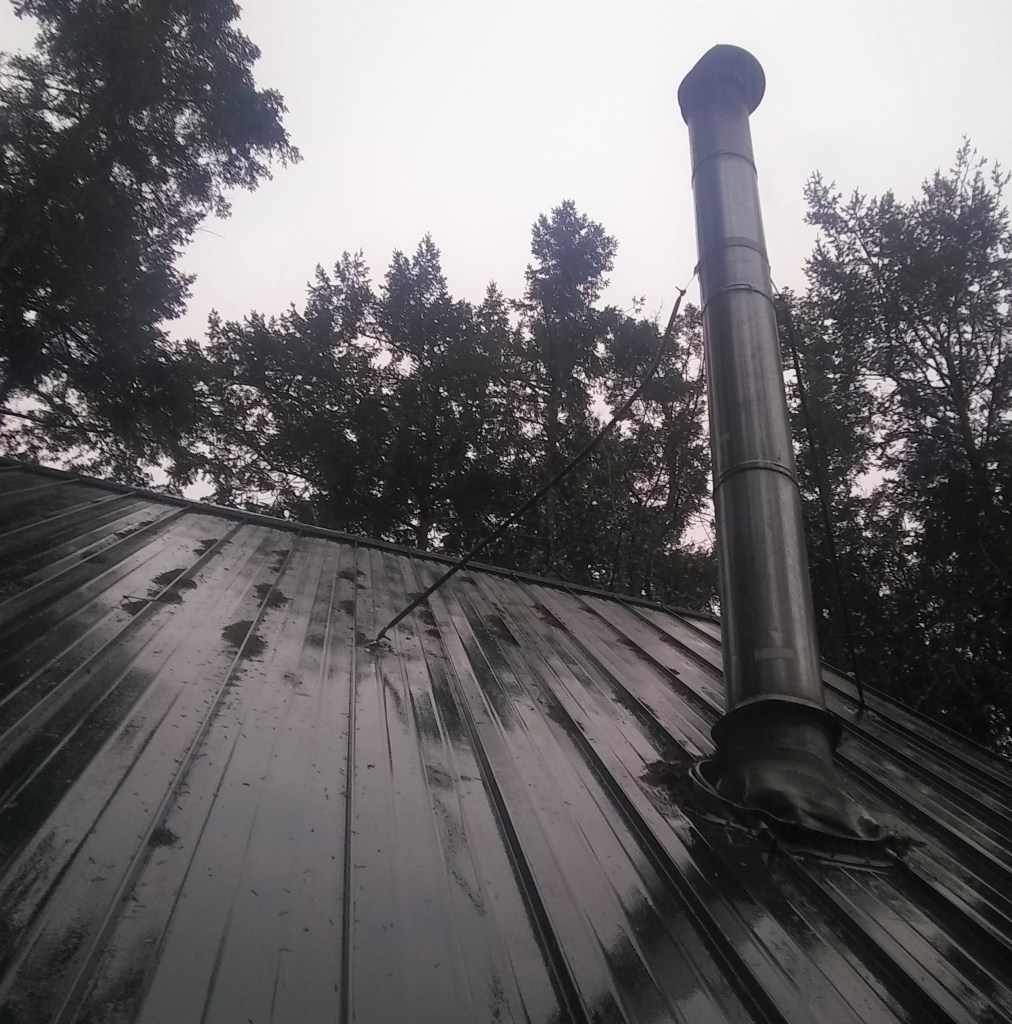
The Nuthatch’s galvanized metal chimney soars high into the air. Could any critter climb it?

FOR THREE DAYS, I’VE NOT BUILT A FIRE in my woodstove. For three days, something’s been living in my chimney.

It’s not good.

I was up in the loft on Tuesday, napping maybe, when first I heard it. A sort of metallic skittering noise. Without looking, I blamed Galley Cat, who was down in the front room. I lamely hollered a protest that she should stop scratching whatever new furnishing she’d found on which to sharpen her claws.

But when I was downstairs fixing dinner the noise came again. Galley, at my feet, gave me one of those sideways looks reserved for the righteously indignant. “Not me, see?”

No, I quickly ascertained. The skittering noise was clearly coming from inside the metal chimney rising above my woodstove.

“What the hell?” I muttered. Mice, I first wondered? I’m in a cabin in the woods. I wage battles to keep mice out. I’ve been victorious in that effort for many months now. I have a whole drawer full of anti-mice devices and mice-fighting aids, some not as nice as others. When something goes skitter in the night, mice leap to my mind.

But no, this was coming from inside a distinctly smooth and vertical metal cylinder, part of a closed system whose only opening is some 25 feet in the air, high above my roof. Mice can climb walls, but can they climb smooth metal surfaces? Would they want to? Seems unlikely.

A bird must have flown down the chimney, I decided. Probably some hapless little chickadee that happened to land at the top and perhaps found that the conical cap gave shelter from the wind and rain. Maybe the chimney was still warm from a recent fire. Might have been inviting.

Surely the top of that chimney is screened, though, I told myself. Yes, my cynical other self responded, it was probably screened 20 years ago, but rust and heat have their way with metal, you know?

The skittering noise came and went over the next three days. I reasoned that the little bird had fallen in to the chimney’s narrowest lower section. About eight feet of pipe, some 8 inches in diameter, rises above the stove before transiting the ceiling. The poor thing likely had insufficient room to flap its wings to fly back up to the top.

Could I free it somehow? I peered inside the stove and saw a series of perforated metal baffles between the fire chamber and the chimney. No access. An examination of the pipe above the stove revealed no obvious way to open it up. And, in any case, the specter of a frightened, frantic, soot-caked songbird swooping around inside my home wasn’t high on my “fun” list.

I stepped outside to see how the chimney was attached to the roof. A circle of at least two dozen bolts circled its base. I’ve been meaning to replace that upper chimney, which had been damaged by a fallen tree a decade ago, its cap dented and a supporting strut bent. But it would require opening the metal roof as with a can opener, a task suited only to a summer week without rain, not the middle of the wettest November on record.

Though we were experiencing our coldest nights of the season, I resolved not to build a fire until well after the noise had stopped, meaning either that the bird had escaped or, sadly, expired. Letting it die on its own, and at its own hand, if you will, was surely ethically better than subjecting it to death by smoke inhalation or, worse yet, roasting?

My brother called from sunny Arizona. As I related my problem, he asked if it might not be a squirrel building a nest in there. I shuddered at the thought. A dead bird wouldn’t smell much, or block the flue. But a squirrel?

I tried to put that fear aside, however. I’ve seen squirrels climb straight up tree trunks, but surely even they couldn’t climb the exterior chimney’s sheer galvanized surface. It’s way up in the air, well out of jumping distance. Building codes generally require that chimneys be two feet higher than any part of the roof that is within 10 feet of the chimney. On my high, sharply sloping roof, that makes for a very tall chimney.

In ensuing days, as I’ve sat in my big wicker chair watching a video or working a crossword, not six feet from the woodstove and that recurrent skittering, I’ve had plenty of time to get paranoid about it. Whatever is in there, why have I heard no cries of anguish? No twittering, no squeaking. It’s not nest-building season, but what if something is building a nest in there? It hasn’t complained because it has been happily coming and going from the top of my chimney, thinking, “All right! How cozy is this?

The thought seized my fevered brain. I leaped up and dashed outside in my robe this morning and stood for 10 minutes craning my neck to peer at the chimney’s peak to see if any industrious critter was popping in and out.

Nope.

This afternoon, the skittering seems to be on the wane. I feel bad about it. But I’m just hoping that whatever expires in there is small enough that it won’t stop me from building a warming fire when I need it. We’re talking about life and death in the wild woods.

Please don’t let it be a raccoon.

I was only ever a Cub Scout, but ‘Be Prepared’ is my new motto

Mr. Toad, named for the road-terror hero of “Wind in the Willows,” ferried rounds of fir from a wind-downed tree on Tuesday.

SOMEBODY COINED THE TERM ‘CAR-WASH RAIN’ and the description was apt. Drumbeats on the roof. Sheets of water down the windows. It was like being in a dimly lit tunnel from which you could barely see out. Like a drive-through car wash.

But this wash and waxing wasn’t over in three minutes. The “atmospheric river,” or Pineapple Express, or whatever label the KOMO Weather Woman affixed on the latest low-pressure tantrum to blast Washingtonians with its Super Soaker, started the drenching Sunday afternoon and didn’t let up for the better part of 24 hours by my clock.

I’m a little fuzzy on the timing because for the latter part of that storm most of the Nuthatch’s clocks weren’t working.

Oh, I forgot to mention the Monday winds, gusting to 60 mph, that blew down trees and doused electricity to our island and several others in the San Juans.

Shortly after my power went out and clocks went dark at 1:23 p.m., Orcas Power and Light Cooperative, which electrifies all the San Juans, emailed me to let me know my power had gone out at 1:23 p.m. I thought it very efficient of them. Maybe I hadn’t noticed all the lights go off, the Internet go down, the heater fan stop and fridge go silent. Of course, I didn’t get the email until after my Internet came back on hours later.

Actually, I was the first Center Islander to report the power failure to OPALCO’s outage line. The phone is the first thing I reach for when things go dark. They can’t fix it if they don’t know about it, right? While our island’s utility wires are underground, our power comes via an underwater cable that originates in Anacortes and first crosses Decatur Island, where lines are on poles and subject to falling trees.

After phoning, my second move was to refill my indoor firewood rack and kindle a blaze in the woodstove. With my electric heat pump no longer magically pulling warmth from the howling winds outside, the cabin would quickly chill.

My next thought: Last time the power failed, in a storm last January, it stayed off for 18 hours. Long enough for the fridge to warm and the freezer full of food to start thawing.

So I stepped out to the shed and hauled out the gas-powered portable generator that got its first tryout in January. While I had already given it a pre-winter test run a couple weeks ago, I hadn’t refilled the gas tank. The good news: I knew I had a spare 5-gallon jug of gasoline. The other news: Said gas jug was aboard my boat, on the other side of the island.

Now, one thing I’ve learned in my long years on this planet and in my few years on this island is that it’s not a great idea to go out in a raging windstorm. The quick lesson on that comes from the loud thunks every few minutes on my metal roof as branches fall. Usually they are small branches. Sometimes they are not small. And they come down fast.

But I had Mr. Toad, the Cantwell golf cart, sporting a brand-new, $1,000 set of six 6-volt batteries installed just days earlier. (Timing can be everything.) Mr. Toad features a hardtop roof, strong enough to protect the noggin from most plummeting limbs. Happily, the pouring rain had ceased and sunshine was lighting up the wildly waving trees. What Mr. Toad lacks is doors. In rain, the going can be wet.

In the calm after the storm, the Nuthatch’s firewood rack gets refilled with wind-downed fir.

The wind-buffeted sojourn was without incident. Once I’d topped off the generator’s tank, the daylight was fading. I wouldn’t fire up the noisy, smelly generator just yet; the fridge would be fine for a while yet. But the lights had been out for hours and OPALCO’s recorded info line offered no estimated time of repair. My next thought was: What did I not want to be looking for in the dark? I dug out my battery-powered mountaineering headlamp, lost in the depths of my knapsack when last I’d wanted it. Then I distributed emergency candles strategically around the cabin, placed a lighter nearby, and retrieved my propane camping stove from the shelf high above the washing machine. (Note to self: The bamboo clothes hamper is not designed to support a 170 pound human, if that cracking sound was any indication.)

Things were getting decidedly dim in the cabin by 4:30. I pulled some bratwurst from the freezer to thaw, since I couldn’t rely on the microwave for defrosting. Then, having done all I could to prepare for the night, I decided to take my pre-dinner nap earlier than usual. (It’s called being retired. One of the better perks.) I had a good book to read, but I wanted to keep that for the potentially long evening, free of Netflix, music, the New York Times app and other electricity-dependent entertainment.

It was pitch dark outside when I awoke. Through its smoke-smudged glass, the woodstove’s low fire cast just a flicker of light on the cabin walls. I added fresh wood. Back in the kitchen, with candles lit and the ceiling flooded with light from a lithium-powered emergency automobile beacon (another treasure discovered while spelunking in my knapsack), I was just gathering items for dinner prep and about to ignite the campstove when the fridge suddenly hummed. And lights flashed on.

OPALCO, ever efficient, emailed me that my power was restored at 5:35:19 p.m. Well done, repair crews. Just in time for dinner. I was back in the 21st century. In 10 minutes, candles and stove were stowed and the microwave was doing its thing.

Today, the payoff for all that angst: A big Douglas fir had blown down across my road a few lots away from mine. The island’s caretaker cut it into big segments and cleared the way. Knowing I was on the lookout for firewood, he alerted me. (My woodshed is full, but my outdoor rack was empty.) By 10 this calm and sunny morning, I was there with my chainsaw. By early afternoon my drying rack was full of 10- to 16-inch rounds. It will keep me busy all winter splitting wood, my favorite therapy. By March, the fir might be burnable. Or at least I’ll have a jump on next fall.

Like a Boy Scout, I’m getting better at being prepared. It’s what you do when you live on a remote little island nobody’s heard of, amid nature red in tooth and claw. Or when it blows like stink.

Winning the Mildred, and other highlights of the season

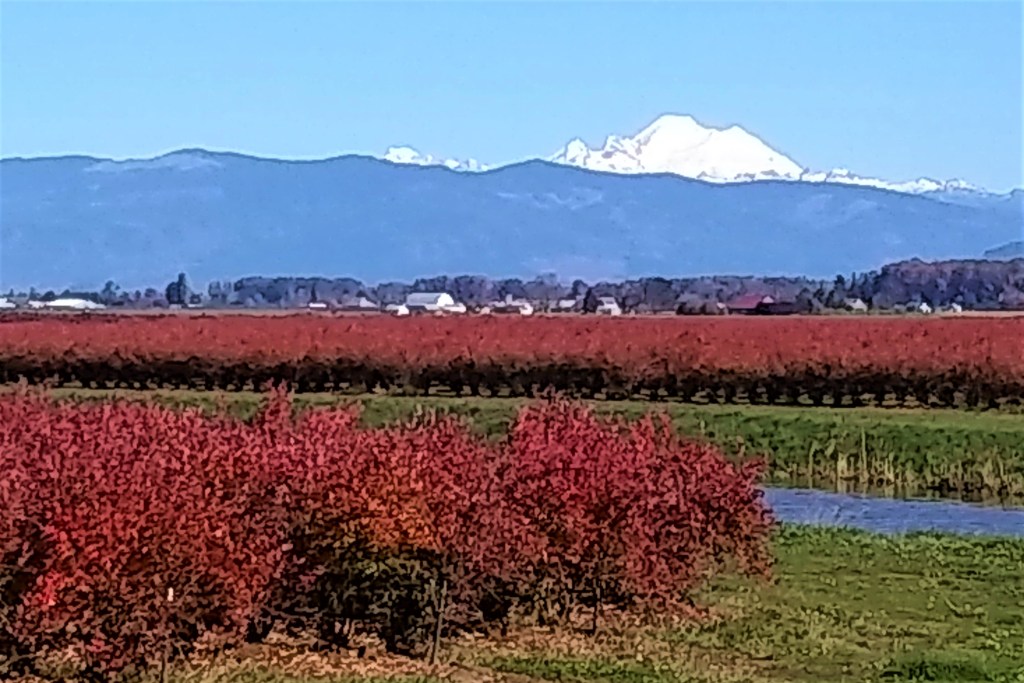
Halloween brought a respite from storms, as Mount Baker towered over Skagit Valley blueberry fields ablush with autumn color.

GETTING OFF OF THE ROCK means even more to me these days when it includes an actual social event, with real people who are all vaccinated and not wearing masks.

Well, there were a few masks at the social event of which I speak, but not the kind you’re thinking.

Halloween was a treat last Sunday, as it always should be, and moreso this year because it brought the almost-post-COVID return of the annual Burns Family Halloween Party, a highlight of the social year for me and my late wife’s family since, oh, probably the late 1970s. The pandemic caused its cancellation in 2020.

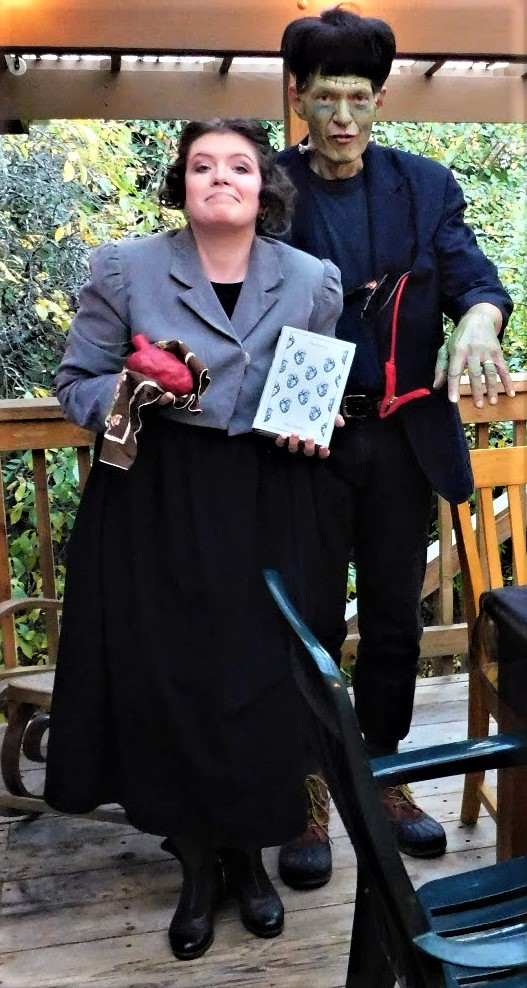
Mary and her monster. Note the clay heart in Lillian’s hand, and the jumper cables hanging from my pocket.

Since its inception, it has been a highly competitive costume party, with a trophy awarded. The legend is that my sister-in-law Kathleen went to Goodwill decades ago and acquired an old bowling trophy that had been awarded to a woman named Mildred. Kathleen replaced the bowling figure with a little waxen witch on a broomstick. Thus was born the Mildred Award for Best Costume, which has been passed around among champions of the sartorially macabre for lo these many years.

Barbara and I took the competition seriously, and over the years came up with thematic costumes that paired together. I was Ichabod Crane and she was the Headless Horseman. I was Edgar Allan Poe, she was the Raven. To mark the 50th anniversary of the first American ascent of Mount Everest, I was an ice-ax wielding Jim Whittaker and Barbara was a crazed-looking, prayer-flag-bedecked yeti. (Thanks to friend Suzy Burton, who has compiled this digital album of costumes from the party over the decades.)

It was tough this year without Barbara. But she was sweetly memorialized in the elaborately decorated Day of the Dead altar that my sister-in-law Margaret always creates as a comforting adjunct to the Halloween celebration. And daughter Lillian stepped up with a brilliant costume pairing idea: She went as “Frankenstein” author Mary Shelley, circa 1818, and I was Shelley’s monstrous, galumphing literary creation.

In keeping with the spooky holiday, Mary Shelley fit right in. Not only did she create one of history’s iconic creatures of every kid’s bad dreams, she was certifiably odd in her own way. After her husband, the romantic poet Percy Bysshe Shelley, drowned at a young age in a boating accident, she is said to have carried his preserved heart with her wherever she went. So Lillian molded an authentic-looking human ticker from modeling clay and carried it around at the party.

Like the Addams Family, we were creepy. We were kooky. We were altogether ooky. We won the Mildred.

Halloween weekend offered a welcome sunny and calm break from the gales and rainstorms that have beset us of late. It was but a respite, however. As I write this in Nuthatch cabin, the towering firs and maples outside my wall of windows sway alarmingly in high winds. The lowering sun, just emerging from rainclouds, flickers through the teetering trees like a blinding locomotive headlight of cold, pastel yellow. Cast in stark shadow, waving branches bearing autumn’s last leaves dance enchantingly across my cabin wall.

It’s November in the Northwest. I enjoy clement weather, but when I think on it, to live without seasons would be, well, monstrous.

50 words for rain on the roof?

Fallen leaves marinate in the rainwater pooling on the Nuthatch’s deck rail this morning.

CAN YOU HAVE AN URBAN MYTH about the Arctic bush? When does it become a Rural Myth?

The myth I’m thinking of is the one about Eskimos or Inuits having 50 words for “snow.” Or is it 500? Is it, in fact, just a myth?

I swerved back and forth over this fogline of thought early this morning as I lay in bed after a long night of rain.

The Nuthatch has a metal roof. Practical and durable for a wet climate. Safer than wood shakes in the summer fire season. It happens that my bed in the loft is situated such that my head is right up against the inside of that roof, with only some knotty pine, a bit of insulation and a veneer of plywood and tar paper intervening. So when it rains, I hear it.

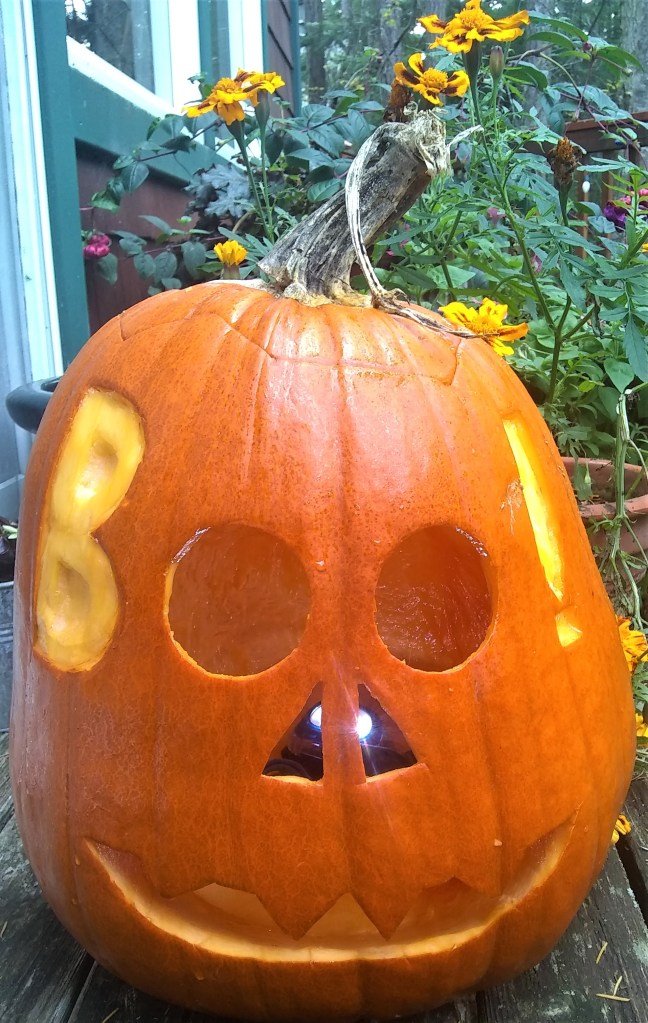
Here’s the jack o’lantern I carved on Wednesday, before the rains. Good news in the forecast: Sunday is supposed to be dry and warm. Happy Halloween!

Usually, it’s soothing. Last night, it was pretty damn loud.

As my Pacific Northwest neighbors know, we’re having a soggy week, and it’s not over yet. For the Seattle suburbs, the National Weather Service forecasts up to 2 inches of rain tonight. There’s a flood watch in effect. Even my rain-shadowy San Juans could get another inch in the next 18 hours, they say. Normally, this corner of the continent is the drizzle capital of North America.

Last night on Center Island I heard the rain start in the wee hours and continue until I arose around 7:15. For hours on end water seemed to spray from a great firehose in the sky.

As I lay in that limbo zone between groggy sleep and hoping that Galley Cat would finally get up first and make the coffee, I came up with this list of terms for rain on my roof, based on the sound effect.

POUNDING: This is a new one I invented last night. Been to the symphony? Know what tympani are? It wasn’t a good night’s rest. Thankfully rare, though with climate change, who knows.

DRUMMING: This term is more common, denoting steady precip. Familiar in poetry and song. Think “Little Drummer Boy” and “rum-pum-pum-pum.” We get it now and then.

PATTERING: Here’s where I’m lulled to pleasant sleep, with the satisfying feeling of being safe and warm inside my cozy cabin. The trees and moss outside are finally getting the moisture they need. Common here in spring and autumn when the forecast calls for those ubiquitous “showers.”

DRIPPING: See “Pattering,” just not so definitive. The preamble, perhaps. A nagging reminder to clean the gutters, which filled with fallen leaves and fir needles in Tuesday’s big wind storm.

OK, four isn’t fifty. It’s a work in progress. But the rainy season has only just begun.

It’s the bomb (cyclone)

That’s my street, where autumn leaves blazed into color late this year. Most will likely blow away in this storm.

I’M HUNKERED DOWN THIS OCTOBER SUNDAY in Wee Nooke, my tongue-in-cheekily named writing hut on the rocky knoll behind my cabin, and the cyclone has arrived.

A far edge of the cyclone, anyway.

I feel pretty safe and, with an under-the-desk electric radiator roasting my feet, cozy. My 6-by-6-foot cedar shack sits in a mossy clearing, clear of falling branches. But as I look out my windows the trees are definitely dancing, as Barbara always described it.

The media is full of headlines about this Bomb Cyclone, a term that evolved from “bombogenesis,” which the National Oceanic and Atmospheric Administration calls “a phenomenon that occurs when a mid-latitude cyclone rapidly intensifies, dropping at least 24 millibars over 24 hours.” Headlines in some of the more sensationalist media are greatly overstating the severity, especially the American version of Rupert Murdoch’s British tabloid, The Sun, which shouts “Seattle to be hit by BRUTAL (sic) subzero weather storm that will ‘rival a hurricane’.”

Yeah, right. Local news media say Seattle will experience relatively mild storm conditions. The idea that temperatures will be “subzero” is some bored headline writer’s fantasy. (It is the season for magic mushrooms in the woods.) Last I looked, the National Weather Service reported that Seattle’s temperature was 57 degrees F.

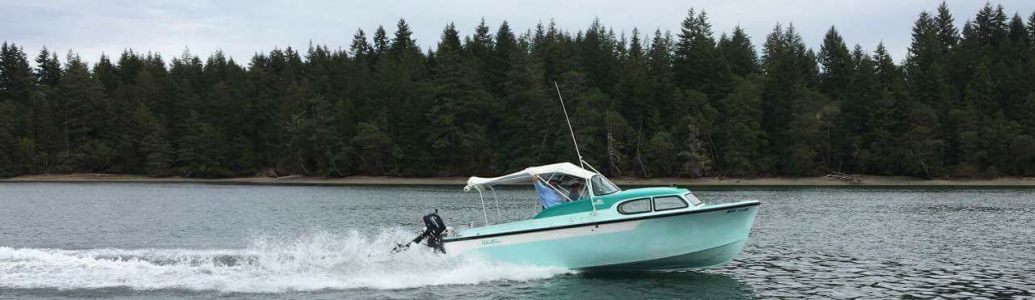
Tracking winds and weather is an obsession among us Center Islanders. No big surprise there, considering how reliant we are on boats or planes to get us anywhere but here. I love my classic 1957 runabout, but WeLike isn’t a rough-weather boat. I don’t leave the dock if there are whitecaps, which generally occur with winds of 13 mph or greater. (For the nautically obsessed, that’s Force 4 on the Beaufort Scale, on which Force 12 is called a hurricane.) In high winds and roiling currents, WeLike can rock and roll to rival Mick Jagger.

So how do we get our wind predictions? Practically everyone I know uses a smartphone app called Windy.

As a card-carrying Luddite (well, we would make cards if an electronic printer wasn’t required), I’ve rebelled against “apps” since the first techie child decided it was too much trouble to use the full word “application.” But with Windy, I’ve totally caved. In fact, I shell out $20 a year to get the upgraded hourly forecast rather than the free summary that is limited to measly three-hour periods. The localized forecasts’ accuracy is impressive.

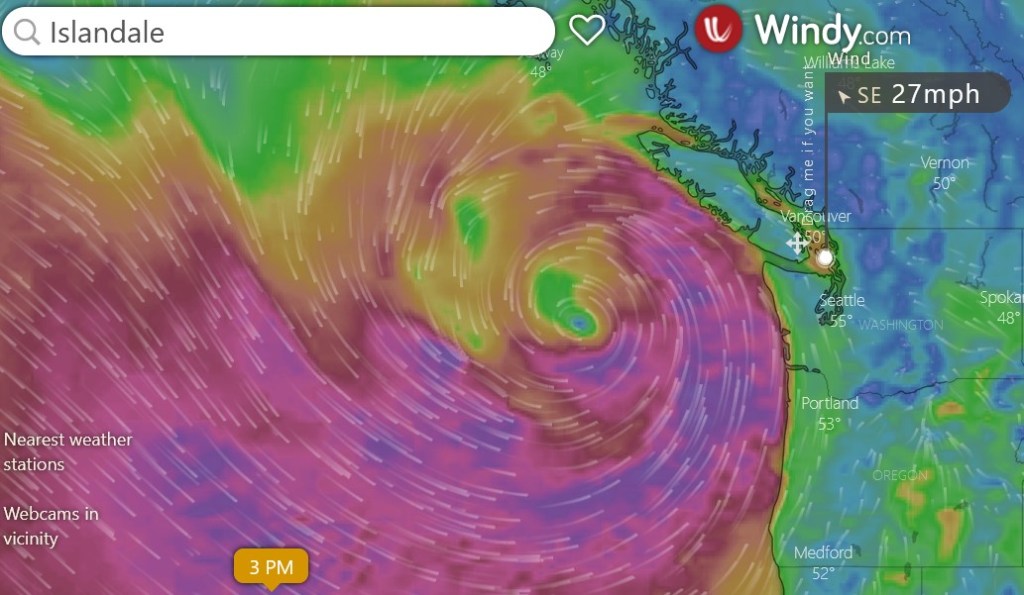
This screenshot from Windy.com shows the whirling winds off the Washington coast on Sunday. The gray flag at upper right pinpoints Center Island, noting windspeed and direction.

Today, the Windy map shows a huge, scary spiral of counterclockwise winds off the Washington coast, centered 280 miles offshore and whirling toward British Columbia. Much of it is bypassing Seattle, but the San Juan Islands are picking up more of the storm’s fringes. As I write, we have steady winds of 25 to 30 mph out of the southeast, drawn by the offshore maelstrom.

The good news for Nuthatchers, me and Galley, is that we’re on the west-southwest quadrant of Center Island, so we’re not getting the brunt of those southeast winds.

And, frankly, winds of this magnitude are no big deal for us, in most respects. We’ll get this kind of windstorm four times in January. What sets this apart is that it’s only October. We should still be enjoying some sunny fall days.

The sobering factor to Windy’s forecast for the next 24 hours: Starting at 9 p.m. and continuing through the 6 p.m. hour tomorrow, my island is supposed to get nonstop winds exceeding 30 mph. Gusts will near 50. That’s a war of attrition on our tall trees. I won’t be surprised if some come down.

A saving grace: We’re getting little rain with the storm, whereas the outer coast expects dumping rain and flooding. And this early in the season, after a summer drought, our ground isn’t yet softened by saturation.

I’m as ready as can be. WeLike is out of the water, on a trailer, in as safe a spot as possible. I chopped a lot of firewood and kindling these past few days, so heat won’t be a worry (even if those subzero temperatures arrive). If power goes out for long, I have a generator, which I fired up two days ago for a pre-winter check, so I can keep my fridge going. And I did a major shopping expedition this week to Costco, Fred Meyer and Trader Joe’s. The pantry overfloweth.

So, bring it on, if we must. Wish us luck against falling firs. On behalf of me and my app-loving neighbors (and I ask your forgiveness), I leave you with this earworm, of which I owned the 45-rpm vinyl back in the day: The Association’s 1967 mellow-rock hit, “Everyone knows its Windy.”

Solitude and good company

Friends Dave and Jill Kern met the barn cat when we visited Lopez Island’s Horse Drawn Farm last week.

I HAVEN’T LIVED ALONE since I had my crummy little apartment connected to the beauty parlor on 10th Street in Mount Vernon. It became a much nicer apartment when Barbara moved in after we married in December 1979. We were there together for only a few months before our first cat, Bing, adopted us by coming to our door and meowing as if the building was on fire, then marching right in like he owned the place. Suddenly we had a Maine Coon kitten. We became cat people by default.

But we were soon willing to face eviction for Bing, since the crummy apartment’s landlord didn’t allow pets (could they make the place crummier?). Called on the (threadbare) carpet, we moved to a larger, newer apartment a mile or so away. I would describe it as, um, crappy.

We loved the Skagit Valley, and my young spouse worked two jobs to supplement the pittance I made as news editor of the local weekly. But ultimately our relative poverty and the quality of our apartment living had a lot to do with my decision to go to graduate school, hoping to improve our lot in life.

So 40 years ago this autumn Barbara and I moved to Chicago, a place she would badmouth with gusto until just about her dying day. Much of that had to do with my leaving her there on her own winter quarter when I went away to take part in Medill School of Journalism’s Washington, D.C., program. She couldn’t accompany me; her job at the Northwestern University library was paying our bills. She called it her PHT (Putting Him Through) degree.

Of course, Chicago produced a record-cold winter, and she had to trudge to work with a six-foot woolen scarf wrapped entirely around her head. For years, it made for a funny story to share with friends over a glass or three of good wine. But she never forgave me.

Throughout our 41 years of marriage, that was the longest period that we were separated. Until last April. It’s been six months since she died in the Nuthatch Cabin’s front room.

Now it’s October. I live on a small, isolated island. Wind and rain have chased most neighbors to the mainland for the winter.

Solitude doesn’t suit me the way it does some. After living with my best friend for 41 years, I guess that makes sense. “How are you doing?” people ask. I know they mean “without her.”

The answer is, I’m coping, more or less. I get out of bed every day. I exercise. I read, I write, I cook. I run to the top of the rocky knoll with Galley Cat, who is my little ginger-colored bundle of joy (who only occasionally bites if I pet her too hard).

So I’m not entirely alone. I say good morning every day to Barbara’s photo, the sexy, come-hither image she mailed me when I was 18 and gone to Florida for college. On the back of the black-and-white print that she made in her own darkroom is penciled “Hey, Sailor!” Her distinctive, curlicued script can bring me a smile or a tear, depending on the mood.

I’m not alone, though. I’ve got the feline housemate, who is a bit of a bed pig. I have the birds who are mobbing the feeder this time of year, perhaps presaging the La Niña winter we’re being warned about. Nuthatches and Chickadees go back and forth as fast as their flappy little wings will carry them, caching hundreds of sunflower seeds in the wrinkly bark of my big Doug firs. Or there is the oversized Hairy Woodpecker swinging from the suet cages like a fat teenager trying out the playground’s baby swings.

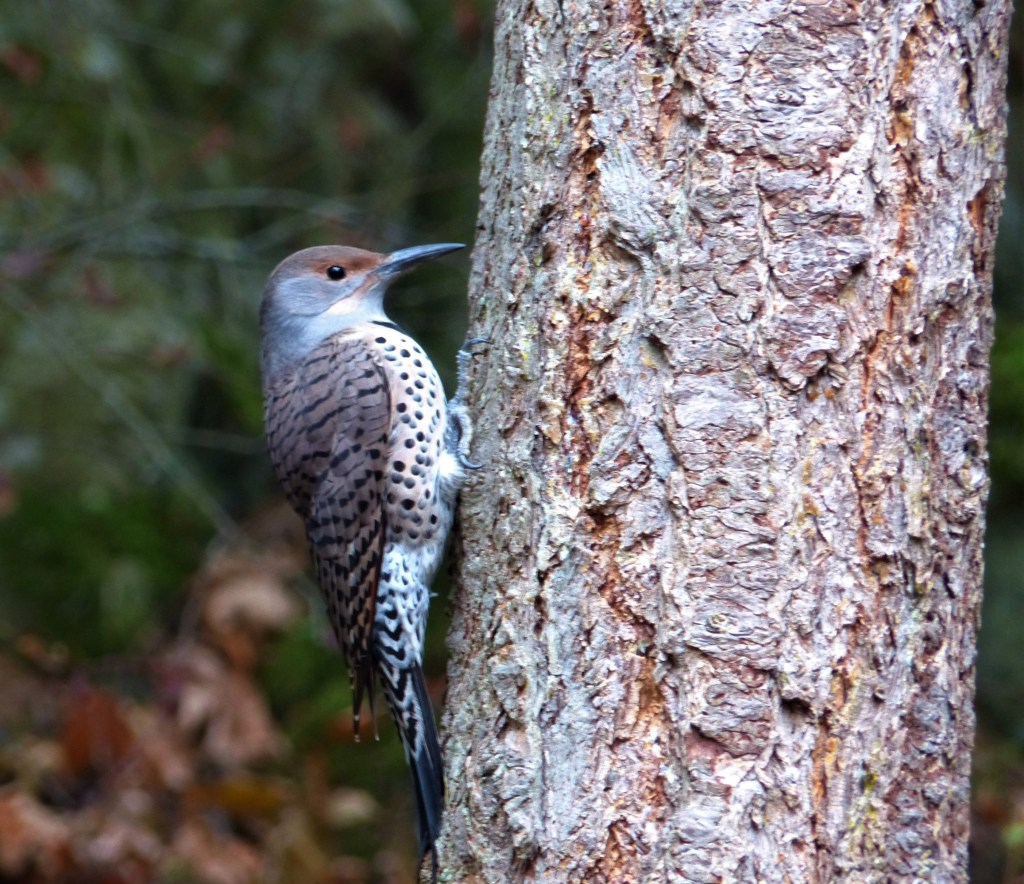
A Northern Flicker came to visit, dressed in his finery.

A pretty Northern Flicker joined the crowd the other day. We get them once in a while. They always remind me of an English lord in a morning coat and spotted silk vest.

I Skype nightly with my loving daughter. And friends and loved ones visit. Last week old friends Dave and Jill Kern, whom Barbara and I knew in our Vancouver, Wash., days, came up and stayed a couple nights on Lopez Island. We toured Lopez together and I brought them out on WeLike for grilled burgers at the cabin. Dave, a treasured colleague of mine at The Columbian newspaper, is in his 70s now. My favorite memory was his 40th birthday, when Barbara and I rented a big Lincoln and took Dave and Jill to dinner at Nick’s, a famed Italian bistro in Willamette Valley wine country, west of Portland. Since we then considered 40 to be essentially life’s end, on the homeward drive I played and replayed a cassette tape of rocker Barry McGuire’s fatalistic Cold War anthem, “Eve of Destruction.” It rocked the Town Car with the stereo turned on “stun.”

Company is good, along with fun memories. Solitude, I’m forced to cope with.

I am who I am: 5 quick poems

Center Island deer have worked their way into my consciousness. See the poem below.

I’M ENVIOUS of something my friend Daniel has done in retirement. For many months, he has participated in a writing class sponsored by the senior center in Olympia. The instructor has challenged his class with countless assignments in which they delve into their past. As Daniel has shared many of those pieces I’ve learned much more than I’ve ever known about my longtime friend, a long-ago college roommate as well as best man at my wedding. And I’ve watched his writing talents soar.

A recent assignment was a little different. The writers were instructed to compose five quick poems, at least eight lines apiece and no more than 10, with each line beginning “I am…” and completing with a metaphor. Writing time limit: 10 minutes per poem.

It sounded like an intriguing challenge. I decided to try it, and I kind of surprised myself. The time limit strips you bare, prohibiting careful introspection.

Here’s what I came up with. Some of the themes: my feelings of loss, in both personal life and career; aging and widower-hood; my love of nature; my feeling of facing a blank slate, with the scary option to reinvent myself. Other stuff you can figure out.


I AM A WANDERING DEER, munching the tenderest leaves I can reach.

I am the sire teaching his fawn the ways of the wood.

I am the bereft mate, left when hunters shot without regard.

I am the angry buck, clashing antlers with bullies from across the island.

I am a tamed follower of trodden paths.

I am an aimless animal who lunges through ferns.

I am nature’s howl.

I am a wild thing who dances in the moonlight, forever.


I AM A FULLY RIGGED SAILBOAT on a wild beam reach.

I am the lazy seal watching it go by.

I am the eel grass, nourishing life.

I am the papa orca harried by tourist boats.

I am the baby orca leaping for joy as cameras click.

I am phytoplankton, glowing in the dark only if you look.

I am a pretty reef, dangerous if you hit me.

I am a finely balanced compass, never lost at sea.


I AM A WIDE-EYED CHILD sitting by a wall.

I am Father Time scribbling in a notebook.

I am the storyteller with a rapt audience.

I am the screenwriter washing cars and pumping gas.

I am the air traveler boasting of his million miles.

I am the tour guide who knows all the corny jokes.

I am Marco Polo, lost in Mongolia.

I am the streaky old pen, running out of ink.


I AM THE TRAIN you rode yesterday, when getting there mattered.

I am a whiff of wood smoke, lost on the wind.

I am the rain you wished we had, but now there’s no umbrella.

I am the salt without the pepper, and remember when we had oregano?

I am an old favorite dish, and you’ll have me again. Soon.

I am the fresh green broccoli turning yellow in the fridge.

I am the trousers that used to fit.

I am washed, folded and put away, and now what do you do with the dryer sheet?


I AM A NEW CHEVY just off the production line, and forget the old Dodge.

I am the odometer set at 000000.

I am the new-car smell.

I am the first bend in the road up into the mountains you love.

I am the hybrid, with fewer stops at the pump.

I am the blank travel log you just tucked into the glove box.

I am the hot wheels flying off a cliff, and kids do not try this at home.

I am the miles to go before you sleep.