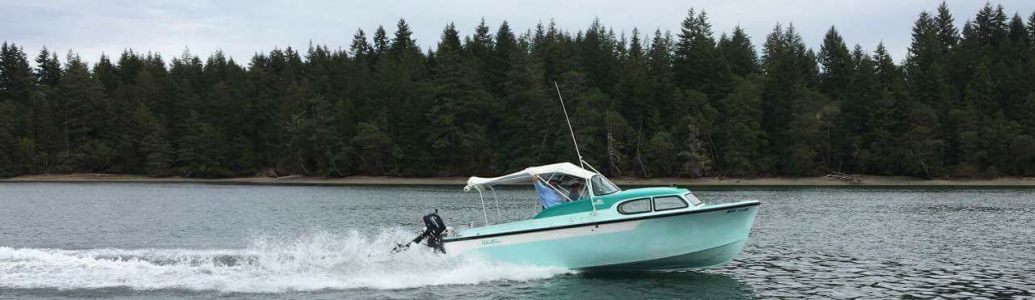


HAPPY AUTUMN AND JOYOUS BIRTHDAYWEEN, dear Reefers.
I’ve just returned from guiding my final Road Scholar outing of the season, a week of kayaking on perfect, sunny September days over calm, often-mirrorlike waters of the beautiful San Juans.
Not long after I returned to the Nuthatch last evening, rain poured down all night, happily reviving all the thirsty ferns and mosses, but I was barely done with breakfast when the sun broke through again this morning. Now I sit in Wee Nooke, my recently restained and spiffed-up cedar writing hut, basking in the warming sun shining in my windows as I munch a tasty sack lunch, feed kitty treats to the frequently visiting Galley Cat, and tap happily at my keyboard. Honestly, it’s kind of like Cantwell’s Camelot.
As for that greeting up top: The official time of the autumn equinox is 11:19 a.m. Pacific Daylight Time on Monday, September 22. Still some hours away, but what’s a few more fallen leaves among friends?
Birthdayween, you ask? That’s an invention of the delightful daughter, Lillian. Their birthday is next Saturday, September 27. Combining their birth month with their favorite holiday, Halloween, they long ago pronounced the entire months of September and October as the festive season of Birthdayween. It might explain why Halloween candy displays appear in stores in August; one must be ready to celebrate. Keep an eye peeled for Birthdayween greeting cards. I’m sure Hallmark will pick up on it soon.
Once again, Road Scholar has proven a good fit for me. More socialization is one of the aching needs of an old widower living with his cat on a remote island nobody’s heard of, and a week of intense togetherness with interesting (and interested) people from across the continent is like balm for my soul. Happily, these are typically well-educated folks not far from my age who are highly curious to learn about this beautiful archipelago where I live, and love to hear me tell about life on my little rock. I’m a storyteller in search of an audience. It’s a good symbiosis.
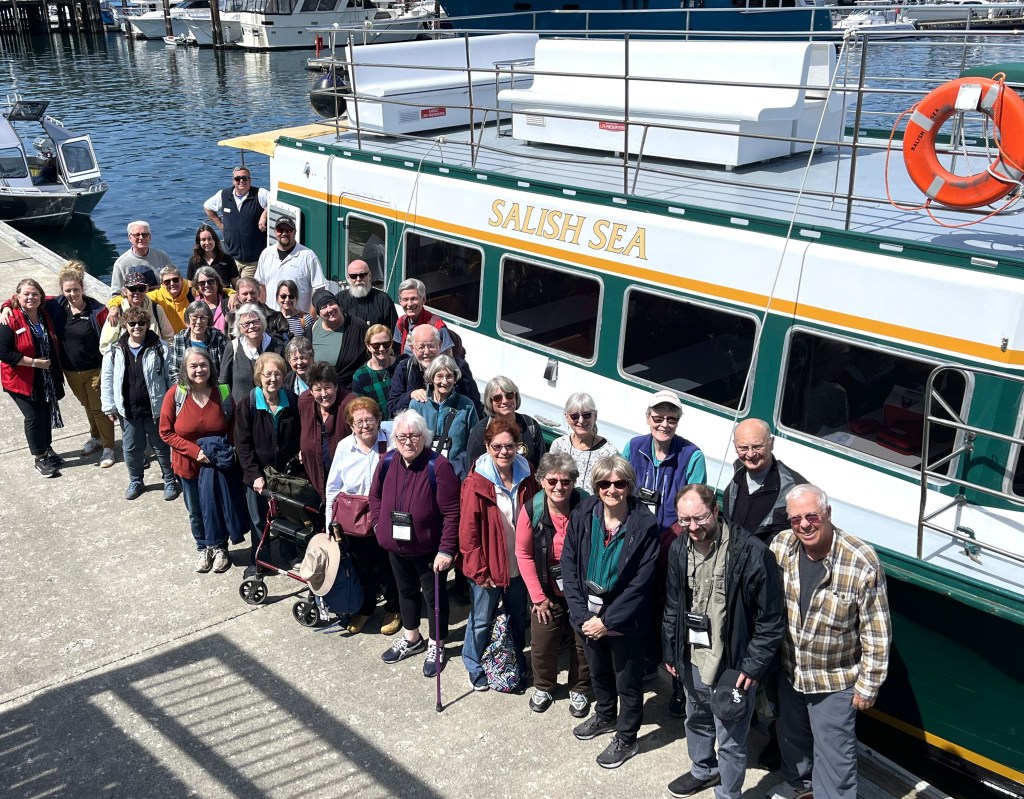
Every trip, I make new friends. This time it was Sue from a little island off the coast of Maine (a lot in common there); Nona, from Evanston, Illinois, where I went to grad school, who finished reading “Murdermobile” on her Kindle before our trip’s end; brave first-time paddler Lyn, from Wenatchee; Cheryl, a retired art teacher from Philly, and too many others to name here. All good folks. All new friends.
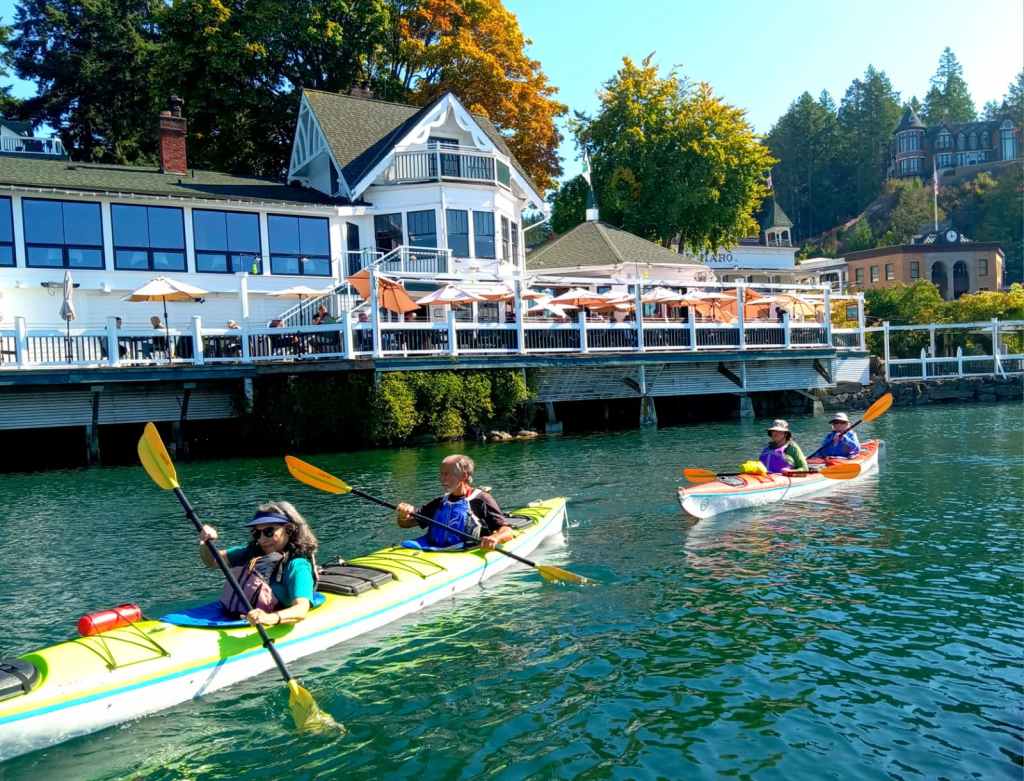
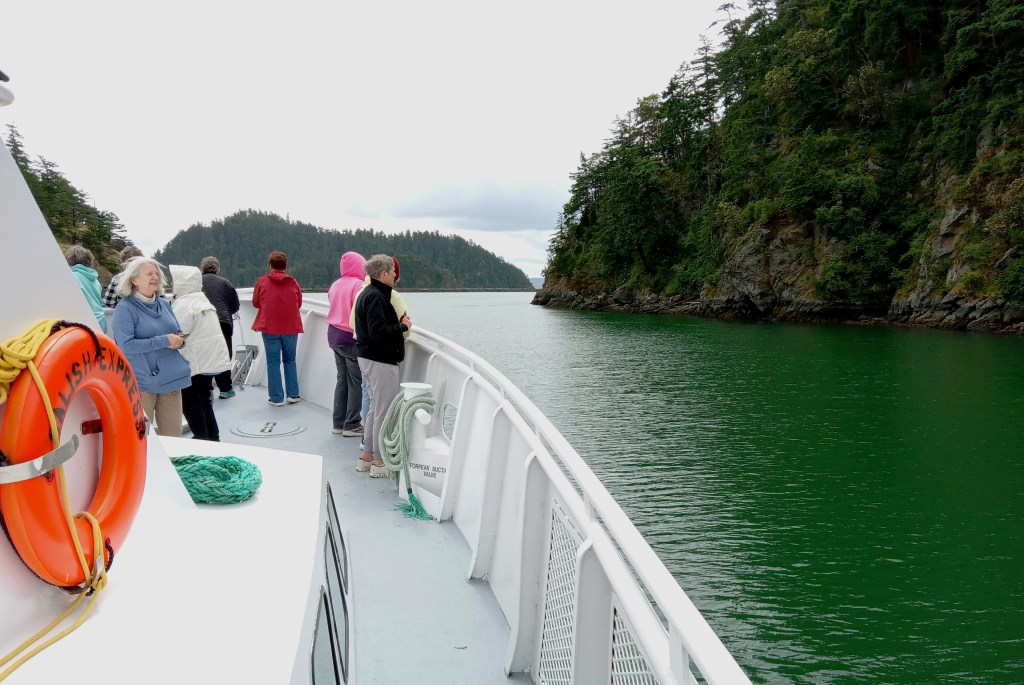
Together, we circumnavigated Burrows Island, near Anacortes; twice paddled out of Roche Harbor, including a peek at English Camp on Garrison Bay, and said hello to a crowd of basking harbor seals on rocks near Turn Island.

Among our land-based field trips was a fascinating tour of the University of Washington’s Friday Harbor Labs, where researchers just announced a breakthrough in finding the key to the wasting disease that wiped out most of the West Coast’s seastar population. The cause: a bacterium similar to that which causes cholera, we learned from Jason Hodin, a senior research scientist at the labs. Understanding the cause opens the door to new strategies for prevention and management of the disease.
The loss of seastars has involved far more than the aesthetic loss of the orange and purple stars that my family enjoyed spying in marina shallows when we lived on our sailboat on Puget Sound, I learned. Seastars feed on sea urchins, which feed on kelp. With the loss of seastars, unchecked urchins have decimated West Coast kelp forests, which provide crucial habitat for countless marine species. Hodin calls kelp forests “the rain forests of the ocean.” Their loss has been an ecological disaster. Thanks in part to work going on in the San Juan Islands, maybe there’s a chance to reverse that.
Meanwhile, friends, enjoy this colorful new season, and kick up your heels for Birthdayween. I know I’m going to party.




 Cantwell's Reef