Island energy provides a jump charge on days of woe

Boaters wave as they churn past my lunch spot on the cliffs at Lopez Island’s Shark Reef Sanctuary on Saturday.

A BIG PART OF MY ISLAND ADVENTURE and this ride you’ve all been on with me is how I’m adjusting to being here without my beloved wife of 41 years, whose corporeal life ended in the front room of Nuthatch cabin in the wee hours of last April Fool’s Day.

I’ve tried not to dwell on my grief too frequently in these lines, but it’s like the 800-pound mortician in the room.

I’m not a fan of solitary living, but I’ve come to realize that the quiet months I’ve had here, with few physical or emotional demands other than playing with my silly cat, have helped me start to come to terms with my wife’s death. It’s not a matter of healing from the devastation of Barbara’s loss. I’ll always feel that. But along with generous support from friends and loved ones, this quiet and lovely little island has allowed me to renew my energy to cope.

This past Thursday, February 10, was Barbara’s birthday. It was a rough week for daughter Lillian and me. Others who’ve lost life partners had warned me early on of the brutal challenge of “firsts” — first Thanksgiving without her, first Christmas without her, and so on. So, as we did with those holidays, Lil and I planned a special observance that would temper the sadness. Last Sunday, a few days in advance of her actual birthdate, we spent a day together that Barbara would have loved, experiencing some of the best of Seattle.

My daughter and I met at the new Northgate station and took light rail downtown. We grabbed coffees and enjoyed a long amble along the waterfront to the Seattle Art Museum’s sculpture park. After retracing our steps and exploring shops along the way, we lunched at Ivar’s Fish Bar. Barbara, whom I believe now has influence on these things, gave us a pristine, springlike day, so we sat at an outdoor table in the sun, watched ferries come and go, and fed french fries to the gulls. (It’s a longtime Seattle tradition, sanctioned by Ivar Haglund himself. No gulls were grievously harmed in the writing of this blog.)

After lunch, we ventured up the hill to the main galleries of Seattle Art Museum and toured a special exhibition of work by Imogen Cunningham, one of Barbara’s favorite photographers. Afterward, we snacked on luscious cannoli at DeLaurenti’s in the Pike Place Market.

It was a good day in honor of Barbara. However, come Thursday, as I was back on Center Island, her actual birthday weighed on me. Along with the approaching one-year anniversary of losing her good company, these particular firsts are forcing me to put aside denial. With melancholy reluctance, I’m fully recognizing this loss is forever.

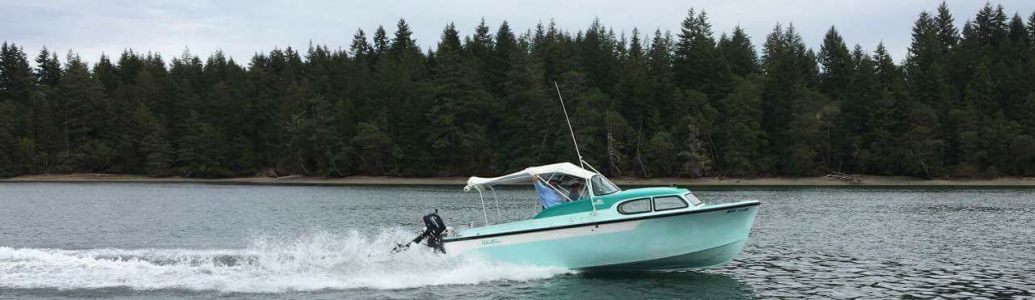
Friday, I finally got my boat, WeLike, back in the water after it had sat on its trailer since November, waiting out thrashing winter winds. Yesterday, with more sunshine to brighten my outlook, I motored over to Lopez Island. As a reward for starting on the first crank, Ranger Rick, my loyal Ford pickup, got a wipedown to remove accumulated bird droppings, and we toured the island. I sipped a strong brew and read my newest Dana Stabenow book on the deck at Isabel’s Espresso. Got a few groceries from the market. Then steered toward the trailhead at Shark Reef Sanctuary, the best place I know for restoring peace to the soul.

A sailboat ghosts past the Cattle Point Lighthouse on the southern tip of San Juan Island, as seen from Shark Reef Sanctuary.

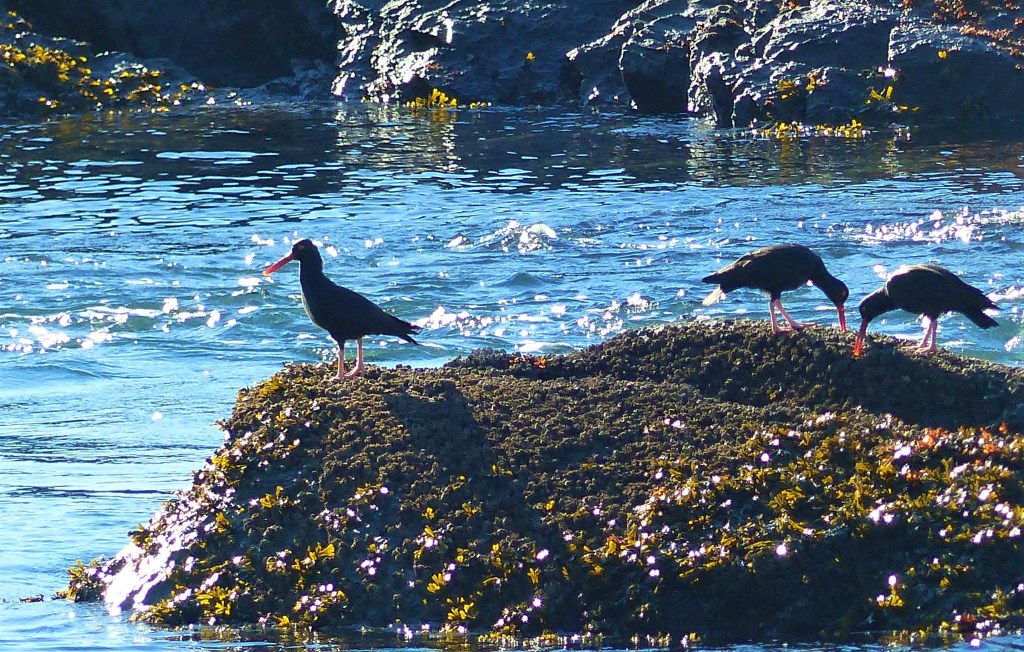
I had the mossy cliffs edging San Juan Channel all to myself, looking down at the rocky, kelp-pantalooned islets just offshore where sea lions and shorebirds abound. I munched a sack lunch and scanned the panorama, from sun-dappled swirling currents below Cattle Point Lighthouse, across the way on San Juan Island, to the snow-blanketed Olympic Range to the south, beyond the sprawling Strait of Juan de Fuca. I listened to an alto chorus of Black Oystercatchers gossip and squabble on the rocks. I waved to a passing powerboat, churning slowly against the tidal change. I let the peace seep in.

Black Oystercatchers love the kelp-carpeted rocks at Shark Reef.

Most days I smile, some days I weep. But I’m not despairing. Barbara wouldn’t want that. As long as I need to, I’ll take one day at a time. And this salty, soothing, serene place helps me recharge.

The foggy doldrums of San Juan-uary

Dense and bone-chilling fogs can descend on the San Juan Islands in January.

THE DOG DAYS OF AUGUST have got nothing on the doldrums of January on this mossy rock.

It’s hermit season in the San Juans. It has its advantages in terms of peace and quiet. Except when the visiting neighbor at the end of the road decided Saturday was a good day for target practice with his new pistol. A quiet single guy who has always kept to himself in the 18 years we’ve been here. I ambled down to gently inquire if all was OK. I told him I was concerned because I had never before heard rapid gunfire 500 feet from my home. He assured me he could “do any fucking thing he wanted to” on his private property. I didn’t dispute that while he held a gun in his hand.

Some hermits you give a wide berth.

But other island characters can warm your winter-chilled heart. A good example is Andrew, one of the regular skippers aboard the Paraclete, the water taxi I regularly ride between Center Island and Anacortes.

Andrew has a sunny disposition no matter the weather. A big fellow in his 20s with a thatch of dark hair above a quick smile, he always hails me with “Nice to see you, my brother!” And he always spares a warm greeting for Galley Cat, who rides in her soft-sided carrier alongside me.

Before a recent sailing, Andrew chatted with our small boatload of passengers about what’s new in his life. He was glad to have snow-free weather for a while because he commutes an hour to rural Whatcom County, where he lives with his parents. He often talks about people he knows from his church, so that’s obviously a big part of his life.

He said he might be getting married this summer (I suspect COVID is playing a role in the timing) and that a Whatcom farm neighbor who’s “maybe in her 70s” — yes, he knows her from church — has offered him and his intended the rental of an apartment recently created in the top of her barn. The farm woman is an independent, live-off-the-land type who has one cow and keeps two calves, butchering one a year and then breeding the cow again. She’s eager to pass along her sustainable agrarian knowledge to the younger generation and “that’s exactly what we want,” Andrew enthused.

That day chilly fog had never lifted from the islands. A fellow passenger asked Andrew if he was certified to pilot by radar. Yes, these guys will get you there.

But as we cruised out into Rosario Strait, a wide and busy waterway plied by oil tankers and towboats, the murk didn’t quite lower to water level. In an eerie scene, visibility was good at surface level but only about the bottom 50 feet of surrounding islands peered out from beneath the fog. It was like a ferry-sized barber clipper had given Decatur Island a cottony bowl cut. The San Juan uplands were taking the rest of the season off.

Now I sit in my cold writing shack, wearing half gloves while I type, nudging half-frozen toes closer to the radiator while I listen to k.d. lang’s lilting and soulful cover of Leonard Cohen’s “Hallelujah.” It perfectly complements my January mood.

Robert Burns, 1759-1796

But tomorrow things are looking up. I’m invited next door for a Burns Night supper at the home of John “The Mad Birder” and Carol Farnsworth. We’ll celebrate the birthday of Scottish poet Robert Burns, a shirttail relative of my dear late wife, Barbara Burns Cantwell. We’ll eat some good food. We’ll read a little poetry, and perhaps listen to an online Burns tribute by the Mad Birder’s former Ph.D. supervisor, Kathleen Jamie, the Makar (Poet Laureate) of Scotland. We’ll likely sip a little single malt in Barbara’s memory, and in Rabbie’s.

Sounds like the perfect close to January on this mossy rock.

Melting snow for the toilet, saving Annas, and other winter fun

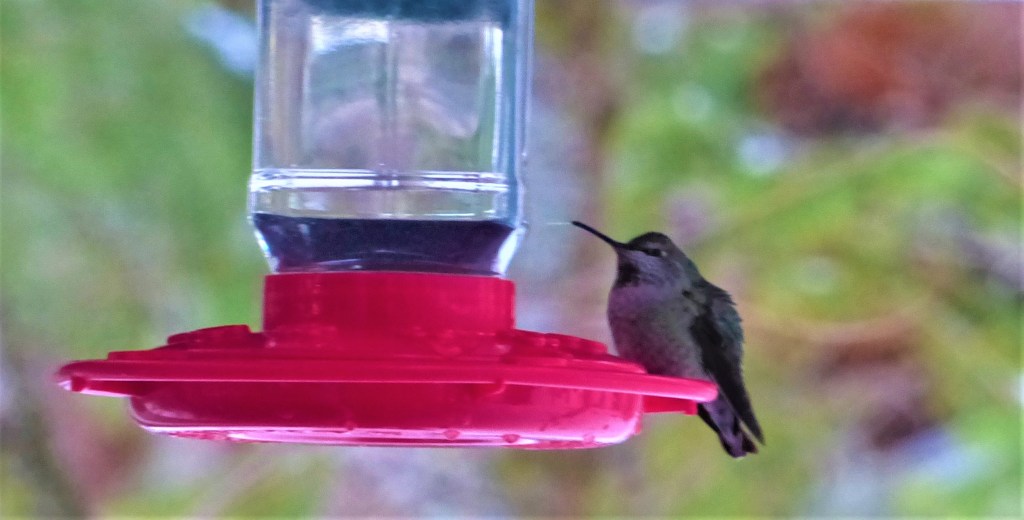
A well-chilled hummingbird returns to my feeder shortly after fresh, warm sugar-water replaced the solid block of ice last week.

IT’S 50 DEGREES FAHRENHEIT OUTSIDE, MY TOILET FLUSHES WITHOUT HAND-PRIMING and my hummingbird feeder isn’t freezing solid every few hours.

These are luxuries one comes to appreciate.

Last we visited, my neighbors’ pipes were iced up but all was well at the Nuthatch. However, on the coldest days I watched through my kitchen window as our overwintering Anna’s Hummingbirds were frustrated in efforts to find nourishment from the feeder that had turned to solid ice. My soft heart breaking, twice a day I brought in the feeder and replaced the ice with fresh, warm sugar-water.

But on the day before New Year’s Eve, the hummingbirds weren’t the only ones frozen out. After a wind-chilled week when outdoor temperatures topped out between 15 and 25 degrees, Center Island’s community water system succumbed to the shivers. Buried pipes and various other parts of our reverse-osmosis supply system froze up. In the space of a couple hours the output from my kitchen and bathroom faucets turned from a trickle to nothing.

Our water guru, Sean, confirmed via an email blast that the outage was island-wide. He offered an apologetic explanation that boiled down to this: The solution was up to the weather gods, not the water guru. We just needed warmth. Patience would be key.

Taking the “toilet tank is half full” view, there was good news: I had long ago stored two 5-gallon plastic jugs, filled with emergency water, on my back porch. I brought them inside to thaw. And somehow water was still flowing at our community clubhouse, about a half-mile from me. That blessing was mixed: As a caution against exhausting the water supply the caretaker had closed the shower and laundry room.

We also had a few inches of snow on the ground, which wasn’t melting. A good source of more emergency water, even if it needed to be boiled, I told myself. The blood of my homesteading pioneer ancestors surged through my veins.

But my South Dakota grandparents’ weary genetic material failed to remind me that when you fill a giant pasta pot with snow from the deck and melt it atop the woodstove, you end up with only about 2 inches of water in the bottom of the pot. Speckled with dirt and floating fir needles, it was good only for toilet flushing.

With a toilet that uses 1.6 gallons per flush, that didn’t accomplish anything fast. After a few melted potfuls I, uh, flushed away that strategy.

The long and short of it was that after four days of no showering, infrequent flushing and more than one trek across the island to refill my water jugs amid frigid winds gusting to 50 mph, I texted the water taxi, packed up Galley Cat and bugged out last Monday like a MASH unit fleeing advancing troops.

Here’s where good friends are a wonderful thing.

Lynn, a former Seattle Times colleague, and her husband, David, had earlier invited me to their Lopez Island vacation home for a brunch. With a little hint-dropping on my part and typical generosity from Lynn and David, that turned into an overnight visit, including two delightful hikes (the sun came out!) on beautiful Iceberg Point, with panoramic views of the wintry Olympics and thrashing waves off the Strait of Juan de Fuca. The gamboling accompaniment of their highly energetic Springer spaniel pup added joy.

The next day I drove Ranger Rick, my reliable teenaged pickup, to the far end of Lopez, parked in the 72-hour lot and toddled aboard the state ferry to Friday Harbor (fare-free for interisland walk-ons). I carried Galley in a soft-sided carrier slung over my shoulder, with all my cat supplies, clothes and other gear packed in a Rubbermaid tote strapped to a hand truck for easy rolling on and off the ferry. The kitty cat and I planned a couple nights with Barbara Marrett and Bill Watson, partners in my upcoming voyage up the Inside Passage to Alaska. We would further plan our 10-week itinerary, which begins Memorial Day weekend.

We buckled down and did a lot of studying of charts and guidebooks, filling out a detailed spreadsheet of where we hoped to visit. We also found time for hikes, a fun board game, good food and an evening binge-watch about Vikings invading medieval Britain.

Looking down from a wintry hike up Young Hill, in San Juan Island National Historical Park, as snow began to fall Wednesday on San Juan Island.

I had planned to return home Thursday. The National Weather Service predicted up to an inch of snow Wednesday night for Friday Harbor but with rapid warming and rain the next day. Didn’t sound like a problem.

We awakened Thursday to 5 inches of wet snow. Beautiful but not travel-friendly. My hosts kindly put me up another night.

Galley and I have been back at the Nuthatch since Friday. Glad to have hot showers and a flushing toilet. Still drinking bottled water until Sean gives the all-clear on the latest water-sample test, but that’s a mere hiccup among this feast of creature comforts.

Maybe it doesn’t hurt to be reminded of our good fortunes once in a while, whether we’re hummingbird or human. Stay warm, friends.

When the snow lay round about, deep and crisp and even

Madrona in the snow: Looking from Center Island toward Decatur Island during my morning walk.

OH, WE’RE HAVIN’ A HEAT WAVE, a tropical heat wave… Well, it got up to 25 degrees Fahrenheit today on Center Island. After a couple of days this week when the red stuff in the outdoor thermometer didn’t budge above 15, that’s saying something. Not much, but something.

Christmas arrived in the San Juans along with a blast of Siberian cold, snow and wind that hasn’t quite ended.

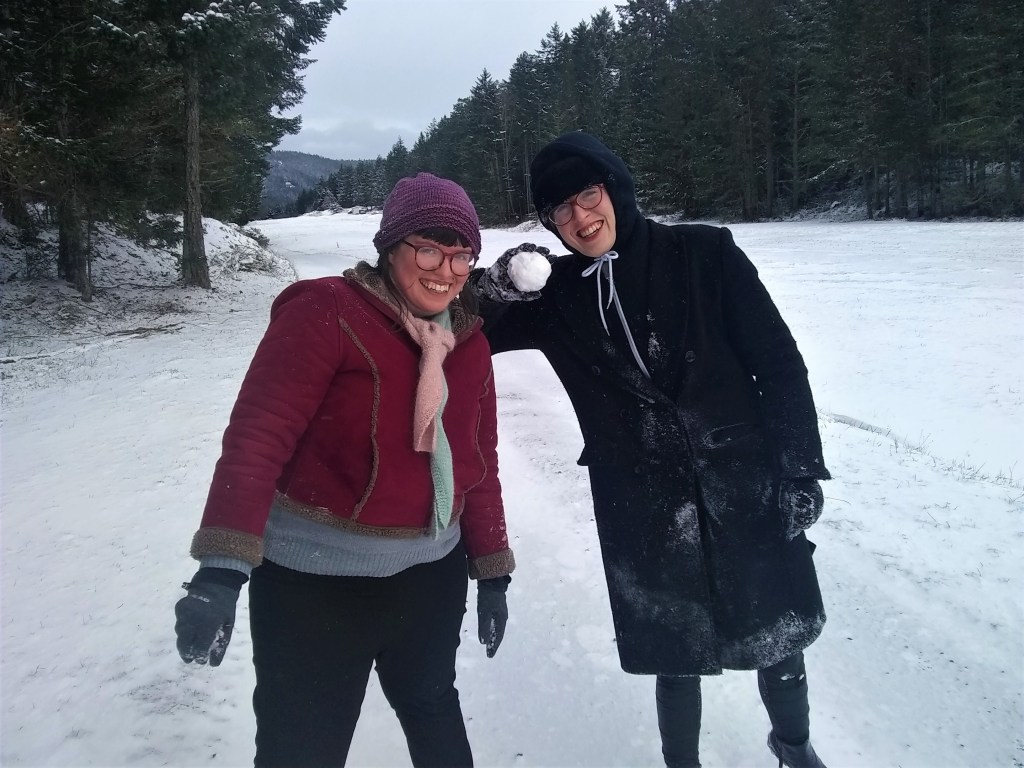
With all that in the forecast last week, daughter Lillian and I canceled our long-planned Christmas rendezvous with friends at the Washington coast. Instead, Lil and her friend Bianca, a former college roommate with whom she remains close, joined me at the Nuthatch for a quiet and cozy celebration with plenty of good food, mulled wine, games, puzzles and favorite old movies. We went caroling at the island farm (“Good King Wenceslas” was our forte) and had a snowball fight on the airfield.

Lillian, left, and friend Bianca on a snowy Feast of Stephen, also known as December 26.

We didn’t wake up to a white Christmas, but by evening the flakes were falling fast, allowing us to enjoy the magic of dimming lights inside the cabin and turning on outside lights above the front wall of windows to experience a mesmerizing eyeful of what I call “Snow Theater.”

Thoughtful friends and family remembered me with many cards and gifts. It was a good Christmas, but as many surmised, it wasn’t easy without my sweet wife and Lillian’s dear mum. Christmas was Barbara’s favorite time of year. We did our best to honor the standard she set and replicate the joy she brought to it. Of course it wasn’t the same, but it was the best way to show our love.

Tracks in the snow told who’d been there before me, whether two-legged or four.

Monday I braved snowy highways to return Lillian and Bianca to Seattle. I returned via water taxi to my island on Tuesday to learn that many neighbors had frozen pipes. (Mine are OK.)

This morning dawned quiet and sunny. Winds were light, the air remained frigid and the snow wasn’t melting. A perfect morning to bundle up for an invigorating tramp around the island with my camera. It was fun to try to read prints in the snow. Was that a deer crossing the road? A fox treading the path behind my knoll?

The continuing cold has helped quash a planned visit by friends for the New Year’s holiday. So Galley Cat and I will be partying alone as we welcome 2022. For me, the year to come holds the adventure of a 10-week voyage with some other chums on a 37-foot powerboat up the Inside Passage to Alaska, and the hope that we might all be able to resume safe travels to faraway places, one of my joys in life. For Galley, there’s probably hope for more runs up the knoll. Maybe better-quality kitty tuna. Her needs are simple. I think we can work on that.

Whatever your wishes, here’s hoping.

At least it wasn’t a skunk

A fire blazes once more in the Nuthatch cabin’s woodstove Saturday night after a marathon cleanup effort.

THE SKITTERING IN MY CHIMNEY stopped midday Thursday. Friday night was cold. I lit a fire. The cabin filled with smoke.

It wasn’t good.

Whatever got into my chimney, and apparently went to its maker there, was now blocking it. Not a tiny bird, I guessed. A squirrel? A hundred bats? Damn.

Saturday was a marathon day of chimney surgery at the Nuthatch. I decided to attack the problem from the inside flue, dreading what I might find.

First I removed every treasured artifact from the mantel. The wedding photos. The ship in a bottle that my brother-in-law Roly constructed. The framed pearl from my father-in-law’s Hood Canal oyster beach. The New Guinea penis gourd from my sister-in-law Ann. All the good stuff.

Moved the wicker chairs to the far side of the room. Draped the furniture with sheets. Tacked a tarp to the wall around the woodstove and spread another across the floor. Soot can go everywhere.

Then I pulled on a white head-to-toe Tyvek painting suit, grabbed my toolchest, a respirator mask and safety glasses from the shed, strapped on my headlamp and commenced peering at the chimney’s every seam and joint to figure out how to open it up.

There were no screws holding the three sections together, just tapered ends fitting snugly into one another. I tried lifting up. I tried pushing down. No budging.

So I did what every home-maintenance wizard does. I checked YouTube.

No luck. All the online chimneys featured screws you could remove, or sliding extensions. Not what I had.

Stymied in my plan to disassemble the flue, I decided to poke and prod from inside the stove. Breathing like an astronaut, with the respirator covering my face, I discovered that the baffles at the top of the fire chamber were backed by bricks that moved when I poked them. Aha!

Fine black soot spilled from above as I moved the bricks. I was able to lift one out and open a clear passage to the chimney. More soot cascaded down. And my headlamp’s beam fell on a small gray lump wedged in one of the baffles. A lump with feathers. A sooty, lifeless sparrow.

I reached in with a gloved hand and gently pulled the limp bird from its trap. It wasn’t big. I don’t see how that small body alone would have blocked the smoke. But maybe its death struggles, all that skittering, had dislodged enough soot to clog the baffles.

With a sense of melancholy relief, I shook the soot and ash from atop each fire brick, replaced them carefully and shoveled the debris from the floor of the stove.

It took hours to get my front room stripped of its protective garments and reassembled as it was. I mixed cinnamon, cloves and orange extract in water and simmered it on the stove all afternoon to purge the cabin’s smoky smell. I buried the bird outside among soggy fallen maple leaves next to the stump looked over by Trudy, the cement garden bunny that came with us from our Bremerton home.

No squirrel, no skunk. No cloud of bats. Just a lonely sparrow who made a bad choice and complicated my Saturday. Sad to think of how its life ended. Rest in peace, you poor, dumb little bird.

The creature in my chimney

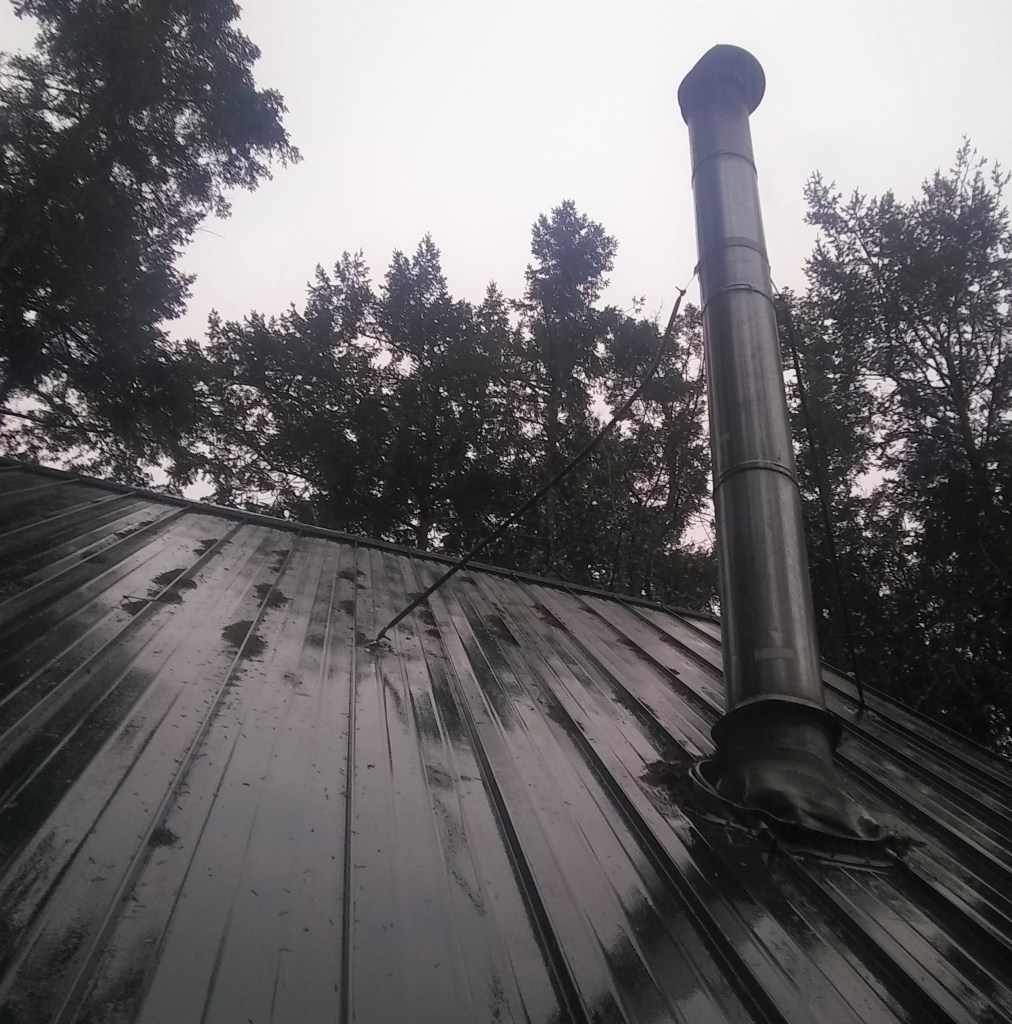
The Nuthatch’s galvanized metal chimney soars high into the air. Could any critter climb it?

FOR THREE DAYS, I’VE NOT BUILT A FIRE in my woodstove. For three days, something’s been living in my chimney.

It’s not good.

I was up in the loft on Tuesday, napping maybe, when first I heard it. A sort of metallic skittering noise. Without looking, I blamed Galley Cat, who was down in the front room. I lamely hollered a protest that she should stop scratching whatever new furnishing she’d found on which to sharpen her claws.

But when I was downstairs fixing dinner the noise came again. Galley, at my feet, gave me one of those sideways looks reserved for the righteously indignant. “Not me, see?”

No, I quickly ascertained. The skittering noise was clearly coming from inside the metal chimney rising above my woodstove.

“What the hell?” I muttered. Mice, I first wondered? I’m in a cabin in the woods. I wage battles to keep mice out. I’ve been victorious in that effort for many months now. I have a whole drawer full of anti-mice devices and mice-fighting aids, some not as nice as others. When something goes skitter in the night, mice leap to my mind.

But no, this was coming from inside a distinctly smooth and vertical metal cylinder, part of a closed system whose only opening is some 25 feet in the air, high above my roof. Mice can climb walls, but can they climb smooth metal surfaces? Would they want to? Seems unlikely.

A bird must have flown down the chimney, I decided. Probably some hapless little chickadee that happened to land at the top and perhaps found that the conical cap gave shelter from the wind and rain. Maybe the chimney was still warm from a recent fire. Might have been inviting.

Surely the top of that chimney is screened, though, I told myself. Yes, my cynical other self responded, it was probably screened 20 years ago, but rust and heat have their way with metal, you know?

The skittering noise came and went over the next three days. I reasoned that the little bird had fallen in to the chimney’s narrowest lower section. About eight feet of pipe, some 8 inches in diameter, rises above the stove before transiting the ceiling. The poor thing likely had insufficient room to flap its wings to fly back up to the top.

Could I free it somehow? I peered inside the stove and saw a series of perforated metal baffles between the fire chamber and the chimney. No access. An examination of the pipe above the stove revealed no obvious way to open it up. And, in any case, the specter of a frightened, frantic, soot-caked songbird swooping around inside my home wasn’t high on my “fun” list.

I stepped outside to see how the chimney was attached to the roof. A circle of at least two dozen bolts circled its base. I’ve been meaning to replace that upper chimney, which had been damaged by a fallen tree a decade ago, its cap dented and a supporting strut bent. But it would require opening the metal roof as with a can opener, a task suited only to a summer week without rain, not the middle of the wettest November on record.

Though we were experiencing our coldest nights of the season, I resolved not to build a fire until well after the noise had stopped, meaning either that the bird had escaped or, sadly, expired. Letting it die on its own, and at its own hand, if you will, was surely ethically better than subjecting it to death by smoke inhalation or, worse yet, roasting?

My brother called from sunny Arizona. As I related my problem, he asked if it might not be a squirrel building a nest in there. I shuddered at the thought. A dead bird wouldn’t smell much, or block the flue. But a squirrel?

I tried to put that fear aside, however. I’ve seen squirrels climb straight up tree trunks, but surely even they couldn’t climb the exterior chimney’s sheer galvanized surface. It’s way up in the air, well out of jumping distance. Building codes generally require that chimneys be two feet higher than any part of the roof that is within 10 feet of the chimney. On my high, sharply sloping roof, that makes for a very tall chimney.

In ensuing days, as I’ve sat in my big wicker chair watching a video or working a crossword, not six feet from the woodstove and that recurrent skittering, I’ve had plenty of time to get paranoid about it. Whatever is in there, why have I heard no cries of anguish? No twittering, no squeaking. It’s not nest-building season, but what if something is building a nest in there? It hasn’t complained because it has been happily coming and going from the top of my chimney, thinking, “All right! How cozy is this?

The thought seized my fevered brain. I leaped up and dashed outside in my robe this morning and stood for 10 minutes craning my neck to peer at the chimney’s peak to see if any industrious critter was popping in and out.

Nope.

This afternoon, the skittering seems to be on the wane. I feel bad about it. But I’m just hoping that whatever expires in there is small enough that it won’t stop me from building a warming fire when I need it. We’re talking about life and death in the wild woods.

Please don’t let it be a raccoon.

I was only ever a Cub Scout, but ‘Be Prepared’ is my new motto

Mr. Toad, named for the road-terror hero of “Wind in the Willows,” ferried rounds of fir from a wind-downed tree on Tuesday.

SOMEBODY COINED THE TERM ‘CAR-WASH RAIN’ and the description was apt. Drumbeats on the roof. Sheets of water down the windows. It was like being in a dimly lit tunnel from which you could barely see out. Like a drive-through car wash.

But this wash and waxing wasn’t over in three minutes. The “atmospheric river,” or Pineapple Express, or whatever label the KOMO Weather Woman affixed on the latest low-pressure tantrum to blast Washingtonians with its Super Soaker, started the drenching Sunday afternoon and didn’t let up for the better part of 24 hours by my clock.

I’m a little fuzzy on the timing because for the latter part of that storm most of the Nuthatch’s clocks weren’t working.

Oh, I forgot to mention the Monday winds, gusting to 60 mph, that blew down trees and doused electricity to our island and several others in the San Juans.

Shortly after my power went out and clocks went dark at 1:23 p.m., Orcas Power and Light Cooperative, which electrifies all the San Juans, emailed me to let me know my power had gone out at 1:23 p.m. I thought it very efficient of them. Maybe I hadn’t noticed all the lights go off, the Internet go down, the heater fan stop and fridge go silent. Of course, I didn’t get the email until after my Internet came back on hours later.

Actually, I was the first Center Islander to report the power failure to OPALCO’s outage line. The phone is the first thing I reach for when things go dark. They can’t fix it if they don’t know about it, right? While our island’s utility wires are underground, our power comes via an underwater cable that originates in Anacortes and first crosses Decatur Island, where lines are on poles and subject to falling trees.

After phoning, my second move was to refill my indoor firewood rack and kindle a blaze in the woodstove. With my electric heat pump no longer magically pulling warmth from the howling winds outside, the cabin would quickly chill.

My next thought: Last time the power failed, in a storm last January, it stayed off for 18 hours. Long enough for the fridge to warm and the freezer full of food to start thawing.

So I stepped out to the shed and hauled out the gas-powered portable generator that got its first tryout in January. While I had already given it a pre-winter test run a couple weeks ago, I hadn’t refilled the gas tank. The good news: I knew I had a spare 5-gallon jug of gasoline. The other news: Said gas jug was aboard my boat, on the other side of the island.

Now, one thing I’ve learned in my long years on this planet and in my few years on this island is that it’s not a great idea to go out in a raging windstorm. The quick lesson on that comes from the loud thunks every few minutes on my metal roof as branches fall. Usually they are small branches. Sometimes they are not small. And they come down fast.

But I had Mr. Toad, the Cantwell golf cart, sporting a brand-new, $1,000 set of six 6-volt batteries installed just days earlier. (Timing can be everything.) Mr. Toad features a hardtop roof, strong enough to protect the noggin from most plummeting limbs. Happily, the pouring rain had ceased and sunshine was lighting up the wildly waving trees. What Mr. Toad lacks is doors. In rain, the going can be wet.

In the calm after the storm, the Nuthatch’s firewood rack gets refilled with wind-downed fir.

The wind-buffeted sojourn was without incident. Once I’d topped off the generator’s tank, the daylight was fading. I wouldn’t fire up the noisy, smelly generator just yet; the fridge would be fine for a while yet. But the lights had been out for hours and OPALCO’s recorded info line offered no estimated time of repair. My next thought was: What did I not want to be looking for in the dark? I dug out my battery-powered mountaineering headlamp, lost in the depths of my knapsack when last I’d wanted it. Then I distributed emergency candles strategically around the cabin, placed a lighter nearby, and retrieved my propane camping stove from the shelf high above the washing machine. (Note to self: The bamboo clothes hamper is not designed to support a 170 pound human, if that cracking sound was any indication.)

Things were getting decidedly dim in the cabin by 4:30. I pulled some bratwurst from the freezer to thaw, since I couldn’t rely on the microwave for defrosting. Then, having done all I could to prepare for the night, I decided to take my pre-dinner nap earlier than usual. (It’s called being retired. One of the better perks.) I had a good book to read, but I wanted to keep that for the potentially long evening, free of Netflix, music, the New York Times app and other electricity-dependent entertainment.

It was pitch dark outside when I awoke. Through its smoke-smudged glass, the woodstove’s low fire cast just a flicker of light on the cabin walls. I added fresh wood. Back in the kitchen, with candles lit and the ceiling flooded with light from a lithium-powered emergency automobile beacon (another treasure discovered while spelunking in my knapsack), I was just gathering items for dinner prep and about to ignite the campstove when the fridge suddenly hummed. And lights flashed on.

OPALCO, ever efficient, emailed me that my power was restored at 5:35:19 p.m. Well done, repair crews. Just in time for dinner. I was back in the 21st century. In 10 minutes, candles and stove were stowed and the microwave was doing its thing.

Today, the payoff for all that angst: A big Douglas fir had blown down across my road a few lots away from mine. The island’s caretaker cut it into big segments and cleared the way. Knowing I was on the lookout for firewood, he alerted me. (My woodshed is full, but my outdoor rack was empty.) By 10 this calm and sunny morning, I was there with my chainsaw. By early afternoon my drying rack was full of 10- to 16-inch rounds. It will keep me busy all winter splitting wood, my favorite therapy. By March, the fir might be burnable. Or at least I’ll have a jump on next fall.

Like a Boy Scout, I’m getting better at being prepared. It’s what you do when you live on a remote little island nobody’s heard of, amid nature red in tooth and claw. Or when it blows like stink.

50 words for rain on the roof?

Fallen leaves marinate in the rainwater pooling on the Nuthatch’s deck rail this morning.

CAN YOU HAVE AN URBAN MYTH about the Arctic bush? When does it become a Rural Myth?

The myth I’m thinking of is the one about Eskimos or Inuits having 50 words for “snow.” Or is it 500? Is it, in fact, just a myth?

I swerved back and forth over this fogline of thought early this morning as I lay in bed after a long night of rain.

The Nuthatch has a metal roof. Practical and durable for a wet climate. Safer than wood shakes in the summer fire season. It happens that my bed in the loft is situated such that my head is right up against the inside of that roof, with only some knotty pine, a bit of insulation and a veneer of plywood and tar paper intervening. So when it rains, I hear it.

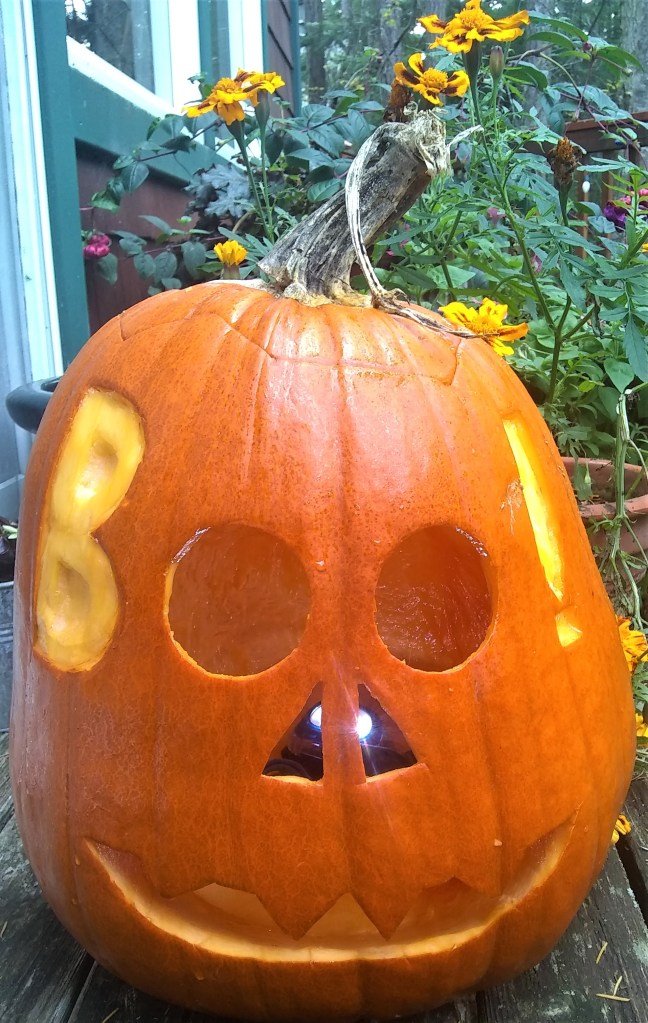
Here’s the jack o’lantern I carved on Wednesday, before the rains. Good news in the forecast: Sunday is supposed to be dry and warm. Happy Halloween!

Usually, it’s soothing. Last night, it was pretty damn loud.

As my Pacific Northwest neighbors know, we’re having a soggy week, and it’s not over yet. For the Seattle suburbs, the National Weather Service forecasts up to 2 inches of rain tonight. There’s a flood watch in effect. Even my rain-shadowy San Juans could get another inch in the next 18 hours, they say. Normally, this corner of the continent is the drizzle capital of North America.

Last night on Center Island I heard the rain start in the wee hours and continue until I arose around 7:15. For hours on end water seemed to spray from a great firehose in the sky.

As I lay in that limbo zone between groggy sleep and hoping that Galley Cat would finally get up first and make the coffee, I came up with this list of terms for rain on my roof, based on the sound effect.

POUNDING: This is a new one I invented last night. Been to the symphony? Know what tympani are? It wasn’t a good night’s rest. Thankfully rare, though with climate change, who knows.

DRUMMING: This term is more common, denoting steady precip. Familiar in poetry and song. Think “Little Drummer Boy” and “rum-pum-pum-pum.” We get it now and then.

PATTERING: Here’s where I’m lulled to pleasant sleep, with the satisfying feeling of being safe and warm inside my cozy cabin. The trees and moss outside are finally getting the moisture they need. Common here in spring and autumn when the forecast calls for those ubiquitous “showers.”

DRIPPING: See “Pattering,” just not so definitive. The preamble, perhaps. A nagging reminder to clean the gutters, which filled with fallen leaves and fir needles in Tuesday’s big wind storm.

OK, four isn’t fifty. It’s a work in progress. But the rainy season has only just begun.

There and back again: Walla Walla wanderings and a heartwarming return

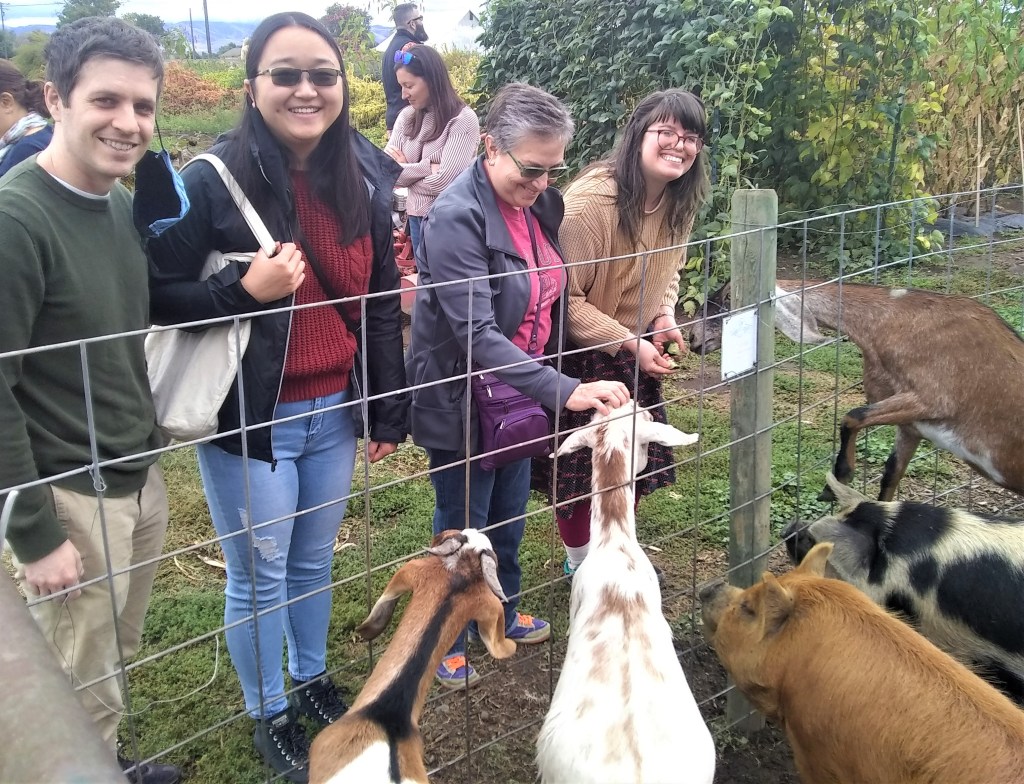
Feeding hungry goats (and a couple of hopeful pigs) at Walla Walla’s Frog Hollow Farm. From left, Kevin, Stevie, Patti and Lillian.

SOMETIMES THE BEST WAY TO APPRECIATE my small island is to get off it for a few days.

Spending four recent days with daughter Lillian visiting friends in Walla Walla was a wonderful getaway.

Our longtime sailing friend, Patti Lennartson, her daughter, Stevie, and Stevie’s partner, Kevin, were our hosts in the land of dry wine and sweet onions.

It included a visit to delightful Frog Hollow Farm, bordering the Walla Walla River southwest of town, where acres of organic produce is offered on a you-pick basis, including their specialty, row after row of heirloom tomatoes of many shapes and colors, from red to orange to purple. The you-pick price: a wallet-pleasing $1.50 a pound for anything in the field.

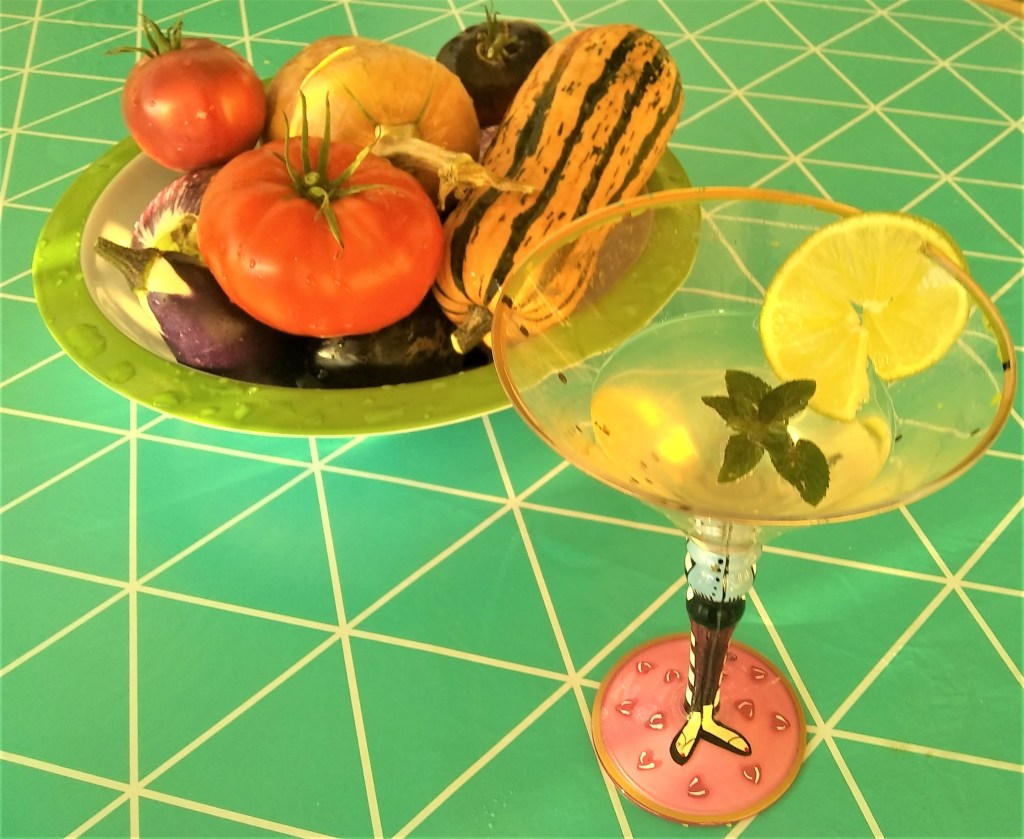
A well-sipped mojito, and pre-dinner produce from Frog Hollow.

We left with bagfuls of tomatoes, butternut and delicata squash, eggplant, kale, and fresh herbs. Most of it went into our dinner that evening, all grilled outside and served alongside fresh wild-caught coho salmon. Our pre-dinner happy hour featured tortilla chips and homemade guacamole washed down with mojitos custom-made by Kevin, a former bartender, using fresh-picked mint from the farm.

Once again, when spending time with good friends, we failed to starve.

On the road home, with sunshine and moderate temperatures, Lil and I chose to take the scenic route over 5,430-foot Chinook Pass, inspired by my old friend and newspaper colleague Gregg Herrington’s recent AAA magazine article touting the appeals of the various Cascade passes.

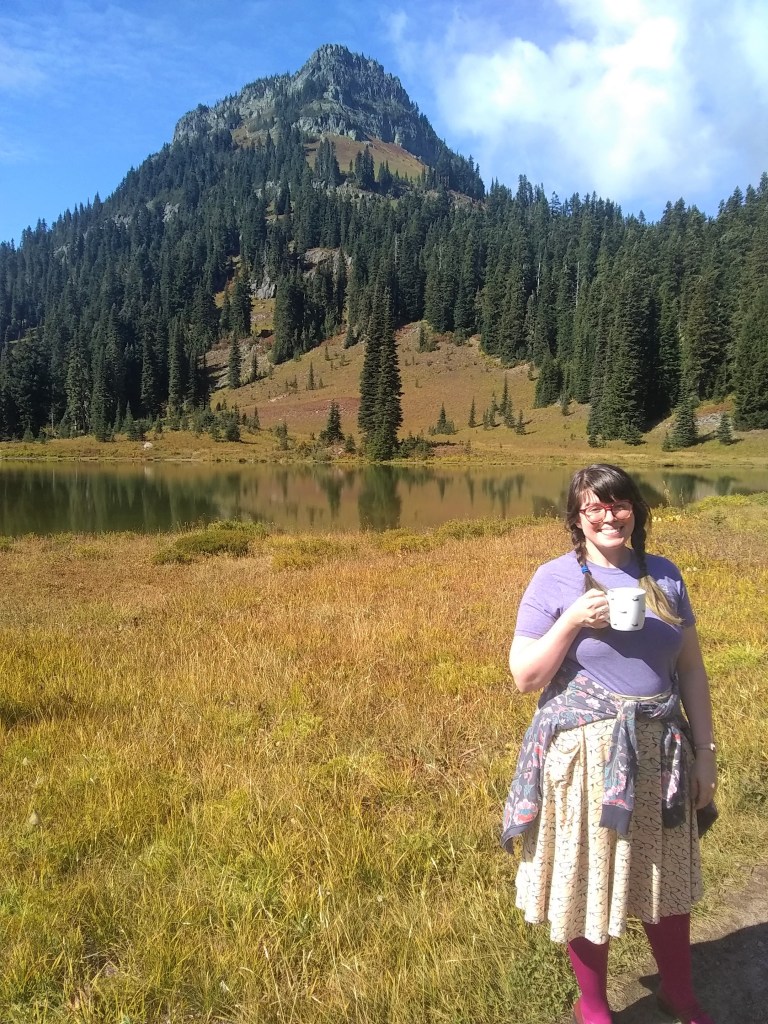
Lillian at Tipsoo Lake, Chinook Pass.

Mid-September traffic was happily sparse. We munched a picnic lunch at uncrowded Tipsoo Lake in Mount Rainier National Park, then walked around the lake as the mountain played peekaboo through clouds. Along the way, we nibbled sweet blue huckleberries and hyperventilated over the intoxicating perfume of the alpine firs, one of the iconic joys of the Pacific Northwest.

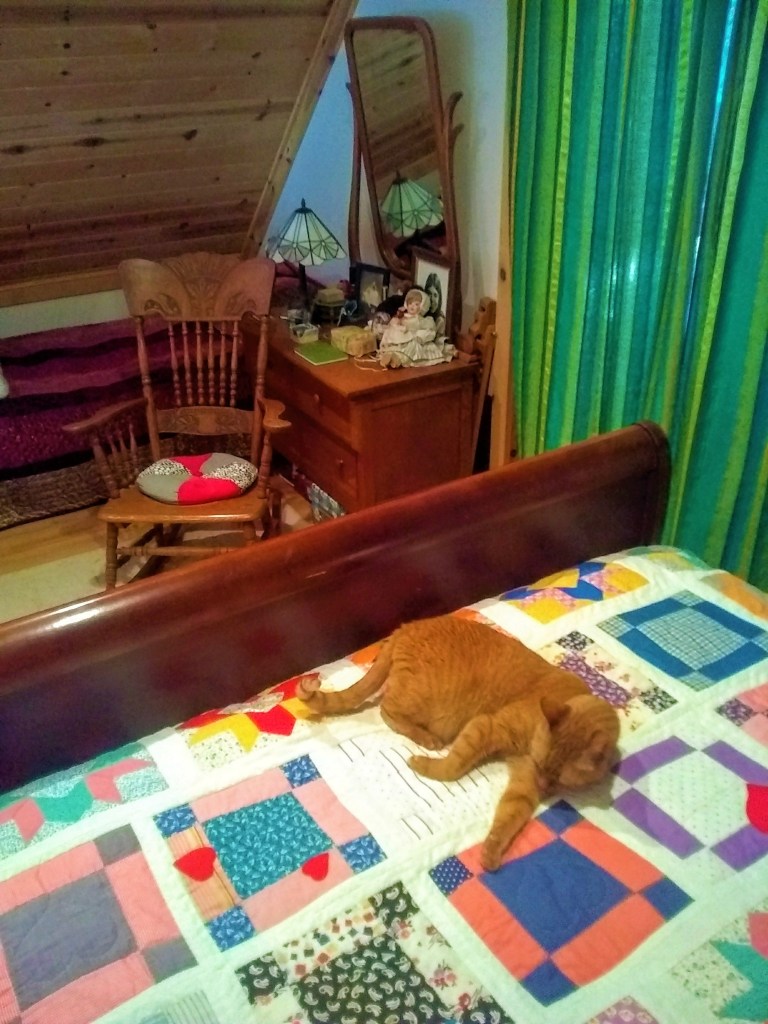
Home again at the Nuthatch, I pulled the bedspread off my bed and replaced it with a quilt sent home with me by friend Patti, former president of the Walla Walla Valley Quilt Guild. Years ago, my mother had bestowed on my late wife, Barbara, a stack of colorful quilt squares that her mother, my Grandmother Sadie Archer, had sewn but never put together into a quilt before her untimely death caused by a heart condition in the early 1920s.

Barbara was not an experienced quilter. Patti was. So good friend Patti ultimately took on the project, hoping to present a finished quilt to Barbara before cancer took my dear wife’s life. Like many hopes, that one didn’t quite come true.

But now I’m the recipient of this beautiful piece of handwork, based on 100-year-old quilt squares sewn by a grandmother I never knew: a school teacher who on her own, as a single woman, homesteaded a parcel of South Dakota prairie before marrying my grandfather. It’s a perfect addition to the loft of the Nuthatch, already furnished with an antique rocking chair and a rustic lowboy dresser that belonged to Grandma Sadie.

Galley Cat enjoys the new bedspread sewn with 100-year-old quilt squares. In the background, Grandmother Sadie’s rocker and dresser.

I sense with certainty that, in spirit, my mother and wife both are looking on with big smiles. In these rapidly cooling first days of autumn, that quilt sewn by a friend’s loving hand warms my return to the island.

Embracing the hush after summer’s rush

The deck garden at Nuthatch Cabin is finally blossoming at full throttle just in time for fall. Late blooming is part of living in the island woods, where sunshine is filtered and marine breezes keep us cool.

IT IS SUDDENLY VERY QUIET on Center Island.

This is not a bad thing.

Two days after Labor Day, big yellow maple leaves are drifting to the ground. Apples on the gnarled tree by the clubhouse are blushing red. My deck garden is at its blooming peak.

As I caught the water taxi from Anacortes back to the island yesterday after a Labor Day retreat on the Washington coast, I passed a couple of neighbors carting luggage up the dock as they departed for their winter abode in South Carolina. Another neighbor couple has a snowbird refuge on the Gulf Coast of Texas.

Not me. I love the autumn months here. Peaceful and pleasant. After countless happy families came on countless vacations to Center Island, featuring boats of every size jockeying local waters to catch toothsome crab and shrimp, suddenly there’s ample dock space. Crystal-clear days mix with morning showers that bring the forest moss back to its fulsome fullness, rivaling the 1970s emerald-green shag carpet I had in my Bellevue bedroom when I was 14. (I actually bought the rug with my paper-route money. Weird kid.)

As at mainland golf courses and swimming clubs, Labor Day is the last social occasion of the summer on Center Island. There’s always a salmon barbecue at the clubhouse. People play pickleball. Hermits that we’ve always been, Barbara and I customarily entertained visitors at our own cabin, on the island’s far side from the frivolity.

This year, daughter Lillian and I journeyed to the ocean beach for a delightful Labor Day rendezvous with old friends, Deborah Willoughby and her kids, Jay and Clara, from Vancouver, Wash. These “kids” all spent their early years together, when I worked at The Columbian newspaper along with Jay and Clara’s parents. This year, Lillian and Jay both turn 30.

On the foggy beach at Seaview, we were drawn to a hand-engineered driftwood version of, um, Stonehenge? But the murk made it hard to tell if it could be used to tell time. From left, Clara Willoughby, Lillian Cantwell and Deborah Willoughby.

We spent a couple nights at the funky-licious (not a term I’d normally employ when clean and sober, but I can’t think of a better descriptor for this place) Sou’wester Historic Lodge and Vintage Travel Trailer Resort, in Seaview on Washington’s Long Beach Peninsula.

OK, how would you describe a place that rents nights in dozens of streamlined, slightly down-at-the-heels caravans that look like what Lucy and Desi pulled in “The Long, Long Trailer”? And shows short films in an old school bus, features a library of VHS movie tapes and vinyl LPs in the lodge lobby, offers do-it-yourself tea service in a bug-size trailer called the QT, and regularly hosts indie musicians and traveling artists? All within a short walk of the Pacific beach?

We prepared dinners on a 1950s push-button General Electric range. We played card games. We walked miles on the foggy beach. We ate brownies and sipped wine on the lodge’s slightly mossy balcony while listening to an outdoor concert by an earnest, lovelorn musician from Santa Cruz. We toasted Barbara, to whose memory the weekend was dedicated. She loved the beach.

Long Beach’s saucy celeb

The getaway concluded with arcade games, bakery pastries, saltwater taffy shopping, wildly zigging go-kart rides, and the requisite stop to pay homage to Jake the Alligator Man at Marsh’s Free Museum in the town of Long Beach. In the Olympics of American kitsch, we’re talking a 10, even from the Oklahoman judge.

Back home, this morning I awoke to the drool of drizzle on the Nuthatch’s metal roof. I trekked across the island and ran a load of wash at the clubhouse. This afternoon, the sun is blazing warm and I’m sipping peppermint tea and listening to Jack Johnson as a soft breeze tickles its way into the open windows of Wee Nooke, my writing hut on the rocky knoll. Galley Cat wanders in and out for a kitty treat every 10 minutes.

You take Carolina or Texas. It’s a quiet September in the San Juans, and I’m so there.