The San Juans pivot from Dog Days to delight

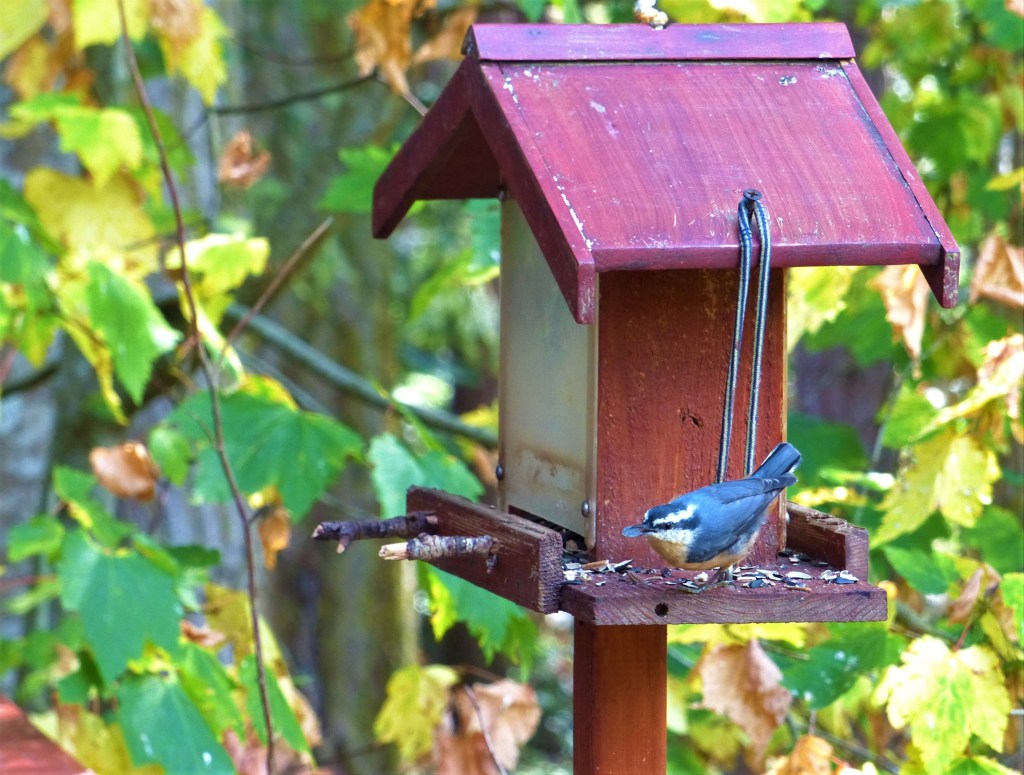
A Red-breasted Nuthatch grabs a sunflower seed from the feeder outside Nuthatch Cabin, where maple leaves are already turning yellow as the season progresses.

IT’S BEEN A PRETTY PERFECT AUTUMN DAY on Center Island, which feels odd considering it’s the middle of August.

If you’d asked me three days ago I’d have told you it was definitely the Dog Days, though Galley Cat doesn’t much cotton to that terminology. It was hot, seemingly airless and — thanks to wildfires in British Columbia — smoky. From my deck, the setting sun blazed crimson as it dipped below Lopez Island.

But today we’ve definitely had what my late Aussie-raised spouse used to call a cool change: Highs in the 60s rather than the upper 80s. There was a distinct rumor of (dare I speak its name?) fall as a goosebumpy breeze murmured through the leaves of the big Douglas maple that grows out of the rock on which Nuthatch Cabin perches.

Autumnal, also, because that maple’s leaves are already turning yellow and starting to drop, though that seems more a symptom of rain deprivation, I’d say from years of observation. Last summer, wet by San Juan standards, the tree stayed green until around the September equinox.

In any case, this day has felt pretty blissful. Gray and chilly at first, it was a good morning for staying inside and treating Sunday like a proper day of rest. In my case that meant having a scrambled egg on avocado toast with my second cup of coffee while watching the Christmas episode of the PBS Masterpiece Mystery series “Grantchester” (a great binge watch if you’re into British vicar-turned-sleuth themes).

Later, telephoning a Walla Walla friend, I wished I could share some of the island freshness. There, wildfire smoke was causing abysmal air quality and the temperature was 102.
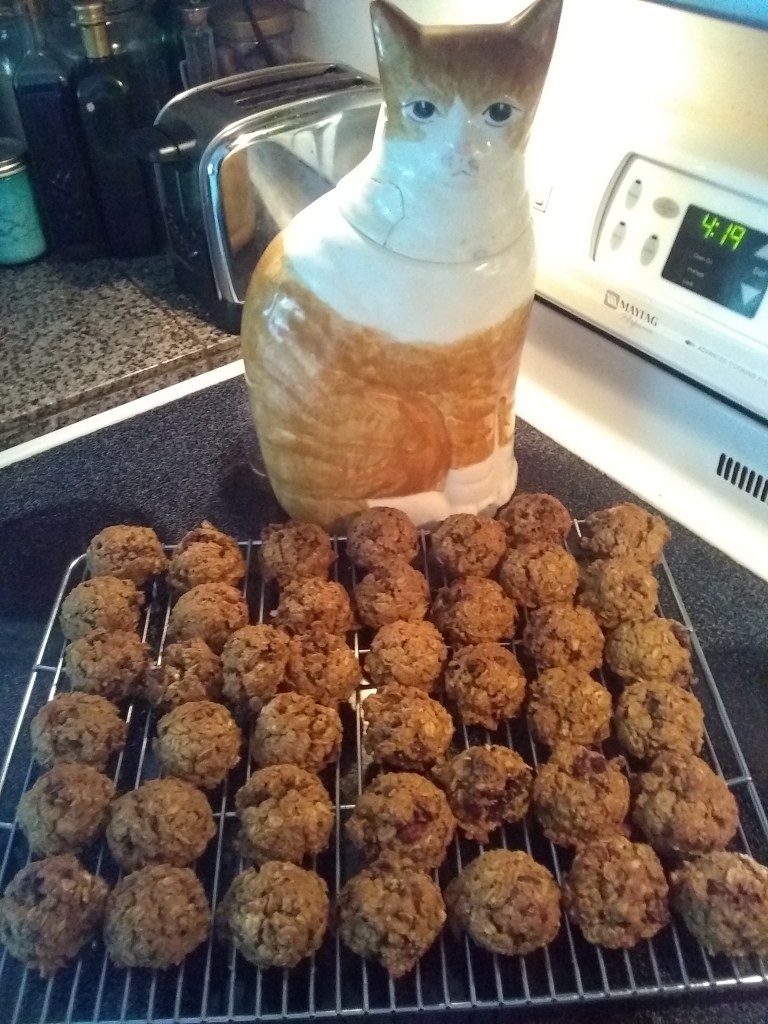
Glenn, the grumpy cat cookie jar we bought years ago on the Oregon Coast, covets the 42 oatmeal cookies I baked. He’ll get them soon enough.

The sun broke through here by midday and it was so nice I couldn’t help myself going out to scrape lichen off the deck I’m refinishing. I can say I redeemed my determination for a restful Sunday by setting the timer on my phone so that I didn’t work longer than 30 minutes.

Then, well, I did some work in the kitchen, but only because my incorrigible sweet tooth demanded that I bake a batch of my diabetes-friendly oatmeal cranberry/chocolate chip cookies (using Stevia sweetener, sugar-free chocolate and Skagit Valley-sourced whole-grain flour, so they’re really more of a health food than a confection, when you analyze it).

Now it’s late afternoon. I’m sitting in the Nuthatch’s living room next to the open slider with that delicious breeze wafting in as birds outside flit back and forth between the feeder and the deck’s bamboo water fountain. I’m sipping a tot of good New Zealand sauvignon blanc and listening to the fountain’s gurgle, the breeze’s soothing whispers and the sublime orchestral soundtrack to the old Robert Redford production of “A River Runs Through It.”

The only thing that would make it a hundred times better would be if I were sharing it with Barbara instead of just the cat.

But one of the nice things people said about my sweet wife was that she knew how to make herself happy while making others happy around her. I’m trying to take a lesson from that.

I still have bad days as well as good days. But life, like summer, goes on.

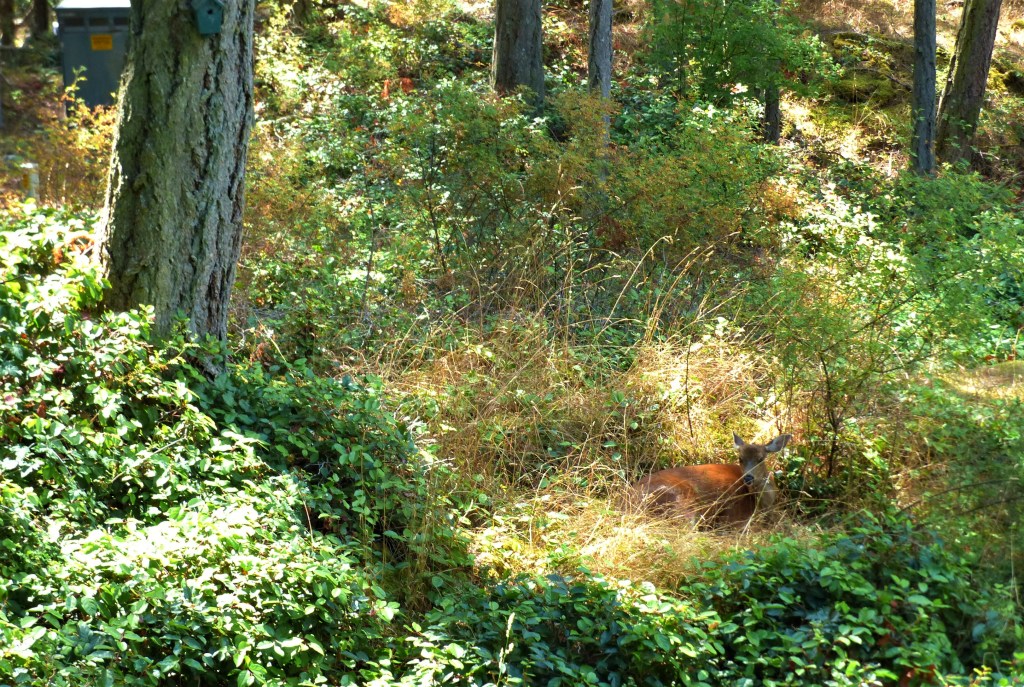
Look closely to find the deer who enjoyed this restful Sunday resting among the tall grasses, salal and wild roses in the front clearing outside the Nuthatch.

Living (and baking) off the fat of the land

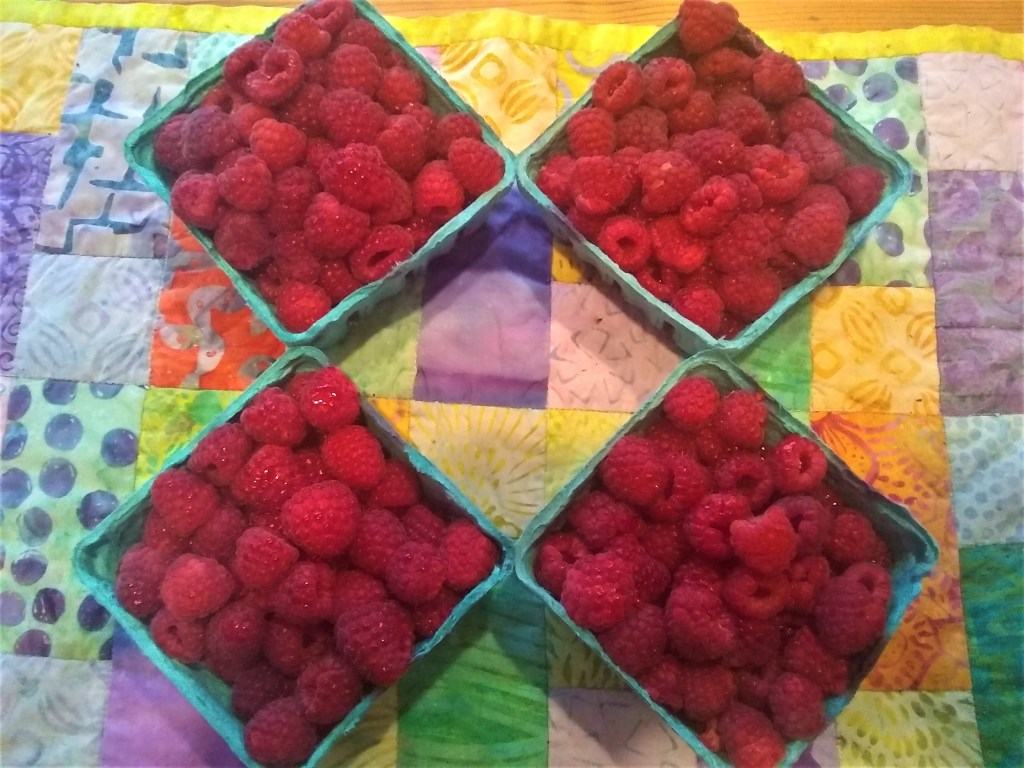
The “before” picture: Raspberries from Hayton Farms on Fir Island, the fertile island nestled between the North and South forks of the Skagit River where it flows into the Salish Sea.

SURPRISINGLY, LIVING OFF THE FAT OF THE LAND, as George and Lennie aspired to in Steinbeck’s “Of Mice and Men,” isn’t too hard on my small island in the summer. Having the fertile Skagit Valley as a neighbor doesn’t hurt.

Returning from a visit with friends in Portland and Olympia earlier this week, I stopped at two favorite purveyors of such “fat”: the Hayton Farms berry stand on Fir Island, where freshly picked organic berries of just about any variety are offered from June to August, and the Pleasant Ridge Farm stand, a short distance north of the North Fork of the Skagit River.

The “after” picture: Raspberry-Apple Crumble, destined for a family barbecue in Seattle.

I picked up a four-pack of fresh raspberries at Hayton Farms and a couple of summer squash and some kale at Pleasant Ridge, a self-serve farmstand that Barbara and I patronized for years. Besides offering bins of some of Skagit’s best sweet corn it has the added charming feature of a field of you-cut zinnias (50 cents a stem) behind the barn. Somehow I got into being a fanatical zinnia grower when I was about 10, and I’m always cheered by these simple, vividly colored blooms ranging from lemon yellow to rich claret.

The squash I supplemented with a pretty orange pepper from my neighbor Monique, proprietor of the Under Sail Produce Stand on Center Island. (The name derives from the old Hobie sail she and husband Chris have rigged up as a shelter for the stand.) Together the summer vegetables went into a tray bake I contributed to a Wednesday dinner with neighbors Carol and John “The Mad Birder” Farnsworth. It nicely complemented the Mad Birder’s salmon cakes and Carol’s pasta dish.

The raspberries are also for sharing. An hour ago I pulled a raspberry-apple crumble out of the oven, my intended contribution to a family barbecue tomorrow in Seattle. Back on the water taxi for me and Galley Cat in the morning.

The dessert is my second outing at baking berry crumbles, a simple treat that my brother Tom liked to create while he was visiting. Barbara was always the Nuthatch’s baker and head chef. I was glad for Tom’s inspiration.

So, the Nuthatch is perhaps a bit like George and Lennie’s dream of a little place where they could live “off the fatta the lan” and maybe keep rabbits (Lennie’s idea). But I don’t need rabbits. Galley Cat, who ducks in and out of my writing hut for another kitty treat every five minutes, even as I write this, keeps me busy enough. Bless her fuzzy little heart.

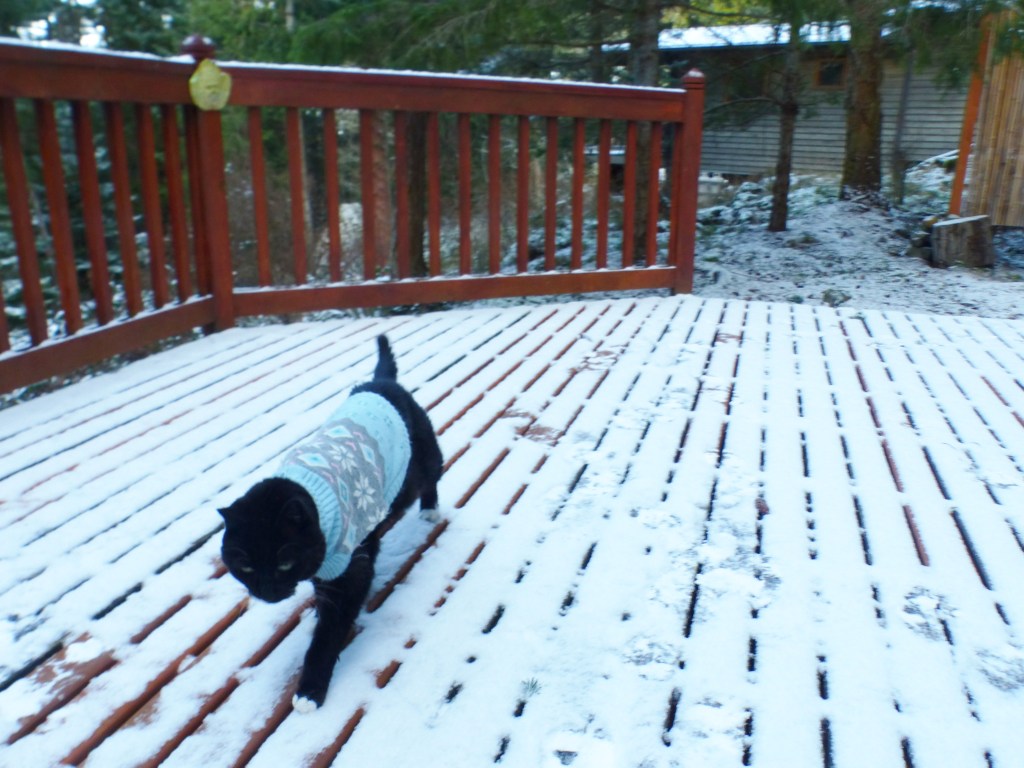
Galley Cat, my sole housemate these days, trots across the rocky knoll behind the Nuthatch cabin.

Froghorns awaken us to summer’s heat

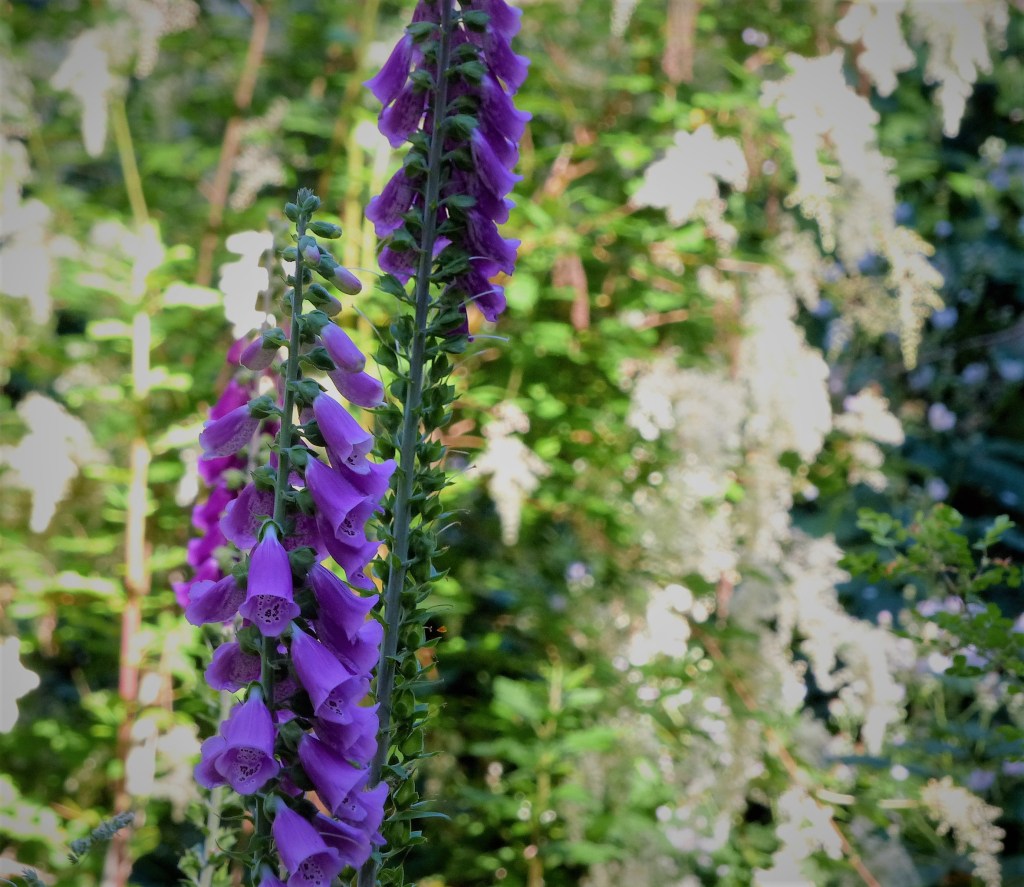
The same summer heat that generates morning fog brings blooms of foxglove, foreground, and creamy cascading flowers of oceanspray, in the background, as seen from Nuthatch cabin’s deck.

THE FROGHORNS WERE BLOWING this morning.

That’s right. No typo. My family started using that bit of linguistic frippery years ago as we laughed with (not at) our friend Giovanna, for whom English was a second language. She enjoyed telling the story of how she had informed friends back in Italy that her new Pacific Northwest home was often “froggy” on summer mornings.

From Nuthatch cabin, I can know without opening my eyes whether it’s froggy, er, foggy on a summer morning. Starting about dawn, ferries crossing nearby Rosario Strait will blow their horns every two minutes as required by maritime rules. From our island, it’s a haunting echo, a bit akin to a belching bullfrog, or a bull elk, maybe. It actually makes it easier to turn over and go back to sleep, knowing we’re fogged in.

It’s that time of year. Hot, sunny summer days often lead to the right conditions for morning fog. In fact, the warm month of August has long been known as “Fogust” in these islands. Barbara and I once waited aboard our sailboat anchored off Decatur Island until 6 p.m. before an August “morning fog” lifted from Rosario Strait, where the blinding white mist can run like a river.

With climate change, fog is coming earlier in the season. This weekend, our temperatures are forecast to reach the upper 80s, as warm as I’ve ever experienced it here, while the Seattle area will roast at over 100 degrees. This is when all of us on our little island thank our lucky stars. On a rock of fewer than 200 acres, nobody is far from the Salish Sea’s cooling influence.

With June sun, the towering foxgloves are in full bloom, along with the gorgeous cascades of tiny ivory flowers on the aptly named oceanspray shrub, one of my favorite native plants of the San Juans.

My brother Tom is happily staying for a few months from his home in southern Arizona, which has experienced shocking heat in recent weeks.

While he’s here, we’re having fun exploring the islands a bit. Last week, we took my old pickup, Ranger Rick, aboard the state ferry from Lopez to Orcas Island. The inter-island ferry routes rarely experience the huge lines you get on ferries to and from Anacortes, the conduit to the mainland. The round-trip fare to take a vehicle from Lopez to Orcas is about $30 in the peak season, not too painful for a mini-vacation.

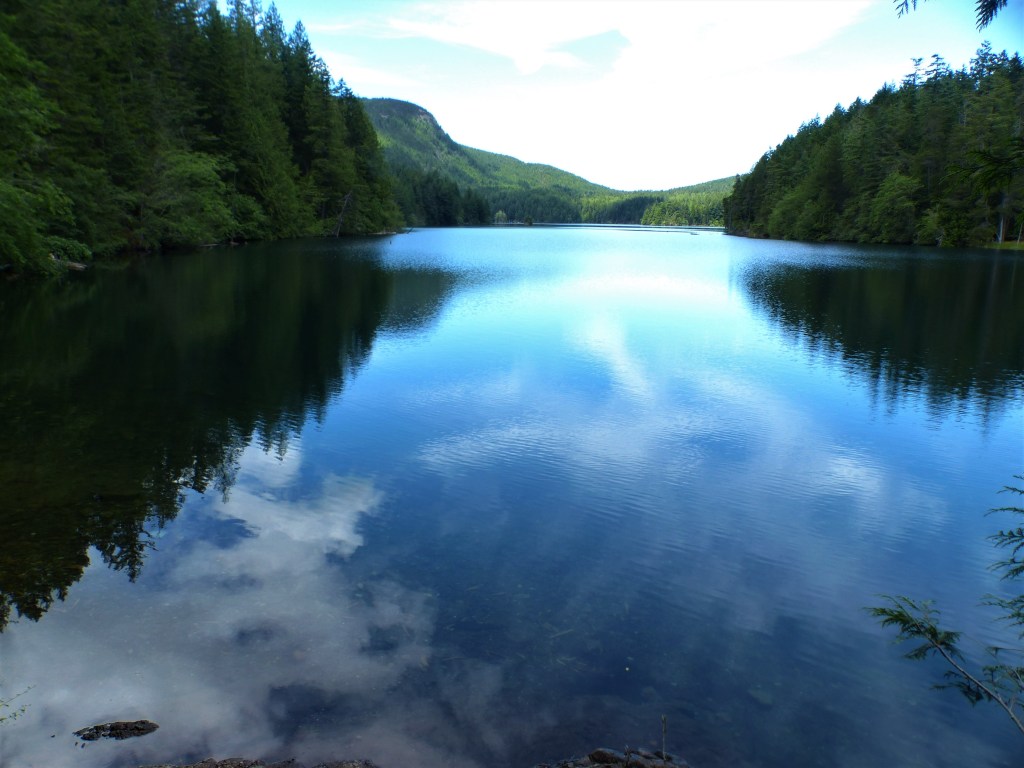
The June sky reflects on Mountain Lake, in Orcas Island’s Moran State Park.

We hiked the shore of pristine Mountain Lake, where we could see foot-long trout swimming in the clear water, drove to the top of Mount Constitution, spent a pleasant hour shopping at Orcas Island Pottery, wandered the public areas of Rosario mansion and ate a tasty dinner (with table service!) at Mijita’s Mexican Kitchen.

Tomorrow we’ll take the ferry to Friday Harbor as walk-on passengers (fare-free on inter-island routes; it feels deliciously like we’re getting away with something). I’ll meet with my boating friends and get a first tour with the owners of Osprey, the Nordic Tug on which we’ll cruise to Alaska next summer. Tom will explore the town’s many shops and eateries.

Enjoy your summer, and keep cool if you can.

Joy in June

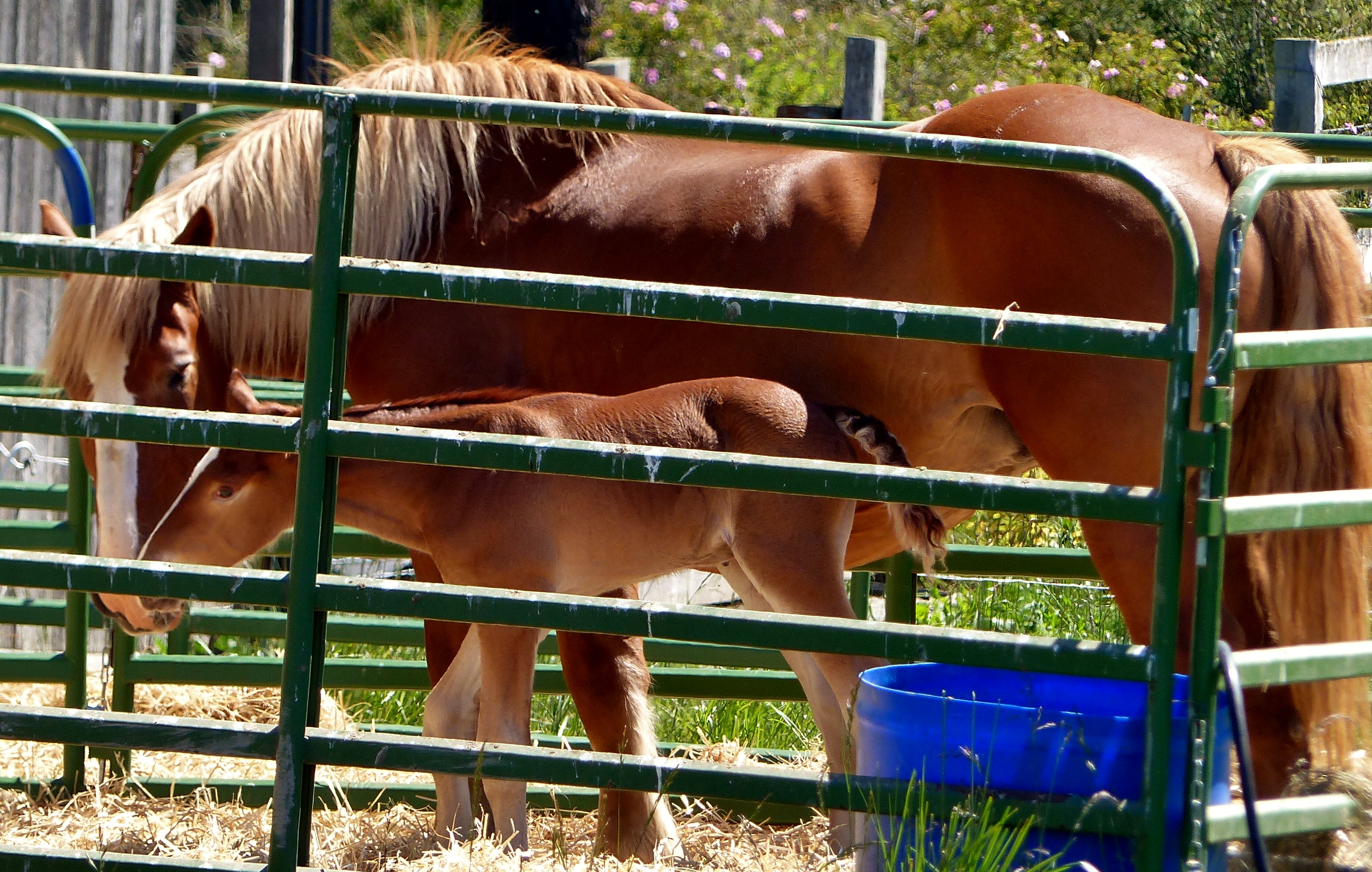
A young colt gets a nuzzle at Horse Drawn Farm, where they take that name seriously.

THERE’S JOY TO BE FOUND if you look around. Sometimes you can almost taste it.

It’s June at Horse Drawn Farm, where I took my brother Tom this week during a one-day marathon tour of Lopez Island’s greatest hits (the Brian version).

Besides stocking up on peppery-fresh arugula and tremendously large stalks of crimson rhubarb, we got to see a draft-horse colt nuzzling its mama. The farm’s name is no joke, they really plow their fields with these beautiful examples of equine splendor.

Tom, who has come to stay for a while from his home in southern Arizona, called our day on Lopez one of his best days in years.

My brother Tom Cantwell with a bag of fresh produce at Horse Drawn Farm.

A nice spinoff benefit I’m looking forward to after dinner tonight: the strawberry-rhubarb crumble he baked, using berries from Center Island Farm and sweetened with stevia-based brown sugar.

Sounds like a mouthful of joy to me.

Farewell to the Comeback Kid

In January 2020: Intrepid in any weather, Bosun liked a daily constitutional, circling Nuthatch Cabin.

THIS SPRING ISN’T GETTING any easier at the Nuthatch. We buried Bosun today, next to Compass and Rose, among blooming salal beneath the tall firs.

Our dear old tuxedo cat, who was old enough to vote if the San Juan County Clerk had just let him register, was in what we were calling his third “bonus year” since suffering a stroke in 2018. He’d had at least one more stroke since then, on top of failing kidneys and hyperthyroidism. But he was the Comeback Kid, bouncing back and refusing to give in to his ailments. His trademark was a booming purr anytime you touched him. He kept purring until just a few days ago.

When the purring stopped, we knew he was in trouble. He stopped eating and drinking early this week. His body had decided it was time to go. Bosun wasn’t ready to throw in the towel, but he was falling down and couldn’t use his sandbox anymore. We were afraid he was going to fall down the stairs and break every bone in his body. We couldn’t let him go that way. So on Thursday I took our old friend in his travel carrier on the water taxi to a veterinary clinic near Mount Vernon. He came home in a box.

It’s been a tough spring.

Bosun was a good cat. He spent much of his life on our sailboat, Sogni d’Oro, where we lived until moving to our island cabin three years ago. He was our third cat with a nautical name, following Compass and Rose, and he sailed the San Juans with us summer after summer. He was the beta cat, the big softie who got bossed around by smaller females. (And what male hasn’t, at some time in their life?) He was a sweet-tempered boy who liked to plant himself smack dab between me and Barbara in bed at night. It tended to hamper our social agenda. But when you tried to pry him off the bed and got that rumbling purr, what could you do?

Daughter Lillian was here to help nurse him in his final days, along with my brother, Tom, who arrived from Arizona on Tuesday.

Bosun was a sweet old cat, and he was my good old friend. I told him to go be Barbara’s kitty now.

Small steps to small pleasures

FEW THINGS FEEL MORE HEALING than sitting on the old wooden porch of Isabel’s Espresso in Lopez Village and sipping a strong drip coffee with three Stevias and a dollop of half ‘n half — the diabetic widower’s special, I guess — on a blue-sky morning in May. It’s bloom time for the island’s wild hawthorne and dainty white bells of salal. I sniff a heady perfume of flowers and fir pollen on the lazy swirls of fresh air that haven’t worked quite hard enough to be a breeze.

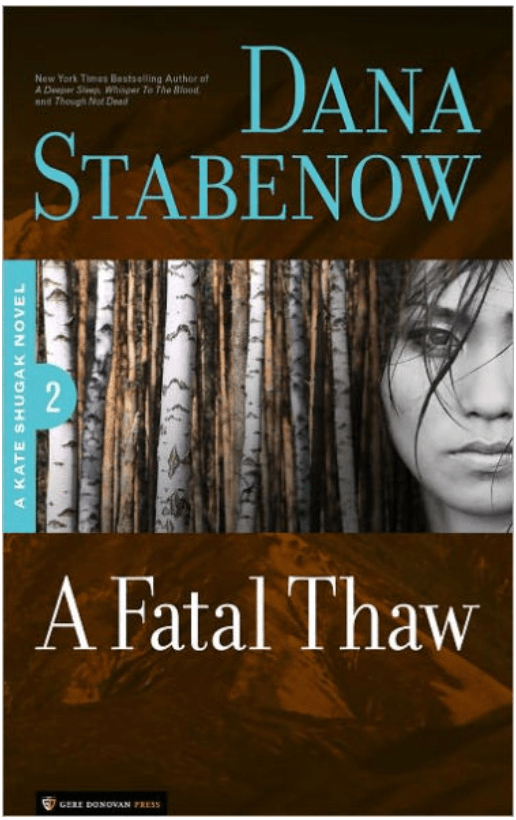
Just sitting, doing something normal, and reading one of author Dana Stabenow’s Kate Shugak mysteries, set in the Alaska bush. Barbara’s not with me, yet she is, in my choice of reading. For years my wife tried to convince me I’d love this sassy Aleut detective, Kate, with a half-wolf dog named Mutt. Dumbly, I resisted, until last fall. Now I’m on Book 13. Two things I’m glad Barbara lived to witness: Trump’s humiliation and my Kate Shugak conversion.

It’s heartbreaking that Barbara’s not sharing in this simple pleasure, just sitting on a sunny deck, reading a good book and sipping a cup of something hot and reviving. But I milk a little enjoyment from knowing she’d have loved it, too.

Neighbor John, the Mad Birder, astutely summed up for me the paradoxical elements of grief. To paraphrase: You don’t honor your loved one by succumbing to a lifetime of emotional paralysis. Barbara wouldn’t wish that on me, and would hate to be the cause of it. Yet how can I stop thinking of her and loving her, and wouldn’t it be wrong to stop missing her?

It’s not simple. It’s not easy. It’s wrong that she isn’t with me, but somehow it’s right that I should find a small pleasure sipping my coffee on the old wooden deck while devouring a good book that Barbara turned me on to.

I love you, sweetie. With a tear in my eye, I love you.

Good friends and nurturing islands

My friend Daniel looks northwest from James Island. Cypress Island is at right, on the far side of Rosario Strait.

EVERY ISLAND IN THE SAN JUANS has its own character. Even a 10-minute hop over the water in WeLike can be like a little vacation.

My old friend Daniel Farber and I put that to the test when he was visiting earlier this week. Daniel and I grew up less than a mile from each other in the Seattle suburbs, went to the same high school, and were housemates while attending The Evergreen State College. He was my best man when Barbara and I married in 1979.

His visit was part of my continuing determination to accept kind invitations and offers of companionship to help me weather my grief at losing my dear wife. It was a month ago today. It seems like yesterday.

But good company helps. We packed a lunch and zipped southward on the blissfully calm waters of Rosario Strait to tie up to a San Juan County Land Bank buoy in Lopez Island’s pretty Watmough Bay. Raptors swirled above us, catching updrafts from the soaring, rocky cliff of 470-foot Chadwick Hill as we munched our lunch. Only one person lounged on the sandy beach. Otherwise, we shared the little bay with a pretty sailboat rocking gently at anchor.

Filled with food, we cast off and turned back northward for a 15-minute run to James Island, a marine state park not much more than a frisbee’s throw from neighboring Decatur Island.

It’s only a few hundred feet across a narrow saddle of forest from one side of James to the other, between two bays equipped with a boat dock and mooring buoys. Daniel and I hiked out to a viewpoint with a wide panorama of the Washington State Ferries route and the high ramparts of Cypress Island. We were the only people wandering among empty campsites that will likely be bustling in a few weeks. I skipped stones from the beach piled high with myriad little agates and tide-polished rocks the size of a martini olive in shades of red, green and ocher.

Back on my island, I saw that the wildflowers called sea blush were frosting our knoll with pink. I found a few calypso orchids, the tiny flowers also known as fairy slippers. Having bloomed when I wasn’t looking, they were already fading.

Daniel left yesterday morning. Today, as I returned from an outing with my chainsaw to bring home firewood from the community log pile, a splash of orange caught my eye among the shadowy woods. I looked up to see a small glass vase of nasturtium flowers hanging on a tree at the side of our back drive.

A glass vase of nasturtiums hangs from a tree bordering our back driveway.

It thrust me back to four Thursdays ago. My island friend Dan Lewis was driving the community pickup truck. I rode shotgun. Barbara’s siblings Julie and Sarah crouched in the truck bed to ensure that the backboard stretcher to which their sister’s blanket-wrapped body was strapped didn’t slide out the back as we made our way to the community dock. From there, Dan’s fast boat would take us across the strait to Anacortes to meet a driver from a nearby mortuary. It was part of the gritty reality of a life’s end on a remote island. My love chose to finish her days here in view of towering trees and sparkling saltwater rather than in a cold and sterile hospital.

As the truck mounted the small hill behind Nuthatch cabin that day, I saw first one, then another, then another vase of fresh flowers hanging from trees along the drive. I instinctively and immediately knew it was the work of our dear neighbor, Monique, the island’s farmer, who had visited Barbara the previous afternoon, holding her hand and whispering comforting words as she faded. The whimsical display of spring blossoms added an air of love and grace to our sorrowful cortège.

Just the one hanging vase remained this morning. It looked as if fresh flowers had been added recently.

I cracked a small smile. I’ll never get over my loss, but these islands, old friends and kind neighbors continue to look out for my soul.

Keeping wind in a writer’s sails

Boats navigate the roiling waters of San Juan Channel, off Lopez Island’s Shark Reef Sanctuary. We watched as gray whales cruised the same waters, spouting and tail-slapping.

BARBARA WANTED ME to keep writing.

For my 65th birthday, five days after she passed away, I got the gift of a packet of reporter’s notebooks, the slim, coil-bound pads that every journalist carries in a pocket — all over the world, in my case. They aren’t easy to come by if you don’t work for a newspaper, but Barbara had found them online and ordered me a bunch. She planned to give them to me at the birthday party she didn’t get to attend.

It would be easy to pack it in and stop writing. She represented so much in my life that was good and happy and comfortable. And I like to write about the good, happy and comfortable parts of life. I don’t like learning that it’s hard to insert contact lenses when your eyes are full of tears. I don’t like waiting to awaken from this bad dream so I can hear her call me to dinner.

But Barbara, Nuthatch Cabin’s friendly ghost, would want me to write about the good parts, so that’s what this post is about — a visit from an old buddy who didn’t hesitate to come running when I needed company. A week ago, my friend Ken Brinkley came up from Portland for a five-night visit.

It reminded me of a painful time 15 years ago when I went to Ken’s side after a sailing tragedy took the life of his wonderful 18-year-old son, Andy. I asked him to come now, in part, because I knew he’d been through the kind of grinding grief I’m facing.

It happens that I met Ken for the first time in these islands. It was the 1980s, and a group of colleagues from The Columbian newspaper in Vancouver, Washington, where I worked for 10 years, took a party weekend at Rosario Resort, on Orcas Island. (Incidentally, it was a stupid place to party. I seem to recall a late-night visit from a sheriff’s deputy.)

Ken, who was married to one of my co-workers, stood up at a meal gathering and asked if anybody else was interested in hiring a sailboat for an afternoon on the sparkling waters of East Sound. I was the only one to raise my hand.

My friend Ken at Shark Reef Sanctuary.

It was the start of a 35-year friendship. Barbara and I later joined Ken and his (now-ex) wife in chartering a larger sailboat in the San Juans, an adventure that eventually led us to acquire Sogni d’Oro, the sailboat on which we explored these islands every summer for decades, and sailed to Mexico in the mid-1990s.

Just having company at the Nuthatch this past week was a blessing. I did all the cooking, with tips I’d learned from Barbara (vegan barbecue rarely tasted so good) and a menu prepared with the help of daughter Lillian, who had returned to Seattle and work. Ken pitched in and helped me with rough and tough cabin chores that had been deferred for months. The hard work was a good distraction from sadness. He brought a bulging satchel of old movies. (All VHS tapes! Ken is 10 years older than I.)

After a trip to the Lopez Island dump on Sunday, we took a sack lunch and hiked to gorgeous Shark Reef Sanctuary, where we sprawled on a sunny cliffside and watched gray whales spout and tail-slap among the roiling tidal waters off Cattle Point. The morning Ken departed, we sat at a favorite Center Island bluff with a view of the snow-draped Olympic Mountains and sun-dappled Lopez Sound, where an otter dove and played. I’d never seen either of those creatures in those places. I think Barbara is pulling strings for me now.

It’s just me and the cats in our cabin for the next few days. The loneliness can be grueling, but I have other visits in the offing. Sometimes an old friend, ready to listen and ready to help, is life-saving nourishment for an emotionally starving man.

Barbara wanted me to keep writing. Here I am.

An old friend from college, Kathy Pruitt, sent this poem that gives her comfort when thinking about loved ones who have passed away.

Finding you in Beauty

The rays of light filtered through
the sentinels of trees this morning.
I sat in the garden and contemplated.
The serenity and beauty
of my feelings and surroundings 
completely captivated me.
I thought of you.
I discovered you tucked away
in the shadows of the trees.
Then, rediscovered you
In the smiles of the flowers
as the sun penetrated their petals
In the rhythm of the leaves
falling in the garden
In the freedom of the birds
as they fly searching as you do.
I'm very happy to have found you,
Now you will never leave me
For I will always find you in the beauty of life.
-- Walter Rinder

The flying boat of Center Island

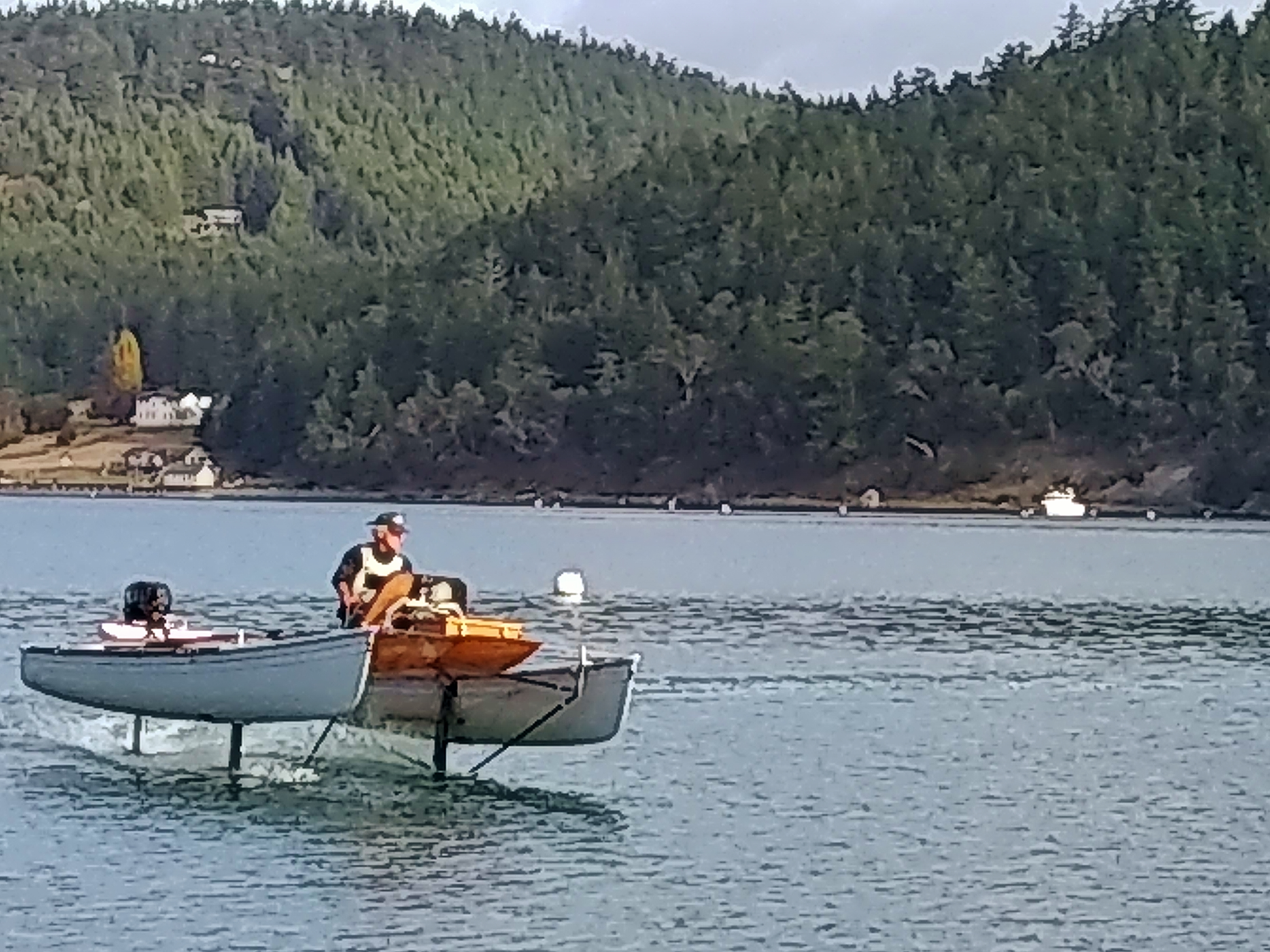
Center Islander Chris Maas carves a turn aboard his custom-built hydrofoil catamaran.

YOU JUST NEVER KNOW WHAT YOU’LL SEE from a little island nobody’s heard of, in a quiet month when few are around.

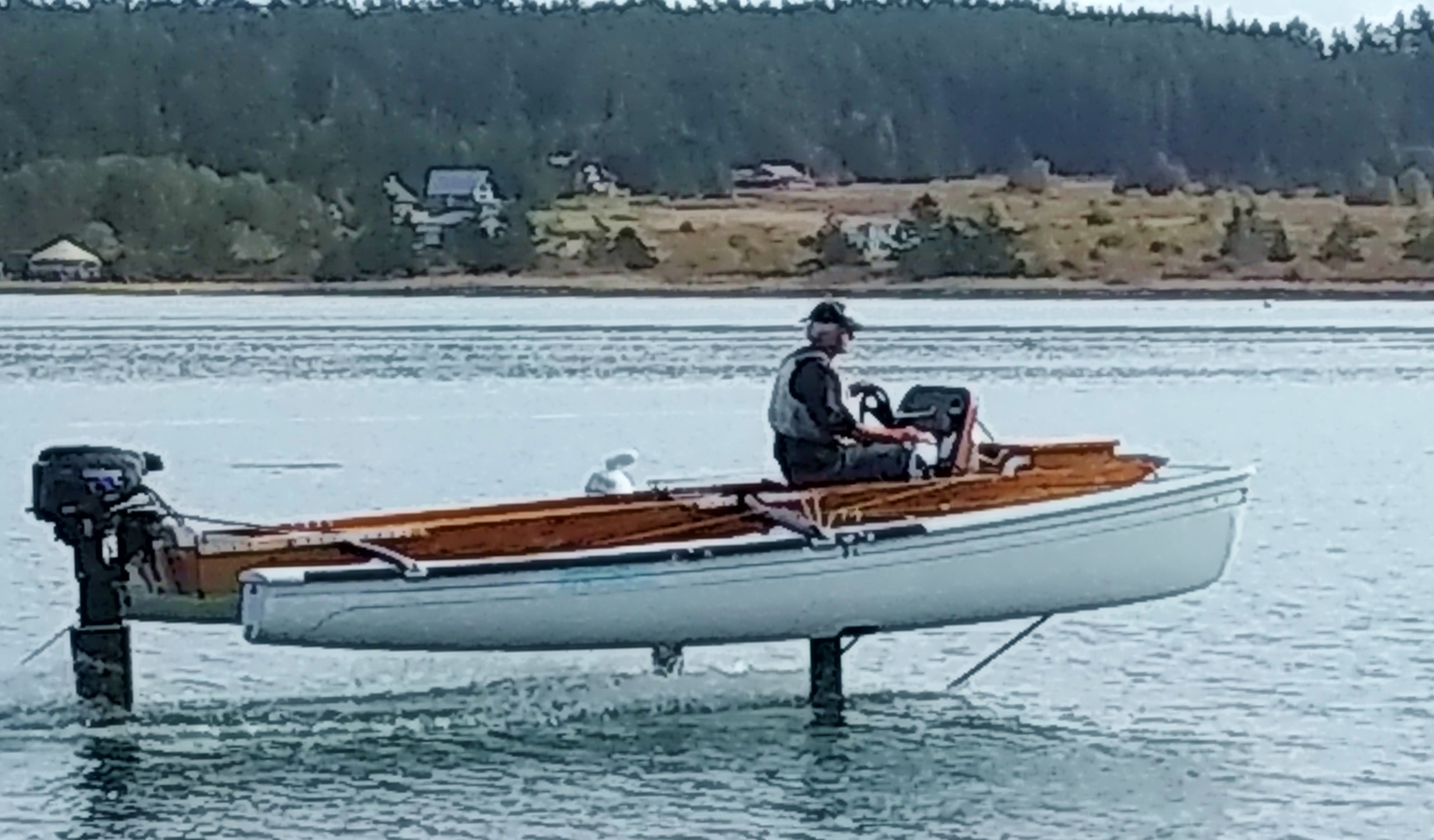
I was walking up our dock the other day and looked around and there was Chris Maas flying by on his hydrofoil.

Chris, co-owner with spouse Monique of Center Island’s only farm, is our resident Mr. Science. Or Mr. Greenjeans. Or both. He’s an inventor and a farmer and a sailor who can build or fix just about anything.

But quiet, and unassuming. Which is why I didn’t know he had converted a catamaran sailboat to an electrically powered hydrofoil until, well, I saw him buzzing by. Quietly.

Among other things, Chris was the world champion in canoe sailing, in the “Development Canoes” event (did you know there was a world championship in canoe sailing?), in competition held in Australia in 2008, for which he has a Wikipedia entry. Last year he launched a gorgeous wooden sailboat he built in his workshop. I happened to visit the day he was varnishing the gleaming tiller he’d fabricated out of a stave salvaged from an ancient cistern on his farm.

The hydrofoil is something he crafted in his workshop just for fun. It’s powered by an outboard motor that he adapted to run on electricity. Lifted by underwater wings similar to an aircraft’s wings, the spidery craft skims the waters of Reads Bay, off Center Island, making barely a hum.

His latest outing was to test a modification that would help the boat smoothly navigate the wakes of other passing boats.

The modification was a flop, Chris told me. So Center Island’s world champion has more tinkering to do, keeping busy in his workshop as the days get colder and quieter, on an island nobody’s heard of, where none of us really mind.

The outboard motor powering the hydrofoil is modified to run on battery power. It is lifted by underwater wings like an airplane’s.

October in my viewfinder

A Great Blue Heron takes wing from a raft of bull kelp off Shark Reef Sanctuary on Lopez Island. This was my view from shore as I sat on a rock munching my lunch over the weekend.

IT’S ONE OF MY FAVORITE MONTHS in the San Juans, often sun-dappled, when it’s not all rain-washed and fresh. Mornings are often still dry enough for my aerobic bike ride, three dashing laps around the Center Island airfield. Or, when the shores and straits are misty, drippy and fog-horned, I might pull on my rain parka and the Pendleton hat that Indiana Jones would have coveted and I circle the island on foot, often toting my camera. On “dump days,” I might take a hike on neighboring Lopez Island.

I’m often surprised by my finds. Here are a few images from this past weekend. It’s a season to savor.

I saw more pumpkins than people on a recent rainy-morning walk around Center Island.

Center Islanders come up with novel ways to mark their property. Here’s a vessel that would fit right in at Shark Reef.
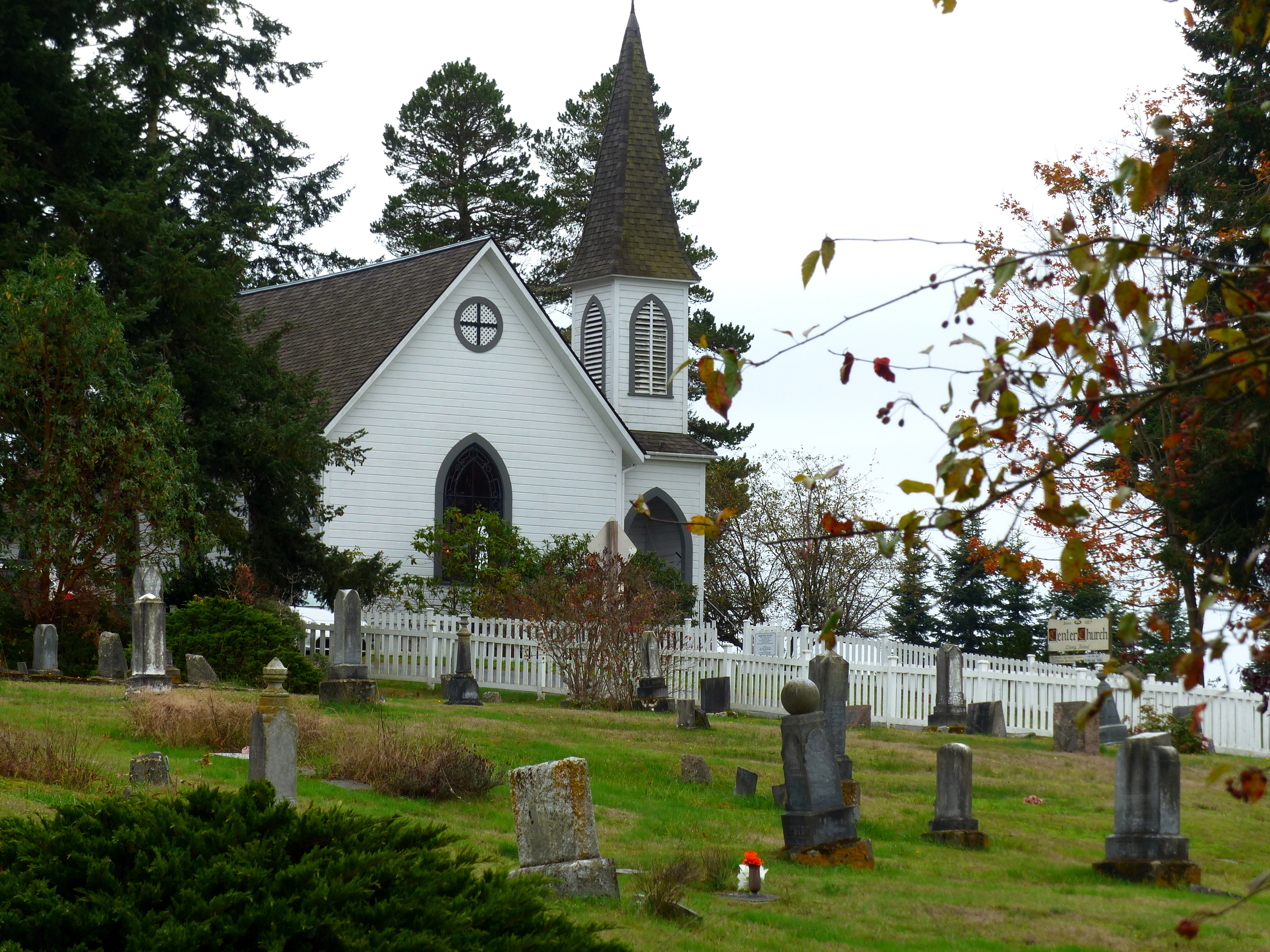
A windswept cemetery is good fodder for an October photo shoot. This graveyard is on Lopez Island, adjacent to pretty Center Church, built in 1887. The cemetery holds some of the island’s earliest settlers.