
Island time feels good on another island (but let’s never leave home again)

IMG_7955WE GOT OFF OUR ROCK and sampled an island in the south seas this week. Well, an island south of us. In Puget Sound.

It was good to be back on the strong and steady old Westsail 32, Sogni d’Oro, for a two-night outing with our daughter, Lillian, who now makes it her home. For once we weren’t heading in the direction the wind didn’t want to help with, so we even hoisted the sails and cherished the silent sounds of the Sound (with the engine off). Mind you, it was a sunny morning in July and there wasn’t much wind, so it took well over an hour before we got up close and on a first-name basis with Bainbridge Island, the first land west of the sailboat’s moorage at Seattle’s Shilshole Bay.

But we were in no hurry. Our planned landfall was no more than 11 miles away at Blake Island, the popular marine state park just south of Bainbridge.

We were taking a gamble on getting a mooring buoy at Blake, where depths can make anchoring dicey, during one of the hottest and sunniest weeks of the summer so far. It’s a mighty magnet for Seattle boaters looking to cool off and ditch the sizzling city.

For those of us who’ve lived on a boat at Shilshole and almost always headed north to the San Juans and beyond when we left the dock, one treat to heading south was the full-on Seattle skyline view we got as soon as we rounded Magnolia Bluff.

P1220133.JPG
A tug and a ferry cross paths on Puget Sound, with the Seattle skyline as a backdrop, on our way to Blake Island.

That panorama from the water is really the only time you get the full visual impact of downtown’s alarming upward growth. Happily, pretty Smith Tower, which was THE skyscraper when Barbara and I were little, still stands off to the side and hasn’t been swallowed up by the tangle of urban architecture just to its north. Smith Tower and the Space Needle still bookend the urban core.

Another treat was our timing. We had guessed that Tuesday would be a good day to go in hope of snagging a buoy. (Our backup plan, if there was no comfortable place to moor at Blake, was to chug around the corner through Rich Passage and drop the hook in Poulsbo’s Liberty Bay.)

As soon as we were out on the wide-open Sound, however, we noticed a happy and rare occurrence. We were out there pretty much alone. No streams of big powerboats to dodge. Not a freighter or cruise ship in sight. Only a rare tug or two and the usual scheduled Washington State Ferries. That boded well for these new retirees: Everyone else was at work, ha, ha.

And sure enough, when we finally rounded the point to peek at the west side of Blake, we spied at least six open buoys just off the pretty sandy beach. Blue sky above. Gentle, cooling breezes, a view of ferries scuttling in and out of Southworth and Bremerton, and a wooded island with miles of trails to explore.

P1220233.JPG
Native wild blackberries grow abundantly along trails on Blake Island.

The next morning, Lil and I tried out a new inflatable kayak and went on an early-morning paddle along the shore, watching raccoons digging for clams on the beach. “Isn’t it nice to see them eating natural foods rather than dumpster diving, for a change?” we agreed.

We went for a hike, we played board games in the cockpit, we grilled our dinner and sipped rum coolers as the sun set behind the Olympics.

P1220302.JPG
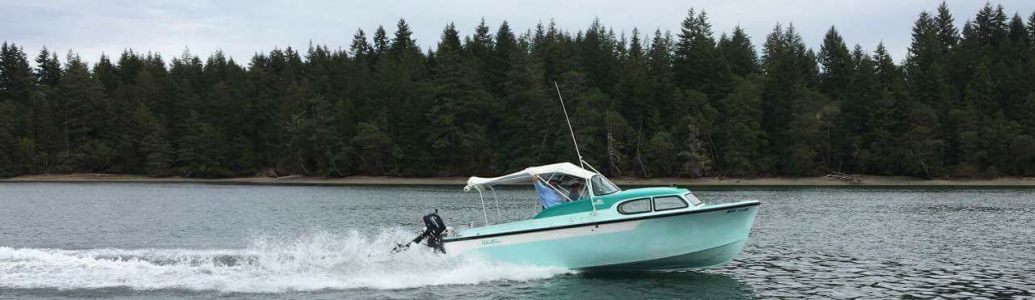
Sogni d’Oro, our old Westsail 32, at right, sits on a buoy off Blake Island as the sun sets behind the Olympic Mountains.

Thursday, we fired up the engine and motored back to Shilshole on calm waters in two easy hours. It was nice to be on the old boat again.

But you know what? After the long homeward slog up the freeway, Barbara and I are really glad to be back on our island. It’s another beautiful day in paradise. “Let’s never leave again,” she said.

Hmmm, for today anyway, that idea feels kind of good. 1-anchor

All creatures great and (very) small

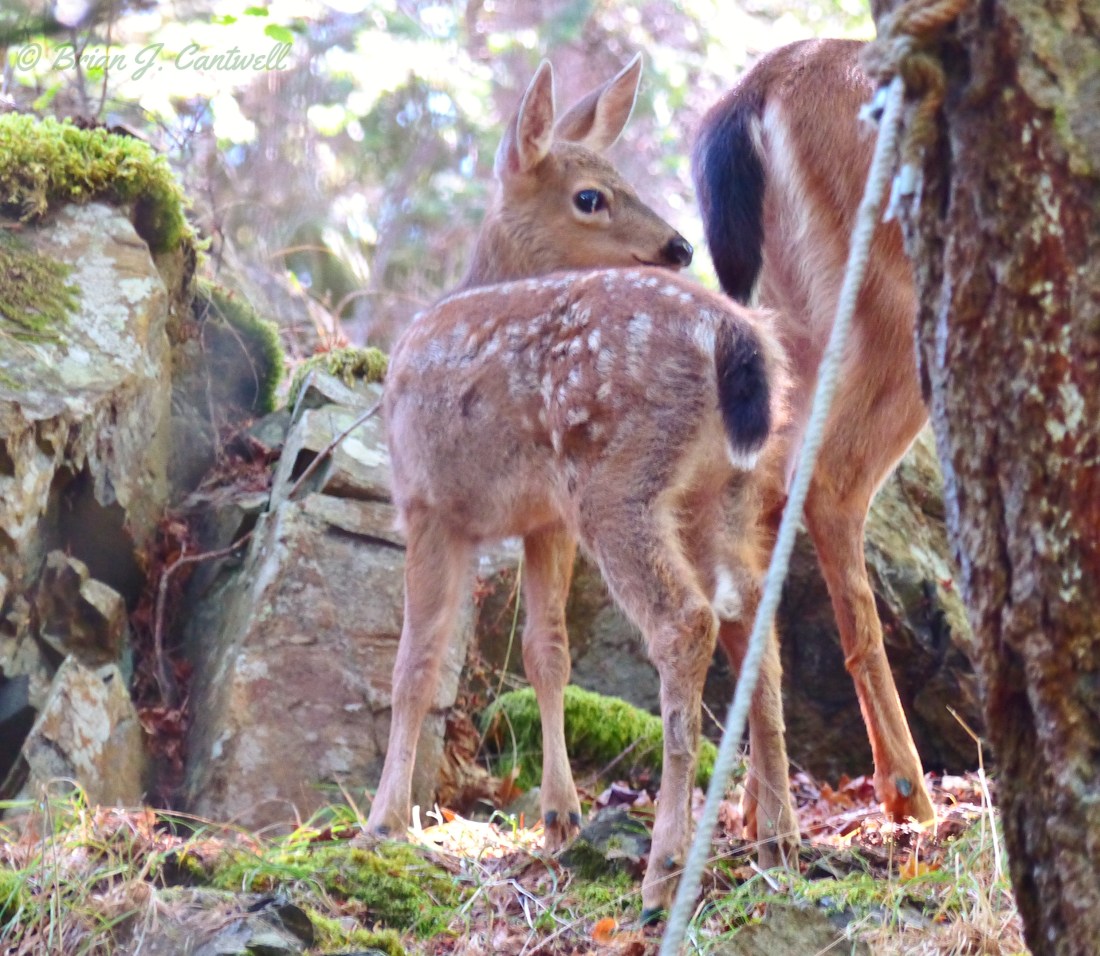
Spotted fawn, Center Island(1).jpgA fawn pauses with its mother atop the rocky knoll behind The Nuthatch cabin. The rope tied to a tree trunk serves as a handhold for humans scaling the steep bank.
IMG_7955IT’S THE SEASON OF FECUNDITY on Center Island.

Suddenly the bird feeders are besieged by whole families of fledgling goldfinches, just days out of the nest. They are small, socially awkward and they fly like children thrown by centrifugal force from a merry-go-round horse. They’ll soon learn how to work their wings, I’m sure, and perfect their landings. When four of them descended on the bamboo fountain on our deck, one teetered on the edge of the bowl and fell in the water. It’s a hoot to watch them. And they are cleaning out the feeders like a fleet of winged Hoovers.

This morning we also saw the first spotted fawn of our year, accompanying its mother as she slurped up the less-desirable birdseed that the goldfinches had strewn from the feeder outside our kitchen window. When I cracked opened a door to take their photo, the fawn showed itself much more surefooted than a goldfinch chick. It pranced effortlessly behind its mother up the side of our rocky knoll.

Life on a small island has its pleasures. 1-anchor

Shot through with lights of stars and dawns,

And shadowed sweet by ferns and fawns,

— Thus heaven and earth together vie

Their shining depths to sanctify.

— excerpt from “My Springs,” by Sidney Lanier

Those ‘10 nations in 5 days’ tours ain’t got nothin’ on me

P1200631.JPG
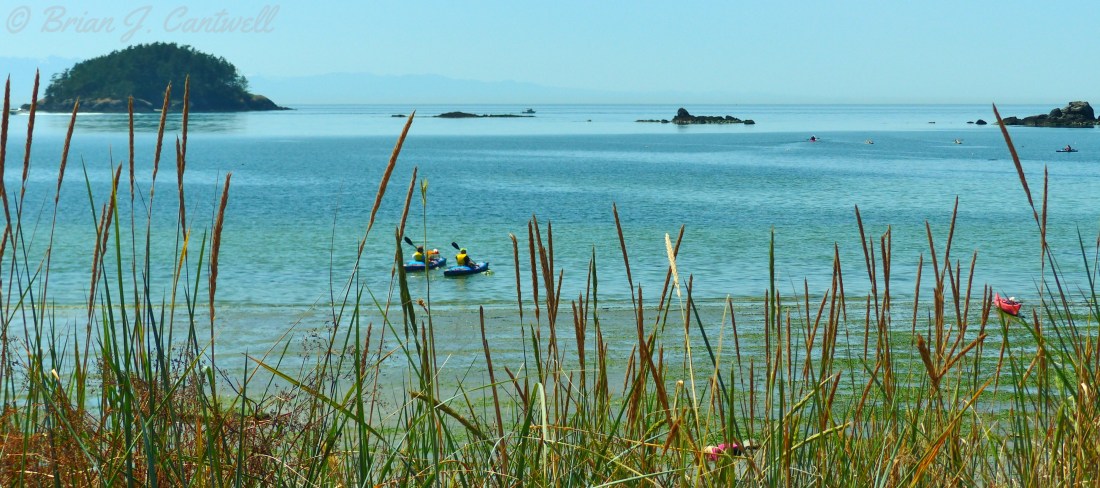
One of my photos from Deception Pass State Park: Kayakers launch on Bowman Bay.

IMG_7955I’M BACK ON THE ROCK after a whirlwind, no-time-to-smell-any-darn-roses field trip to top-tier recreation sites around Puget Sound and the Salish Sea. I put more than 500 miles on the Civic. Whew.

Retirement can be hard work, especially if you’re not very good at committing to doing nothing, I’m finding.

The good news is I’ve landed a plum project with Seattle-based Mountaineers Books. One of their imprints, Braided River, is working in cooperation with the Washington Environmental Council on a new book about Puget Sound, aimed at furthering discussion of the need to clean up the Sound (as Washingtonians said we were going to do about 50 years ago). I will be a contributing author on the project, with my section spotlighting about 30 top recreation spots around the Sound and the Salish Sea.

I’ve been to most of the places on the list we’ve come up with, some of them multiple times. But there were a few I’d never quite gotten around to, and others that I needed to revisit to take some fresh photos.

So I packed our car-camping gear and caught the water taxi on Monday morning. My first night was camping at Deception Pass State Park, where I explored some trails I’d never trod and got lots of new photos. (High point: Sunset light on North Beach and the arching bridges. Low point: Being kept awake until midnight — along with everyone else in the campground — by the thundering jets from nearby Whidbey Island Naval Air Station. With new much-noisier aircraft and more and more day-and-night training sorties, the previously innocuous “sound of freedom” is sadly spoiling a gem of a park.)

P1210036.JPG
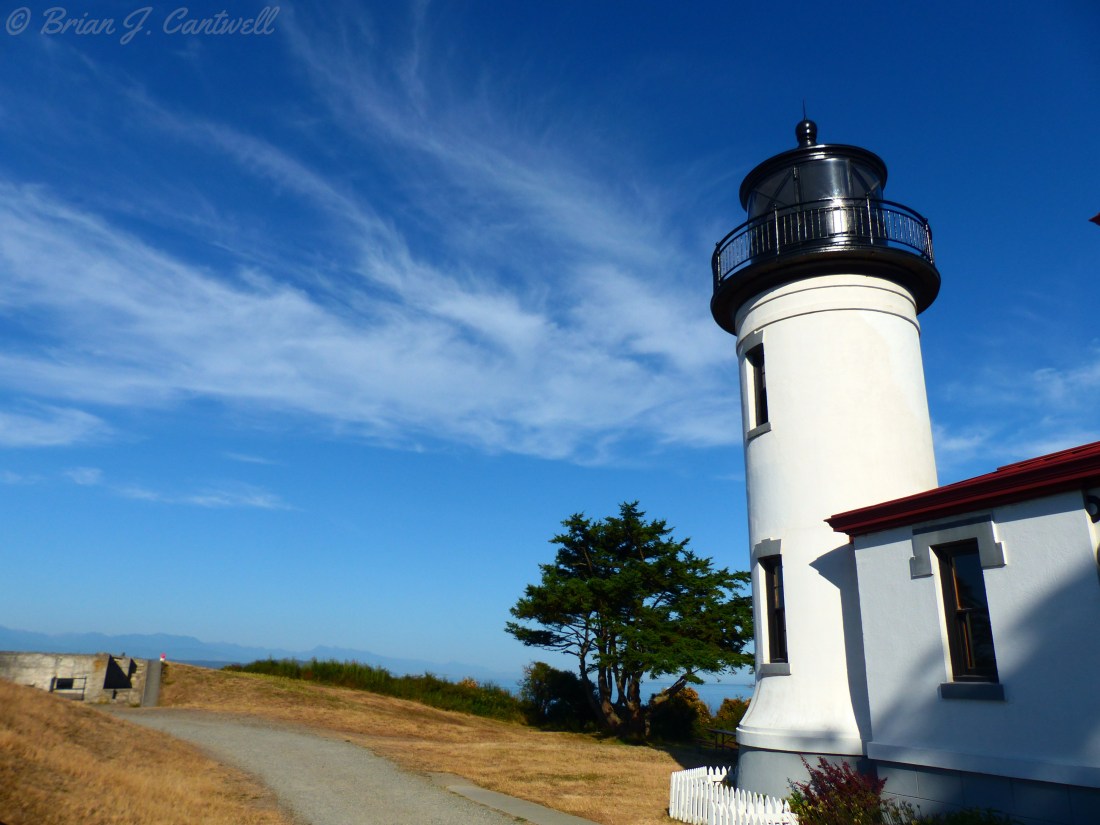
Admiralty Head Lighthouse at Fort Casey.

The next day I started the real marathon. My Whidbey Island stops for quick exploration and photography included Ebey’s Landing National Historical Reserve and Fort Casey State Park, before catching a 9:30 a.m. ferry from what’s now called the Coupeville dock (formerly known as Keystone) to Port Townsend.

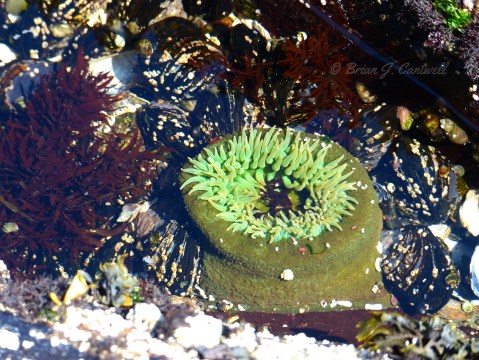
From there, I was on the clock to catch a noontime minus tide at Clallam County’s Salt Creek Recreation Area, 16 miles west of Port Angeles. I’d never been to Salt Creek, but I’d heard of it (and edited stories about it) and its phenomenal tidepooling. Marine biologists and students from across the nation come there to study marine life.

P1210186.JPG
A sea anemone among mussels and barnacles on the rocks at Salt Creek Recreation Area in Clallam County.

Not only was the place a Disneyland of intertidal-zone wonders, I found a bunch of water-view campsites definitely worth a return trip.

From there, I drove back east a few miles to find the newly developing beach where the now-undammed Elwha River meets the Strait of Juan de Fuca. I’d visited the spot a couple years ago, and I was wowed now at how much more beach has been created as the newly free-flowing river continues to flush sediment to its mouth.

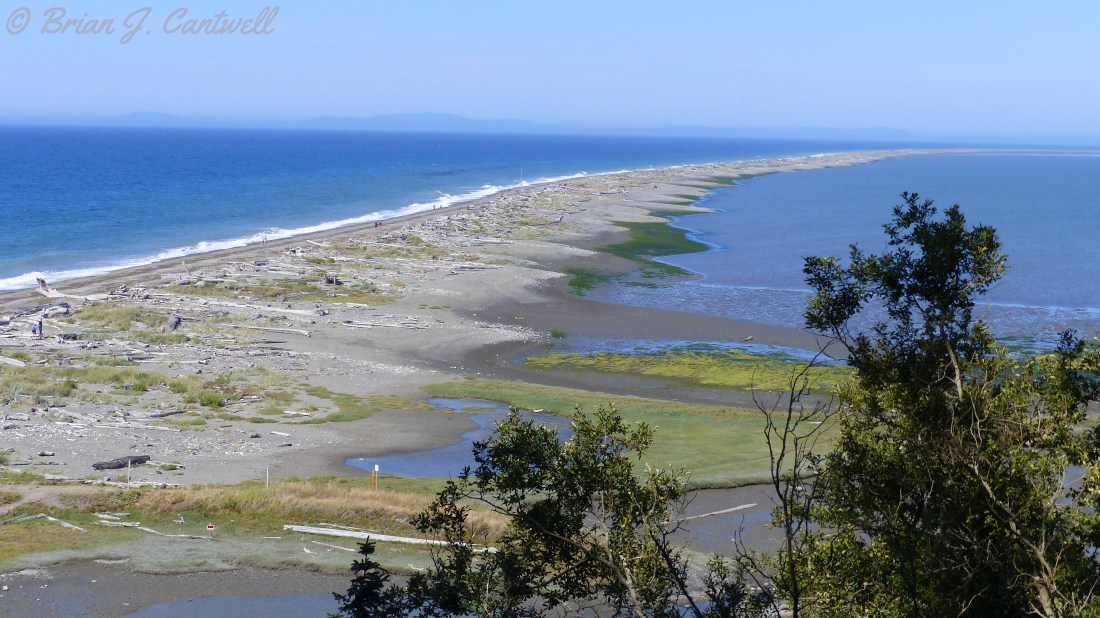
Then I burned up the road back to Sequim for a stop at Dungeness National Wildlife Refuge and a half-mile hike down a woodsy trail to get good photos of 5-mile-long Dungeness Spit.

P1210360.JPG
Dungeness Spit reaches out into the Strait of Juan de Fuca like a long arm cozying up to a lover.

Then it was on to my second night camping destination, Dosewallips State Park, on Hood Canal (the resident elk herd wasn’t at home, more’s the pity).

Next day: Dosewallips to Poulsbo (for snaps of Liberty Bay’s waterfront and Sluy’s Bakery pastries), to Suquamish (and Chief Seattle’s 19th-century Agate Pass homesite, and his nearby gravesite), to Bremerton (whose waterfront is home to one of the more innovative fountain parks, with an apt Naval-vessel theme), to Belfair’s Theler Wetlands Nature Trails, to Gig Harbor’s lively waterfront, and finally across the Narrows Bridge to Tacoma’s Point Defiance Park, a classic (and classy) urban park that, in my Seattlecentricity,  I had shockingly never visited. I could easily have spent a full weekend exploring Point Defiance alone.

P1210959(1).JPG
Mount Rainier and downtown Olympia, as seen from the Farbers’ deck.

I ended that day with a stay with my friends Daniel and Jean Farber in their delightful home overlooking Olympia’s Budd Inlet (and a pretty nice view of Mount Rainier). It was great to have a real bed, delicious home-cooked food (Moroccan recipes!) and a long hot shower. (Thanks, you two.)

Next morning I hiked to the end of the verrrry long boardwalk at Billy Frank Jr. Nisqually National Wildlife Refuge. It was the first time I got a little damp, from a heavy drizzle, after several days of warm sunshine, but it meant a quieter outing with more birds. A fellow walker said she saw a weasel by the barns. Sorry I missed it; I’d have liked to compare it to our Center Island mink.

Then it was a long and tedious drive back up I-5 to Anacortes and the boat ride home. For more details, you’ll just have to read the book, which will likely publish in time for Christmas 2019. 1-anchor

You never know whooo you’ll run in to on Center Island

IMG_7955ON OUR LITTLE ROCK IN THE SAN JUANS, we have deer (who nibble my ferns), raccoons (who leave intriguing footprints when it snows), mice (who now live in fear of our cats), herons (who wade in close on minus-tide days like this), otters (who poop prodigiously on our docks) and mink ( including one that occasionally drinks from the bamboo fountain on our front deck, just like it’s slurping from an office water fountain). Yes, mink are native to the San Juans. No, we are not planning on making anybody into coats or stoles.

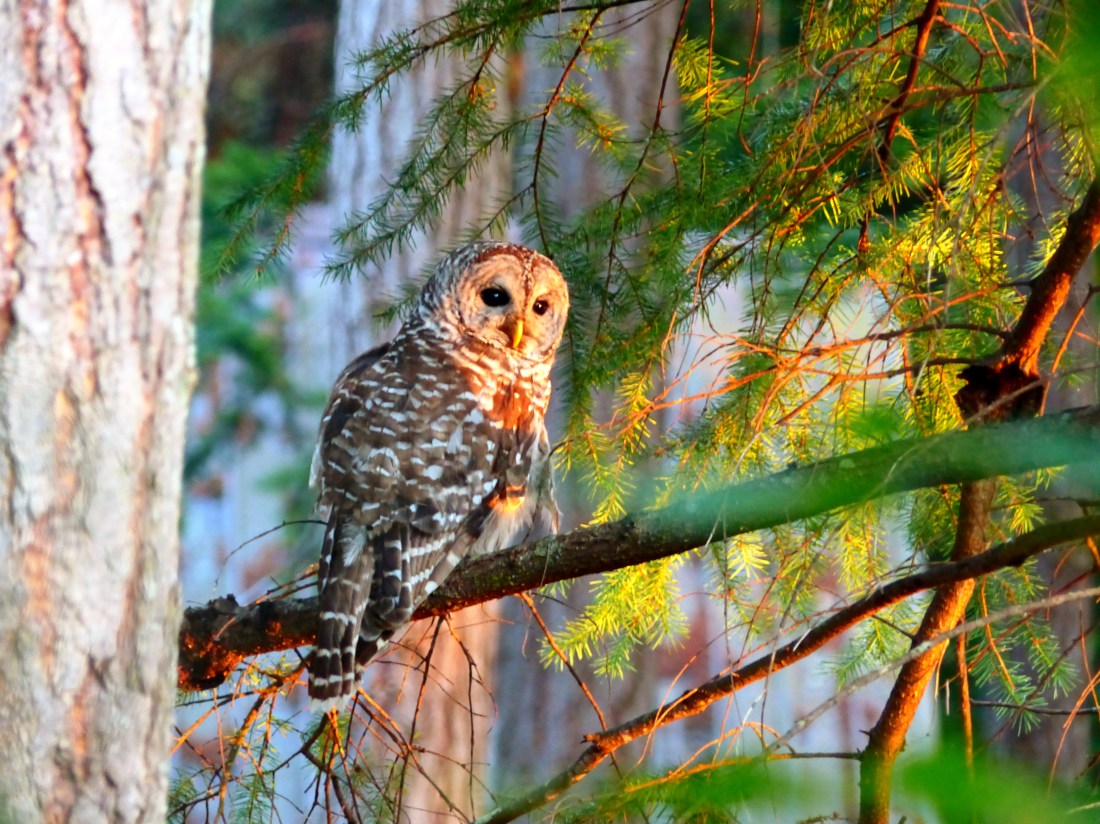
A couple evenings ago as we stepped outside The Nuthatch we encountered another local — though actually, when I read up on him, I learned that his family migrated here from the East Coast. This guy was sitting on the post of our front steps, then made a quick hop to a nearby tree. He didn’t seem to mind just hanging out while we watched him as he watched the sunset. cropped-1-anchor.jpg

P1190892.JPG
A barred owl perches on a Douglas fir branch as the sun sets over nearby Lopez Sound. Barred owls — whose distinctive hooting call is described as “Who cooks for you?” — are native to eastern North America. They’re considered invasive in the Pacific Northwest. But, hey, so are Californians. Brian J. Cantwell photo.

How does our garden grow? With high hopes and lots of encouragement

IMG_2559.JPG
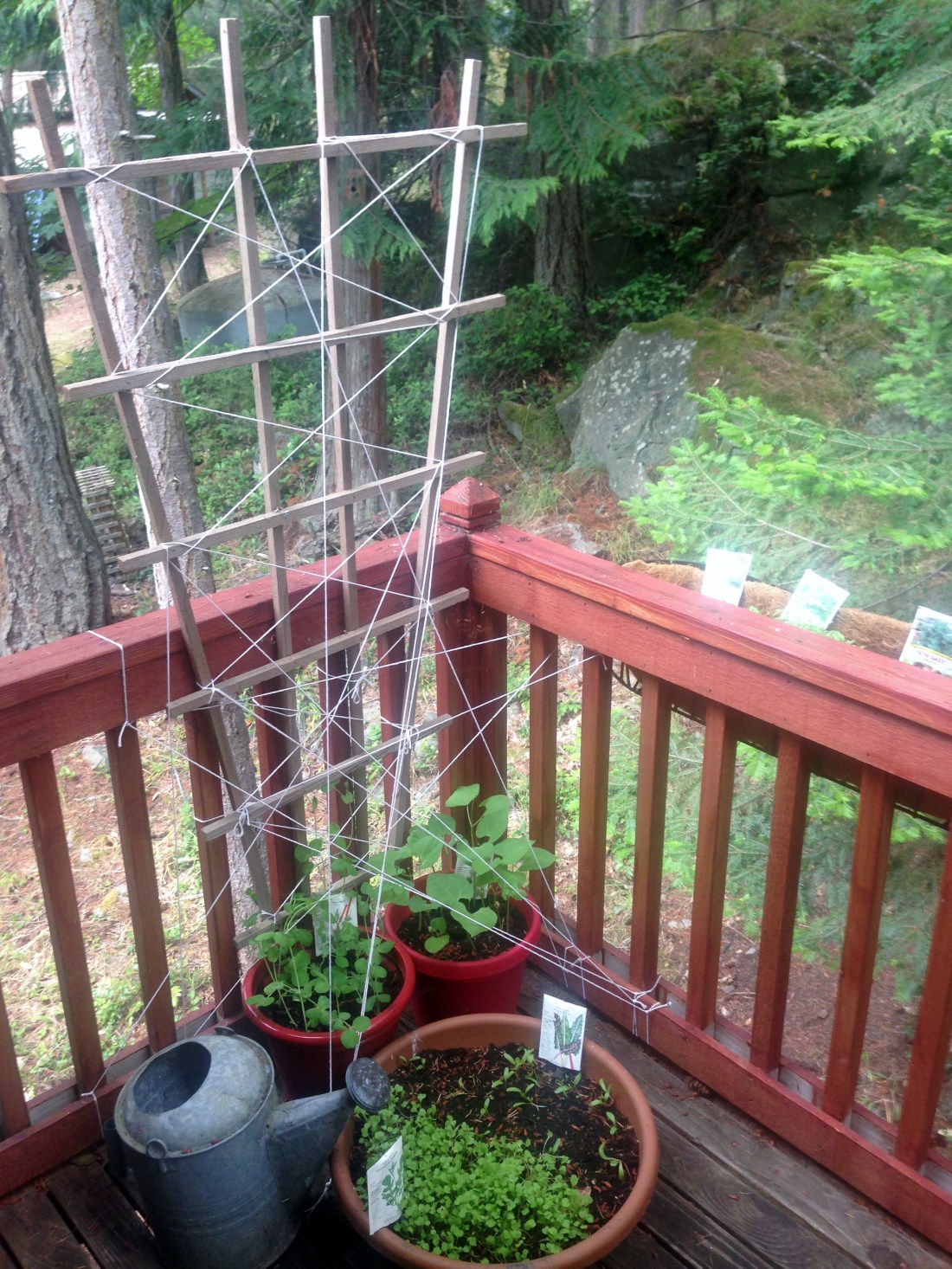
Our deck garden with a cat’s cradle of string beckoning climbing tendrils of peas and pole beans.

IMG_7955LONG BEFORE I WORKED AT THE SEATTLE TIMES, my first daily-newspaper job was at the Yakima Herald-Republic (before it was owned by The Seattle Times, as it is now.) For Barbara and me, it was our first time living east of the Cascade Mountains. We Seattle kids, who liked green woods and water views, always thought the world ended at North Bend.

But sagebrush-rimmed Yakima had its way of wooing us. I used to go to work on a nice day and leave the windows down on the parked car; there was no chance it would rain. Do that in Seattle and you’ll get soggy seats.

And behind our little bungalow on South Sixth Avenue we had the best vegetable garden we’ve ever had before or since. It was two years after Mount St. Helens had sent billows of ash eastward, bringing Yakima a day of darkness. When we lived there, we’d dig down only an inch in our garden to find a band of chalky grit, and that stuff was a great soil amendment. Add long days of sunshine, plus irrigation water from the Naches River, and we had ripe tomatoes, eggplant, peppers and more.

Now, after most of 25 years living on a boat, we’re on land again, and we’d love to have another bountiful garden. On our rock in the San Juans? Good luck!

Center Island
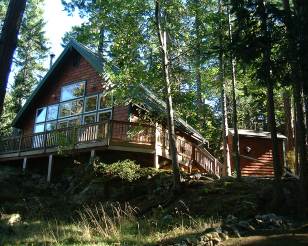
The Nuthatch cabin sits atop a rocky knoll. Nice view, bad soil.

I use the word “rock” advisedly. Our cabin perches atop a stone outcropping, which gives it a great view, and I love the characteristic San Juans topography. There’s soil around us, but dig down less than a foot and you’ll hit rock. I managed to plant a few trees in one spot, but next to them you can marvel at the BOULDER I dug up in the process. You could almost sit down and eat your lunch on it. The soil isn’t the best, either. We’ve tried growing a few things other than Douglas firs, which like it here, but most of our efforts have gone to the brush pile after a few years of steadfastly refusing to prosper.

That’s not to mention the deer, which mercilessly nibble just about everything that isn’t fenced.

But that isn’t stopping us from trying this summer, with imported soil in big pots on the cabin’s deck. On the upstairs deck off our loft, the most protected spot, we’re bravely experimenting with snow peas and pole beans, growing from large pots next to a trellis that I’ve lashed to the railing. Since both put out many eager tendrils and love to climb, I’ve supplemented the trellis with a sort of cat’s cradle of white zigzagging string. (Barbara thinks I got carried away.) So far, so good, though it’s the east side of the cabin, with lots of big trees around, and sunshine is sparse. We’ll see.

IMG_2580.JPG
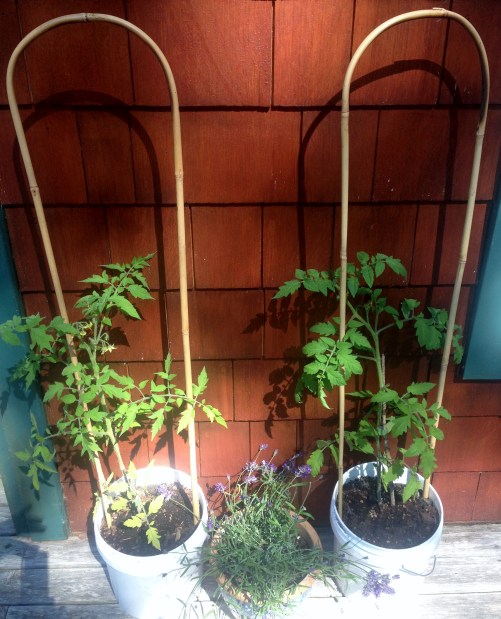
The tomatoes are movable, so we can shift them to sunny spots on the Nuthatch cabin’s deck. What’s retirement for, if not for pandering to your plants?

The next experiment is with tomatoes. Having grown up in Western Washington, the land of green tomato pickles (who actually likes those?), I’m dubious that we’ll get any to ripen. We don’t have a good spot that’s sunny all day (see previous mention of big trees), and because we’re surrounded by water it’s a rare day that we get as warm as 75 degrees, even at summer’s height. (Sounds like a good recipe for more of those damn pickles, if you ask me!) But a generous neighbor with a greenhouse offered us a couple of plants that were already tall and flowering. So we’ve planted them in buckets, with the idea that we can move them around to sunny spots as the sun moves across the sky.

Beyond that, we have a large planter divided between rocket (the Australian name for arugula, which gets kudos for zooming upward) and Swiss chard (limping along like a Swiss goatherd with bunions), plus a rail-mounted planter with cilantro (viva for its vigor), dill (doing well, maybe it can flavor those tomato pickles) and tiny little sprouts of oregano and basil (still about flea-size after a month of hopeful coaxing).

Oh, well, we’re retired. We have time to pander to our plants. Maybe we’ll pack their pots into the pickup and take them on a vacation to Yakima. cropped-1-anchor.jpg

There is no gardening without humility. Nature is constantly sending even its oldest scholars to the bottom of the class for some egregious blunder.

— Alfred Austin